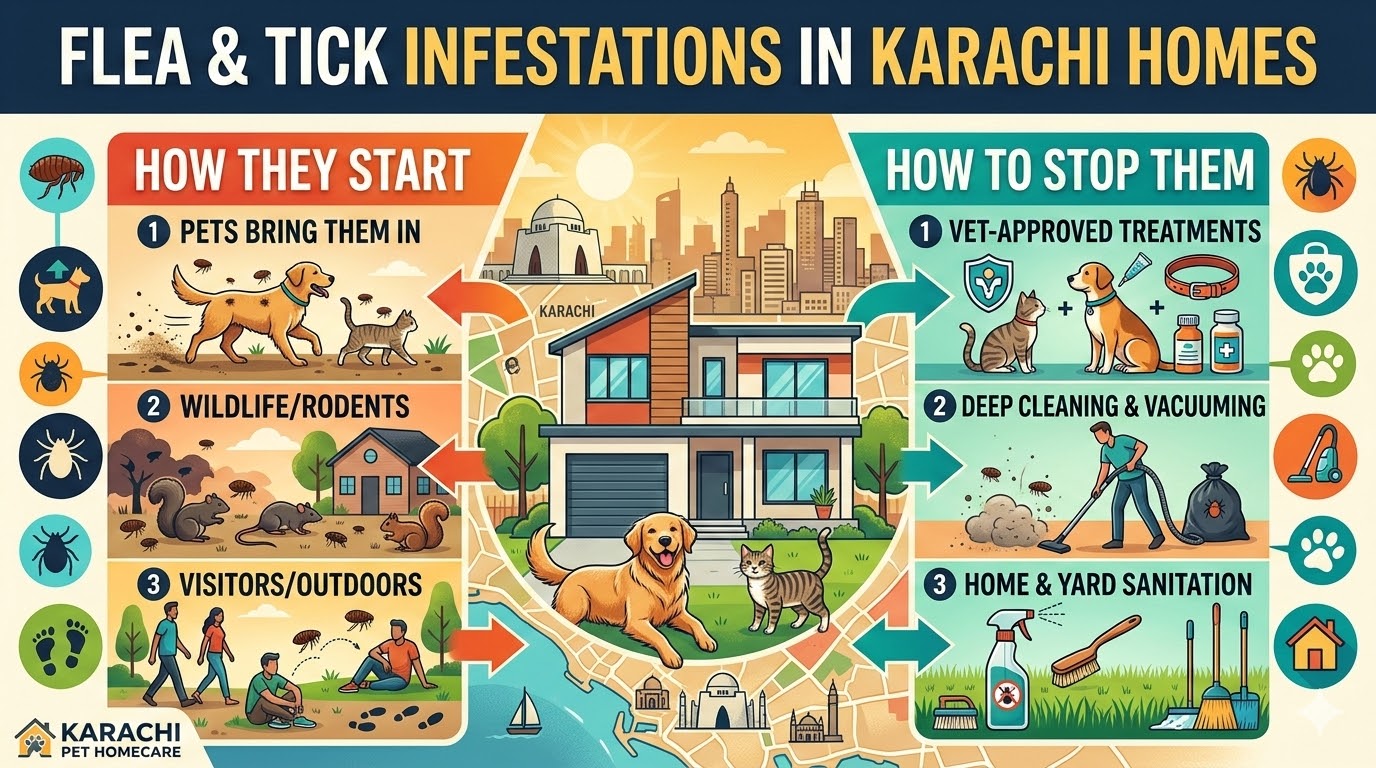
If you’ve noticed your dog scratching more than usual, found mysterious bites on your ankles, or spotted tiny fast-moving specks on your furniture — your Karachi home may already have a flea or tick problem. And if you’re thinking “it’ll go away on its own” — it won’t. Without professional intervention, these infestations grow fast, spread through every room, and put your entire household at risk.
In this guide, we break down exactly how flea and tick infestations take hold in Karachi’s unique environment, what warning signs to watch for, and — most importantly — how to eliminate them for good.
Why Karachi Homes Are a Hotspot for Fleas and Ticks
Karachi’s climate is one of the biggest reasons why flea and tick infestations are so common here. With temperatures averaging 27–35°C throughout most of the year and humidity levels that spike significantly during the monsoon season (June–September), the city creates near-ideal breeding conditions for these parasites.
Fleas thrive at temperatures between 21°C and 32°C. Ticks can remain active year-round in Karachi’s mild winters. Unlike colder cities where harsh winters kill off pest populations, Karachi’s warmth keeps them breeding continuously.
Key Local Factors That Drive Infestations
- Dense residential areas: DHA, Gulshan-e-Iqbal, North Nazimabad, and Clifton — with their tightly packed homes and shared boundary walls — allow pests to travel quickly between properties.
- Stray animal populations: Karachi’s large stray cat and dog population acts as a constant reservoir for fleas and ticks. A single encounter between your pet and a stray is enough to bring an infestation indoors.
- Grassy and green areas: Parks in areas like PECHS, Gulistan-e-Johar, and Bahria Town are common tick habitats, especially during and after the monsoon when vegetation stays moist.
- Second-hand items and carpets: Fleas can survive in dormant egg and pupa stages for months. Purchasing second-hand rugs, sofas, or even moving into a previously occupied home can introduce an infestation instantly.
How a Flea or Tick Infestation Typically Starts in a Karachi Home
Most Karachi homeowners are surprised to learn that infestations rarely start with a large-scale invasion. They creep in quietly — and by the time you notice them, they’re already established.
The Most Common Entry Points
1. Your pets: The number one entry route. Dogs and cats that go outdoors — even briefly — can pick up dozens of fleas or ticks in a single outing. These parasites then fall off inside your home, where they find dark corners, carpeting, and bedding to breed in.
2. Visiting animals: A neighbour’s pet, a stray that wandered into your garden, or a relative’s dog visiting for Eid can leave eggs behind without anyone realising.
3. Clothing and shoes: Ticks are hitchhikers. Walking through tall grass or sitting in a public park in areas like Sea View or Bagh Ibn Qasim can result in ticks attaching to your clothing and entering your home on you.
4. Infested goods: Flea eggs in dormant stages can survive in second-hand furniture, fabric items, or even in the corners of a rented property where the previous tenants had pets.
The Lifecycle That Makes Infestations So Hard to Break
Understanding the flea lifecycle is critical. Adult fleas — the ones you see — represent only about 5% of the total infestation. The remaining 95% consists of eggs, larvae, and pupae hidden in carpets, upholstery, and floor cracks.
This is why DIY sprays and flea collars rarely work. You kill the adults, but the eggs hatch weeks later and the cycle restarts. The pupal stage is particularly stubborn — it’s resistant to most insecticides and can remain dormant for up to 12 months, waiting for vibrations or warmth that signal a host is nearby.
| Quick Fact: A single female flea can lay up to 50 eggs per day. In just one month, a pair of fleas can produce a population of over 20,000 eggs, larvae, and pupae in your home. |
Warning Signs: Is Your Karachi Home Already Infested?
Because infestations often build silently before becoming visible, knowing the early warning signs is essential. The sooner you act, the easier — and less expensive — the treatment.
Signs of a Flea Infestation
- Your pet is scratching, biting at its skin, or losing patches of fur — especially around the base of the tail and neck
- You notice small, dark specs (“flea dirt” — actually flea faeces) on your pet’s coat, bedding, or white sheets
- You find itchy, clustered bites on your lower legs and ankles, often in a line or group of three
- Tiny, fast-moving brown specks are visible on light-coloured surfaces like floor tiles or your pet’s white fur
- The “white sock test”: walk across your carpet in white socks — fleas will jump onto them and become visible
Signs of a Tick Infestation
- Finding ticks attached to your pet — particularly around the ears, between toes, and on the neck
- Discovering engorged ticks on yourself after spending time in grassy or garden areas
- Your pet appearing lethargic, off food, or developing unexplained fever — possible signs of tick-borne illness
- Spotting brown or reddish-brown seed-like insects crawling on walls, upholstery, or curtains
The Health Risks You Cannot Afford to Ignore
Many Karachi families underestimate flea and tick infestations as a mere nuisance. The reality is far more serious.
Flea-Related Health Risks
- Flea Allergy Dermatitis (FAD): Extremely common in dogs and cats, causing intense itching, hair loss, and skin infections
- Tapeworms: Fleas are intermediate hosts for tapeworm larvae. Children who accidentally ingest an infected flea — which can happen during play — can develop tapeworm infections
- Anaemia: In severe infestations, particularly in puppies and kittens, blood loss from flea bites can lead to life-threatening anaemia
- Human skin reactions: Flea bites cause intense itching, and scratching can lead to secondary bacterial skin infections
Tick-Related Health Risks
- Babesiosis and Ehrlichiosis: Tick-borne diseases that affect dogs and can cause fever, anaemia, and organ failure if untreated
- Rocky Mountain Spotted Fever (RMSF): While rare in Pakistan, it has been documented and can be severe in humans
- Lyme Disease: Though more common in Europe and North America, the risk should not be entirely dismissed
- Tick Paralysis: Certain ticks secrete toxins that can cause temporary paralysis in pets and, in rare cases, humans
| ⚠️ Important: If you notice unusual symptoms in your pet — particularly fever, loss of appetite, or joint pain — consult a veterinarian immediately and mention the possibility of tick exposure. |
Why DIY Solutions Fail (And What You’re Up Against)
The Karachi market is flooded with flea sprays, tick collars, anti-flea shampoos, and home remedies like neem oil and garlic. While some offer temporary relief, none of them solve the core problem — and here’s why:
- Flea eggs and pupae are insecticide-resistant: Over-the-counter sprays kill adults on contact but cannot penetrate the protective pupal casing. The infestation restarts within 2–4 weeks
- Incomplete treatment: DIY treatments typically address the pet but not the environment — leaving thousands of eggs in your carpets, sofa, and floorboards
- No residual protection: Consumer products wear off quickly in Karachi’s heat and humidity, leaving your home vulnerable again almost immediately
- Missing hidden zones: Professional pest controllers know where fleas and ticks hide — under baseboards, inside wall voids, in garden soil. These are places a home spray never reaches
This is why professional flea and tick control in Karachi is the only solution that actually breaks the entire lifecycle — treating both your home and the source of re-infestation systematically.
The Professional Approach: How Unique Fumigation Tackles Flea & Tick Infestations
At Unique Fumigation, we’ve been treating flea and tick infestations across Karachi for years. We understand the local conditions — the monsoon season spikes, the stray animal problem, the densely populated residential areas — and we design our treatment protocols accordingly.
Our Integrated Treatment Process
Step 1 — Free Inspection: Our trained technicians assess the level of infestation, identify the entry points, and map all problem zones in your home — including your garden, outdoor areas, and any pets on the premises.
Step 2 — Indoor Treatment: We apply professional-grade Insect Growth Regulators (IGRs) combined with adulticide treatments to kill adults and prevent eggs and larvae from maturing. This breaks the lifecycle at every stage.
Step 3 — Outdoor & Garden Treatment: Particularly relevant for Karachi homes with gardens or yards, we treat outdoor areas where ticks and fleas shelter between hosts.
Step 4 — Follow-Up Visit: Because of the pupal stage, a second treatment is scheduled 7–14 days after the first to eliminate any newly hatched adults before they can reproduce.
Step 5 — Prevention Guidance: We advise you on pet treatment coordination, post-service hygiene, and how to reduce the risk of re-infestation — specific to your home’s layout and lifestyle.
| All products used by Unique Fumigation are safe for children and pets when applied by certified professionals. We use WHO-approved formulations appropriate for residential environments. |
Preventing Future Infestations: What Karachi Homeowners Can Do
After professional treatment, maintaining a flea and tick-free home requires consistent habits. Here’s what works in Karachi’s environment:
For Pet Owners
- Use veterinarian-prescribed monthly flea and tick preventatives (topical treatments or oral tablets) — not just collars
- Check your pet thoroughly after walks, especially in grassy areas like parks in Gulshan or Defence
- Wash pet bedding weekly in hot water (above 60°C)
- Avoid letting pets interact with strays — a challenge in Karachi, but important
For Your Home
- Vacuum carpets, rugs, and upholstery at least twice a week and empty the vacuum immediately outside
- Wash bedding, curtains, and fabric covers regularly, especially during and after monsoon season
- Keep grass and garden vegetation trimmed short — ticks love tall, damp grass
- Seal gaps under doors and around plumbing entry points to reduce wildlife and stray animal access
- Schedule a professional inspection every 6 months, particularly before and after Karachi’s monsoon season
Know When to Call the Professionals
If you see any of the warning signs listed above, or if you’ve tried over-the-counter products without success — don’t wait. The longer a flea or tick infestation is left untreated, the larger and more difficult it becomes to resolve. Early professional intervention saves time, money, and a great deal of discomfort for your family and pets.
Karachi families dealing with recurring infestations often find that professional flea and tick control services in Karachi are the only reliable solution, particularly for homes with pets, gardens, or proximity to common stray animal routes.
Frequently Asked Questions
How quickly can a flea infestation spread through a Karachi home?
Extremely quickly. In Karachi’s warm climate, flea eggs can hatch in as little as 2 days, and a new generation of adults can emerge in as few as 14 days. A small infestation involving a handful of fleas can become a serious problem within 3–4 weeks.
Are ticks common inside homes or only in gardens?
Ticks are primarily outdoor parasites, but in Karachi they frequently enter homes via pets or clothing. Brown dog ticks (Rhipicephalus sanguineus) — the most common species found in Karachi — are well adapted to indoor environments and can complete their entire lifecycle inside a home.
Can I treat the infestation myself after buying a pet flea treatment?
Treating only your pet addresses just 5% of the infestation. The remaining 95% — eggs, larvae, and pupae in your environment — will continue the cycle. Effective treatment must address both your pet and your home simultaneously. For established infestations, professional treatment is strongly recommended.
How long does professional flea and tick treatment take?
The initial treatment typically takes 1–2 hours depending on the size of your property. A follow-up visit is required after 7–14 days. Most infestations are fully resolved within 3–4 weeks from the first treatment.
Is the treatment safe for my children and pets?
Yes, when carried out by trained professionals using appropriate products. Unique Fumigation uses WHO-approved formulations and provides specific guidance on re-entry times and post-treatment precautions to ensure the complete safety of your household.
Don’t Let a Flea or Tick Infestation Take Over Your Home — Act Now
A flea or tick infestation doesn’t resolve itself. In Karachi’s climate, it only grows. Every day you wait, more eggs hatch, more hiding spots are colonised, and the problem becomes harder and more expensive to treat.
Unique Fumigation has helped hundreds of Karachi families — from DHA and Clifton to Gulshan and North Nazimabad — completely eliminate flea and tick infestations and protect their homes from future outbreaks.
| 📞 Book Your FREE Inspection Today Contact Unique Fumigation now to book a no-obligation, free home inspection. Our team will assess your infestation, provide an honest evaluation, and recommend the most effective treatment plan for your specific situation. ✅ Certified pest control professionals ✅ Safe, WHO-approved treatments ✅ Guaranteed follow-up service Visit uniquefumigation.com/fleas-ticks-control-in-karachi or call us today. Karachi’s pest-free homes start here. |
Related Services: Alongside professional flea and tick control in Karachi, Unique Fumigation offers comprehensive pest management services for cockroaches, bed bugs, rodents, termites, and more across all areas of Karachi.

Muhammad Ali Khan is the founder and director of Unique Fumigation Services, Karachi’s longest-running PPMA-registered pest control company, established in 1993. With over 30 years of hands-on experience in residential and commercial pest management, he has overseen more than 5,000 treatments across every major locality in Karachi — from DHA and Clifton to Orangi Town and Korangi.
Under his leadership, Unique Fumigation has maintained affiliations with the Pakistan Pest Management Association (PPMA), National Pest Management Association (NPMA), Federal Board of Revenue (FBR), and Sindh Revenue Board (SRB), while exclusively using WHO-approved, eco-safe chemicals — a standard he enforced from day one.
Muhammad Ali Khan writes on pest biology, infestation patterns specific to Karachi’s climate, treatment protocols, and chemical safety — drawing directly from three decades of field experience treating termite-damaged structures, dengue-prone areas, and food-industry facilities for clients including K-Electric, Hyperstar, IBA Karachi, and USAID.
His work is grounded in one principle: pest control done wrong is a health hazard, not just a failed service.