This category contains helpful articles about bed bugs, including how to identify them, common signs of infestation, where they hide, and how they spread. Our guides also cover prevention tips, treatment options, and practical advice to help homeowners understand and deal with bed bug problems effectively. Stay informed with expert insights on protecting your home and maintaining a pest-free environment.
Karachi never sleeps. With millions of travellers, business visitors, and domestic guests checking in and out of the city’s hotels, guest houses, and serviced apartments every single day, hospitality managers face a pest threat that is as invisible as it is devastating — bed bugs.
A single bed bug infestation can destroy the reputation of a five-star hotel just as quickly as it can ruin a small guest house in Gulshan-e-Iqbal. Online reviews travel faster than any pest, and a guest who wakes up covered in bites will not stay silent. In a city as competitive as Karachi, one negative experience shared on Google, TripAdvisor, or social media can cost you months of bookings.
This guide explains why professional bed bug control is not optional for Karachi’s hospitality sector — it is a business imperative.
1. Understanding the Bed Bug Threat in Karachi
Why Karachi Is Especially Vulnerable
Karachi is Pakistan’s largest city and its commercial and financial capital, receiving an enormous volume of domestic and international travellers year-round. The city’s humidity — particularly during the monsoon months from June to September — creates ideal conditions for bed bug survival and rapid reproduction. Bed bugs thrive between 21°C and 32°C, and Karachi’s climate sits in that sweet spot for much of the year.
High-density neighbourhoods such as Saddar, Clifton, Defence (DHA), and Gulistan-e-Jauhar see heavy hospitality activity. Budget guest houses and mid-range hotels in Saddar, for instance, have particularly high guest turnover, increasing the risk of bed bug introduction from infested luggage, clothing, and second-hand furniture.
How Bed Bugs Enter Your Property
Bed bugs are expert hitchhikers. They do not jump or fly, but they cling to fabric, luggage zippers, seams, and upholstery with extraordinary skill. Here is how they most commonly enter Karachi hotels and guest houses:
Infested luggage brought in by guests arriving from other cities or countries
Second-hand mattresses, sofas, and furniture purchased without inspection
Laundry returned from an infested off-site facility
Staff members’ personal belongings, uniforms, and bags
Guests who have previously stayed in infested accommodation
Once inside, bed bugs can spread from one room to the entire floor within weeks by travelling through wall cavities, electrical conduits, plumbing, and even via housekeeping trolleys and linen carts.
2. The Real Cost of Ignoring Bed Bugs
Reputation Damage — The Invisible Financial Loss
For hotel and guest house owners in Karachi, reputation is everything. Pakistan’s tourism and business travel sector relies heavily on word-of-mouth and online ratings. A single post on a popular platform describing bed bug bites, bloodstains on sheets, or live insects crawling on walls can accumulate thousands of views within hours.
Consider this: according to hospitality research globally, properties that receive a publicised bed bug complaint see booking rates drop by as much as 20–30% in the months that follow. For a mid-range hotel in areas like North Nazimabad or Pechs, that loss could be financially catastrophic.
Direct Financial Costs
The cost of ignoring bed bugs always exceeds the cost of prevention. Hotels that allow infestations to grow unchecked eventually face:
Compensation claims and refunds from affected guests
Emergency room closures and lost revenue during treatment
Disposal and replacement of mattresses, upholstered furniture, and bedding
Staff overtime and intensive deep-cleaning costs
Potential legal liability if a guest suffers a severe allergic reaction
Health Implications for Your Guests
Bed bug bites cause itching, skin rashes, and in some individuals, significant allergic reactions. Repeated bites across multiple nights — common in hotel settings — can lead to secondary skin infections from scratching. For guests with compromised immunity, the health impact can be serious. Karachi’s healthcare burden is already significant; the last thing any hospitality business should add to it is preventable pest-related illness.
3. The Biology of Bed Bugs — Know Your Enemy
Effective bed bug control starts with understanding these insects. Bed bugs (Cimex lectularius) are small, reddish-brown, flat insects approximately 5–7 mm in length when fully grown. Their flattened bodies allow them to hide in the thinnest of gaps — behind headboards, inside mattress seams, under loose wallpaper, within electrical sockets, and inside the hollow legs of bed frames.
A single female bed bug can lay up to 500 eggs in her lifetime. At room temperature, eggs hatch within 6–10 days. This means an infestation of just a few bugs can grow exponentially within 6–8 weeks if left unchecked. By the time guests start complaining, the infestation is usually already well-established.
⚠ Key Fact for Hoteliers Bed bugs can survive without feeding for 6 to 12 months under the right temperature conditions. This means an unoccupied room is not a bug-free room. Closing a room temporarily does NOT eliminate an infestation.
Bed bugs are also developing resistance to many over-the-counter chemical treatments. DIY sprays purchased from Karachi markets are largely ineffective against established infestations and may only scatter bugs deeper into walls and furniture, making professional treatment harder later.
4. Why DIY Treatment Fails in Commercial Settings
Many hotel managers attempt to handle bed bug problems in-house, using locally available pesticide sprays or fumigation products. In a commercial hospitality setting, this approach consistently fails for several important reasons:
Scale: A guest house with 20 rooms has hundreds of potential hiding spots that require systematic, methodical treatment — far beyond the capacity of standard sprays.
Resistance: Bed bug populations in urban areas like Karachi have developed significant resistance to pyrethroid-based sprays commonly sold in retail stores.
Incomplete treatment: Without professional equipment, it is nearly impossible to treat wall voids, electrical fixtures, and deep mattress seams where eggs are laid.
No follow-up inspection: Bed bug treatment requires follow-up visits to catch hatching eggs, which standard DIY methods do not account for.
This is why Karachi’s most serious hospitality operators choose professional bed bug control services in Karachi that are specifically designed for commercial environments with multiple rooms, high guest turnover, and zero tolerance for downtime.
5. What Professional Bed Bug Control Looks Like
Thorough Inspection First
Professional pest control does not begin with spraying — it begins with a detailed inspection. Certified technicians use specialised torches, magnification tools, and their training to identify active infestations, harborage sites, and the extent of spread before recommending any treatment.
Integrated Pest Management (IPM) Approach
Reputable pest control companies in Karachi use an Integrated Pest Management approach, combining multiple treatment methods for maximum effectiveness:
Chemical treatments using residual insecticides applied to harborage sites
Steam treatment for mattresses, soft furnishings, and areas where chemicals cannot be safely applied
Dust formulations for wall voids, electrical sockets, and structural gaps
Monitoring traps to assess treatment success and detect re-infestation early
Follow-Up and Certification
A professional treatment programme includes at least two to three follow-up visits to treat newly hatched eggs and verify complete elimination. Upon successful treatment, responsible pest control providers issue a clearance certificate — something increasingly required by hotel chains, booking platforms, and corporate clients in Karachi.
6. Prevention: Building a Bed Bug-Resistant Operation
Treatment cures. Prevention protects your investment. Here are the best practices that Karachi’s most pest-resilient hotels implement as standard operating procedure:
Staff Training
Housekeeping staff are your first line of defence. They should be trained to identify the signs of a bed bug infestation during routine room turnover: small dark faecal spots on mattress seams, shed skins near bed frames, blood smears on pillowcases, and a faint musty odour in heavily infested rooms.
Mattress Encasements
Investing in high-quality, bed bug-proof mattress and pillow encasements eliminates the most common harborage site and makes inspection significantly easier. This is one of the highest-return prevention investments any hotel can make.
Luggage Rack Policy
Ensure rooms have dedicated luggage racks and that guests are encouraged to use them. Luggage placed directly on beds or floors dramatically increases the risk of bed bug transfer. This simple practice, well implemented in DHA and Clifton hotels, is often overlooked in smaller guest houses.
Scheduled Professional Inspections
Do not wait for a guest complaint to call a pest control specialist. Scheduling quarterly bed bug inspections and preventive treatments — particularly before high-occupancy seasons such as Eid holidays, business conference periods, and summer months — is the most cost-effective strategy available.
Procurement Policy for Furniture
Never introduce second-hand mattresses, bed frames, sofas, or upholstered chairs into your property without professional inspection and treatment. This is one of the most common entry points for bed bugs into Karachi guest houses operating on tight renovation budgets.
7. Karachi-Specific Challenges You Must Not Ignore
High Guest Turnover in Commercial Hubs
Areas like Saddar, M.A. Jinnah Road, and Korangi Industrial Area have some of the highest guest turnovers in the city. Budget travellers, industrial workers, and transient populations frequent guest houses in these zones. High turnover means higher introduction risk, and shorter room preparation windows mean less time for thorough inspection between guests.
Monsoon Season Amplification
Karachi’s monsoon season — July through September — creates elevated humidity that accelerates bed bug reproduction and extends their lifespan. Properties that do not conduct pre-monsoon treatments are particularly vulnerable to rapid population growth during this period.
Cross-Contamination Through Shared Laundry
Many smaller guest houses in Karachi outsource their laundry to third-party facilities. If those facilities are not managing pest risks, infested linen can bring bed bugs directly into your property in large quantities. Ensuring your laundry provider uses appropriate heat treatment (above 60°C) is critical.
Lack of Awareness and Stigma
One of the biggest challenges in Karachi’s hospitality sector is the reluctance to acknowledge bed bug problems due to perceived reputational stigma. This causes delays in seeking professional help, allowing infestations to grow from a contained room problem to a building-wide crisis. The faster you call a professional, the lower your total cost and the better your chances of resolving the problem discreetly.
8. Legal and Regulatory Considerations
Pakistan’s consumer protection landscape is evolving. Hotel guests in Karachi who suffer documented bed bug infestations are increasingly aware of their rights to compensation and refunds. While formal litigation remains less common than in Western markets, the threat of regulatory scrutiny from local authorities — particularly from Sindh’s tourism and hospitality regulators — is real and growing.
International hotel chains operating in Karachi are already subject to corporate pest management standards that require documented inspections and treatment records. Independent hotels and guest houses that cannot demonstrate a history of professional pest management are at a disadvantage when seeking partnerships with online travel agents (OTAs) and corporate clients.
Maintaining documented records of scheduled bed bug treatments and inspections is increasingly a standard expectation — and a competitive differentiator — in Karachi’s hospitality market.
9. How to Choose the Right Pest Control Partner in Karachi
Not all pest control providers offer the same standard of service. When choosing a bed bug control company for your hotel or guest house, look for the following:
Commercial hospitality experience: Have they treated hotels and guest houses specifically? Residential experience is not sufficient.
Licensed and certified technicians: Ensure technicians are trained and that the company operates with appropriate licensing.
Multi-stage treatment protocol: A single spray treatment is not sufficient. Insist on a programme that includes follow-up visits.
Discreet service: A professional provider understands the sensitivity of treating an occupied or partially occupied property and works with minimal disruption.
Written reports and guarantees: Documentation of treatment and a service guarantee protect both you and your guests.
🛡 Protect Your Property. Protect Your Reputation.Book Your Free Bed Bug Inspection Today Don’t wait for a guest complaint to take action. Unique Fumigation’s certified specialists are serving hotels and guest houses across Karachi — from Defence and Clifton to Saddar, Gulshan, and North Karachi. We offer discreet, professional, and guaranteed bed bug control programmes tailored specifically for the hospitality sector. 📞 Call us now | Book a Free Inspection at uniquefumigation.comServing all major hospitality zones in Karachi — fast response, zero disruption, full documentation.
Final Word
Karachi’s hospitality sector is growing, competitive, and increasingly scrutinised by a more informed travelling public. Bed bug control is no longer a reactive measure taken in crisis — it is a proactive investment in your guests’ experience, your property’s reputation, and your business’s long-term profitability.
The question is not whether bed bugs will enter your property. In a city like Karachi, with its scale of movement and its climate, the real question is whether you will be prepared when they do. Professional, scheduled pest management is the only reliable answer.
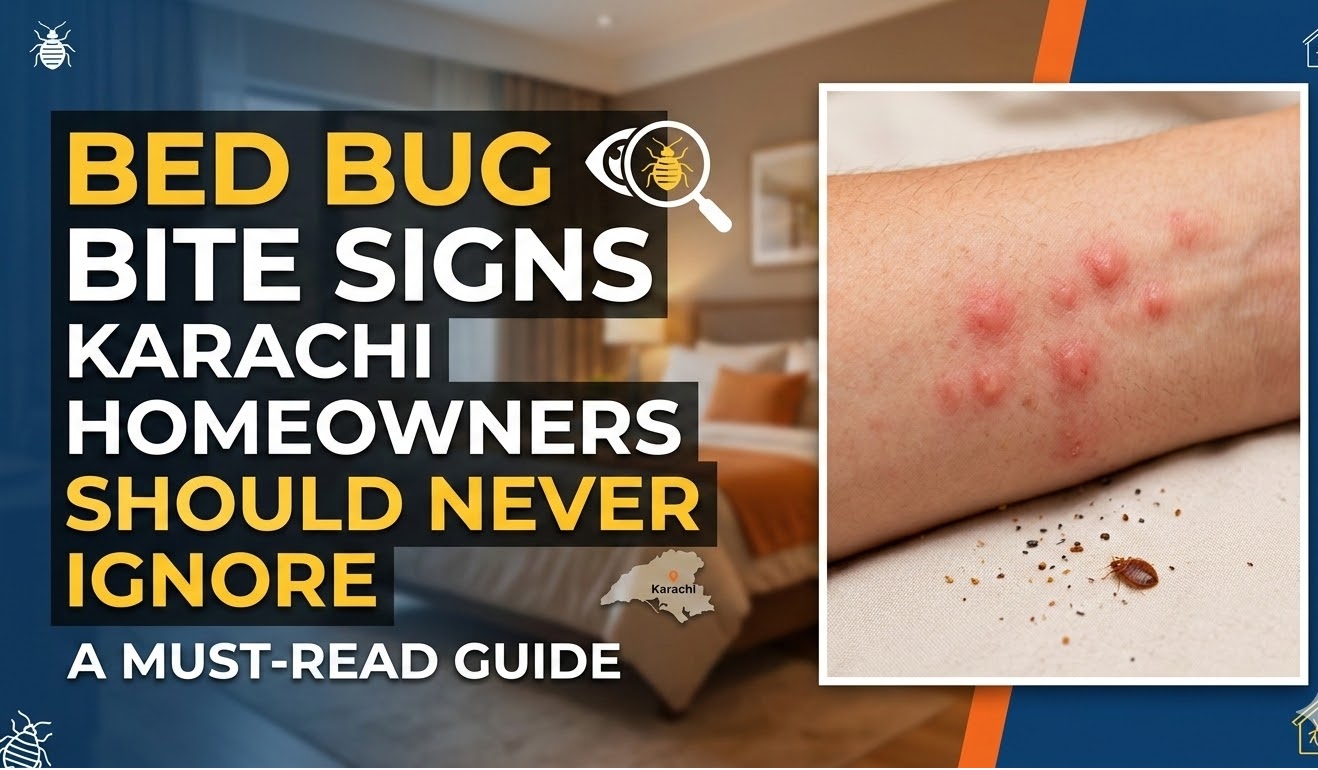
You wake up in your home in Gulshan-e-Iqbal or North Karachi with a cluster of itchy red welts on your arm. You assume it was mosquitoes — after all, Karachi’s summers are relentless, and mosquitoes are a constant companion. So you apply a topical cream, forget about it, and go on with your day.
Two weeks later, the bites are back. This time more of them. On your back. On your legs. Your child has them too.
This is the moment most Karachi homeowners finally begin to suspect something more serious — and by that point, what started as a handful of bed bugs has often grown into a full-scale infestation hidden deep within your mattress, sofa, and walls.
Bed bug bites are one of the most misidentified and dangerously ignored pest signs in Karachi homes. This guide will help you recognise them accurately, understand what they mean, and take the right action — before a manageable problem becomes an expensive nightmare.
1. What Bed Bug Bites Actually Look Like
The Classic Appearance
Bed bug bites typically appear as small, flat or slightly raised red welts on the skin. They are often surrounded by a reddish halo and may develop into larger wheals in individuals with sensitive skin. Unlike mosquito bites, which tend to be isolated and random, bed bug bites have a very distinctive pattern:
Clusters or lines of 3–5 bites — often described as “breakfast, lunch, and dinner” by pest professionals
Bites appear on exposed skin — arms, neck, face, shoulders, and legs are most commonly affected
Intense itching that often worsens at night or after waking in the morning
No visible bite mark initially — bites can take 24–72 hours to show on the skin, which confuses homeowners
How Individual Reactions Vary
Not every person reacts to bed bug bites the same way. In a family home in DHA or Clifton, one family member may develop clear, itchy welts while another shows no skin reaction at all — even though both are being bitten. This uneven reaction is one of the reasons infestations go undetected for so long in Karachi homes.
Approximately 30% of people do not react visibly to bed bug bites. If one family member is showing signs but others are not, this does NOT mean the others are safe. They may be contributing to feeding the infestation unknowingly.
⚠ Critical Distinction Bed bug bites appear in clusters or lines. Mosquito bites are random and isolated. Flea bites concentrate around the ankles and lower legs. Scabies causes burrowing lines between fingers and toes. If you are seeing grouped red welts on upper body areas after sleeping, bed bugs are the most likely culprit.
2. Eight Bite Signs Karachi Homeowners Must Not Dismiss
Sign 1: Bites That Appear Overnight
If you go to sleep without any marks and wake up with itchy welts, this is a major red flag. Bed bugs are nocturnal feeders. They emerge from hiding during the hours when carbon dioxide levels rise — typically between 2 AM and 5 AM — and feed for 5 to 10 minutes before retreating. If your skin reactions are consistently appearing by morning, do not attribute this to anything other than a nocturnal biting insect.
Sign 2: Bites in Straight Lines or Tight Clusters
Random bites suggest mosquitoes or general insects. Bites arranged in a straight row of three or four, or clustered tightly in one area of skin, are a hallmark of bed bug feeding. A bed bug feeds, moves slightly, and feeds again — producing that characteristic linear pattern. If you are seeing this pattern on your arms or neck, act immediately.
Sign 3: Recurring Bites in the Same Location
A mosquito bite is a one-time event. Bed bug bites recur in the same general body areas night after night because the bugs are harbouring in a fixed location — your mattress, headboard, or bedside furniture — and returning to feed on the nearest available host. If you are treating bites topically but new ones keep appearing in the same spots, this is a strong infestation signal.
Sign 4: Bites Affecting Multiple Family Members
When bites start appearing on more than one person sleeping in the same room or on the same floor, the infestation has reached a size where there are enough bugs to feed on multiple hosts. In larger Karachi homes in areas like Gulshan-e-Hadeed, Defence, or Malir, bed bugs can spread across rooms through shared walls and plumbing. Multiple family members showing symptoms is an urgent warning.
Sign 5: Bites Accompanied by Bloodstains on Bedding
After a bed bug feeds, it returns to hiding. But if a sleeping person rolls over onto a recently fed bug, it is crushed — leaving a small rust-coloured bloodstain on the sheet or pillowcase. If you are regularly finding small reddish-brown smears on your bedding that were not there at the start of the night, this is one of the most reliable physical confirmations of an active infestation.
Sign 6: Bites With a Dark Faecal Spot Nearby
Bed bugs defecate after feeding, leaving small dark ink-like spots on mattress seams, sheets, pillowcases, and bed frames. Finding these spots alongside bite marks removes all doubt. Use a white tissue to press on any dark spot on your mattress — if it smears into a brownish-red stain, it is bed bug faecal matter.
Sign 7: Bites That Worsen Over Weeks
Early-stage infestations produce fewer bites because the bug population is small. As the population grows — and bed bugs can double their numbers within weeks — the frequency and intensity of bites increases. If your situation has been progressively worsening over a period of weeks rather than improving, this escalation pattern is characteristic of a growing infestation.
Sign 8: A Child or Elderly Family Member With Unexplained Skin Irritation
Children and elderly family members often have more sensitive skin reactions to bed bug bites. What presents as mild irritation in a healthy adult may appear as significant welts, widespread rash, or even blistering in a child. In Karachi’s extended family households — where grandparents and young children often share sleeping areas — one person’s extreme reaction may be the first visible sign of a problem affecting the whole household.
3. Why Bed Bug Bites Are So Easily Misdiagnosed in Karachi
The Mosquito Assumption
Karachi has a significant and persistent mosquito problem — particularly in areas near water bodies, open drains, and low-lying neighbourhoods. This means Karachi homeowners are culturally primed to attribute any nighttime bites to mosquitoes. This assumption is correct often enough to create dangerous complacency when bed bugs are actually the culprit.
The Heat Rash Confusion
During Karachi’s intense summer months — April through July — heat rash is extremely common, especially in homes without consistent air conditioning. The red, clustered appearance of heat rash closely resembles bed bug bites, and many homeowners mistake one for the other and treat accordingly, giving the actual infestation time to grow.
Delayed Skin Reaction
Because bed bug bites can take one to three days to become visible, the connection between sleeping in an infested bed and the appearance of bites is not immediately obvious. Homeowners often cannot identify a clear cause and conclude the bites must be from environmental factors rather than a pest in their own home.
Absence of the Insect Itself
Unlike cockroaches or ants, bed bugs are almost never seen during daylight hours. They hide with extraordinary effectiveness in mattress seams, behind loose wallpaper, inside electrical sockets, and within the joints of wooden bed frames. A homeowner may be enduring significant bites for months without ever seeing a single live insect — making professional detection methods essential.
4. The Health Risks Behind the Bites
Skin Infections From Scratching
Bed bug bites itch intensely. In a hot, humid Karachi home where air conditioning may not run throughout the night, the urge to scratch is constant. Repeated scratching breaks the skin, creating an entry point for bacterial infection. Secondary infections, including impetigo and cellulitis, are documented complications of bed bug infestations, particularly in children.
Allergic Reactions
A subset of people develop significant allergic responses to bed bug saliva. Reactions range from localised urticaria (hives) to, in rare cases, anaphylaxis. In Karachi’s general population, where pre-existing conditions like eczema and allergic dermatitis are common, bed bug bites can significantly aggravate existing skin conditions.
Sleep Deprivation and Mental Health Impact
The psychological burden of a bed bug infestation is substantial and often underestimated. The knowledge that insects are feeding on you and your family while you sleep causes severe anxiety, hypervigilance, and chronic insomnia. Many Karachi families dealing with unresolved infestations report that multiple family members begin sleeping on sofas or in different rooms — inadvertently spreading the infestation further.
Anaemia in Severe Cases
In extreme infestations — particularly affecting very young children, elderly individuals, or immunocompromised family members — repeated nightly blood loss from hundreds of bites over weeks can contribute to mild anaemia. While this is not common, it has been documented in cases where infestations were left entirely untreated for extended periods.
If any family member is experiencing worsening symptoms, the priority must be both medical attention and immediate professional intervention. You can explore bed bug control solutions in Karachi designed to eliminate the source of the problem entirely.
5. Confirming It Is Bed Bugs: What to Look For Beyond the Bites
Bites alone are not proof of bed bugs — they are a warning signal. To confirm an active infestation in your Karachi home, look for these physical evidence points:
Inspect Your Mattress Thoroughly
Strip your bed completely and examine every seam, fold, and corner of your mattress under a bright torch. You are looking for: live bugs (small, flat, reddish-brown insects approximately the size of an apple seed), shed skins (translucent golden husks left by moulting nymphs), tiny white eggs (about 1 mm, found in clusters within seams), and dark faecal spotting along the stitching.
Check the Bed Frame and Headboard
Wooden bed frames — common in Karachi homes — are a prime harborage site. Unscrew and inspect any joints or hollow sections. Headboards attached to walls are particularly high-risk, as they sit directly against surfaces through which bugs can travel between rooms.
Examine Furniture Near the Bed
Any furniture within one to two metres of your bed should be examined. Bedside tables, dressing tables, wardrobes positioned against the bed wall, and even picture frames are common secondary hiding spots once a primary infestation outgrows the mattress area.
Look for the Musty Odour
Large bed bug infestations produce a distinct, sweet-musty odour — sometimes described as overripe raspberries or a damp, sweetish smell. If you notice an unusual odour in your bedroom that was not there before, particularly in a room that is otherwise clean and well-maintained, this is a significant indicator of heavy infestation.
🔍 Quick Home Check — 5 Minutes, Right Now Pull back your mattress seam with a credit card. If you see any of the following, call a professional today: Dark brown or black spots (faecal staining)Tiny white specks in a cluster (eggs)Golden papery husks (shed skins)Any live insect, flat and reddish-brown, the size of a watermelon seed
6. Karachi-Specific Risk Factors That Worsen Bed Bug Bite Frequency
Monsoon Season and Humidity
Karachi’s monsoon months — July through September — create high humidity levels that accelerate bed bug egg hatching and nymph development. A home that had a small, contained infestation in May can experience a population explosion by August. Homeowners who notice increased bite frequency after the monsoon begins should treat this as an emergency signal.
Power Cuts and Heat
Load shedding remains a reality in many Karachi neighbourhoods, including parts of Orangi Town, Korangi, and Lyari. When air conditioning is unavailable during hot nights, windows are opened, people sleep more exposed, and body heat and carbon dioxide — the primary attractants for bed bugs — are more concentrated. Homes that experience frequent power outages tend to report more severe bite experiences during infestations.
Second-Hand Furniture Markets
Karachi’s large second-hand furniture markets in areas like Empress Market, Lee Market, and various neighbourhood bazaars are a well-documented source of bed bug introduction into homes. Families who have recently purchased used sofas, mattresses, bed frames, or upholstered chairs should inspect these items carefully and consider professional treatment before bringing them indoors.
Dense Housing and Shared Walls
In high-density residential areas such as Liaquatabad, Nazimabad, and Federal B Area, apartments and attached houses share walls, plumbing, and electrical infrastructure. Bed bugs from a neighbouring unit can migrate through these shared pathways. If you are being bitten but cannot find evidence in your own bedroom, the source may be entering from an adjacent property — a situation that requires professional inspection to diagnose accurately.
Domestic Worker Inadvertent Transfer
Many Karachi households employ domestic staff who travel from different parts of the city daily. While this is not a reflection on any individual, domestic workers who live in or travel through infested households can inadvertently carry bed bugs on clothing and personal items. This is a documented transmission pathway that homeowners should be aware of without alarm or prejudice.
7. What NOT to Do When You Suspect Bed Bug Bites
The instinct to act immediately is correct. But many of the most common reactive steps taken by Karachi homeowners actually make the problem significantly worse. Here is what to avoid:
Do NOT move to another room to sleep. Bed bugs will follow your body heat and carbon dioxide trail, spreading the infestation to new areas of your home.
Do NOT spray market-bought insecticide over your mattress. Over-the-counter pyrethroids scatter bugs deeper into walls and furniture without killing eggs, making professional treatment harder.
Do NOT throw your mattress into the street without sealing it. An exposed infested mattress placed outside can spread bed bugs to neighbours and is rarely the solution — bugs are rarely confined to the mattress alone.
Do NOT wait and watch for several more weeks. Every week of delay allows the population to grow exponentially. A problem treatable in one visit becomes a multi-room, multi-visit crisis.
Do NOT assume the problem will resolve itself. Bed bugs do not disappear without treatment. They can survive without feeding for six to twelve months.
8. When to Seek Medical Attention for Bed Bug Bites
Most bed bug bites, while uncomfortable, resolve on their own within one to two weeks once the source is eliminated. However, seek medical attention promptly in the following situations:
Bites that show signs of infection — increasing redness, warmth, swelling, or pus discharge
A child with bites that are spreading or becoming blistered
Any family member who develops difficulty breathing, facial swelling, or dizziness following bites — these may indicate anaphylaxis and require emergency care
Elderly or immunocompromised family members with widespread bite reactions
Bites that have not resolved after three weeks and continue to worsen
Tell your doctor specifically that you suspect bed bugs — this changes the treatment approach and helps them identify secondary infections correctly. Many Karachi dermatologists are familiar with bed bug bite presentations, particularly during peak infestation seasons.
9. The Only Permanent Solution: Professional Treatment
Here is the truth that no topical cream, repellent spray, or home remedy will change: bed bug bites will continue until the infestation is fully eliminated. Treating the symptom — the bite — without eliminating the cause is the definition of a temporary solution.
Professional bed bug treatment for a residential home in Karachi involves a systematic, multi-stage approach:
Comprehensive inspection of all bedrooms, living areas, and common spaces to map the full extent of infestation
Targeted residual chemical treatment applied precisely to harborage sites — not broadcast spraying that scatters bugs
Steam treatment of mattresses and upholstered furniture to kill bugs and eggs on contact with heat
Dust formulations for wall voids, sockets, and structural gaps where chemical sprays cannot penetrate
Follow-up visits to treat newly hatched eggs and verify full elimination — the step most DIY attempts skip
Choosing reliable bed bug control services in Karachi means choosing a provider who treats your home as a system, not just a single mattress. The goal is complete elimination — not temporary reduction.
🛡 Stop the Bites. Protect Your Family.Book Your FREE Bed Bug Inspection with Unique Fumigation Today If you or anyone in your Karachi home is waking up with unexplained bites, do not wait for the infestation to grow. Unique Fumigation’s certified pest control specialists serve homeowners across Karachi — from DHA and Clifton to Gulshan, North Karachi, Orangi Town, and beyond. We offer discreet, professional, and guaranteed bed bug treatment programmes with full documentation. 📞 Call us now | Book Your Free Inspection at uniquefumigation.comFast response across all Karachi neighbourhoods. No obligation. Complete confidentiality.
Final Word
Bed bug bites are your home’s way of sending you an urgent message. They are not random inconveniences, not heat rash, and not merely a mosquito problem. They are evidence of a living, growing infestation inside the place where your family is most vulnerable — asleep.
The signs described in this guide are designed to help Karachi homeowners move past the delay, the denial, and the misdiagnosis — and take decisive action. The earlier you act, the simpler and more affordable the solution. The longer you wait, the deeper and more complex the problem becomes.
Your family’s comfort, health, and peace of mind are worth one phone call.
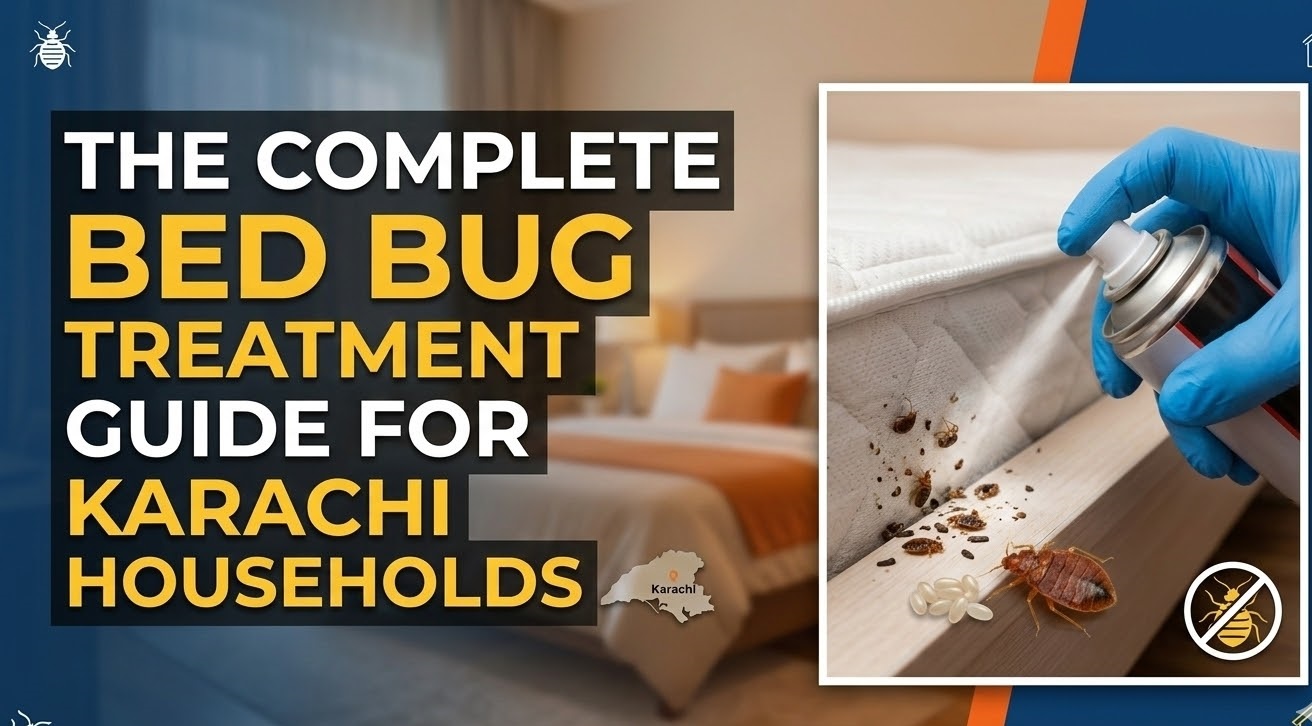
Bed bugs are one of the most distressing household problems a Karachi family can face. They are nearly invisible, remarkably resilient, rapidly reproductive, and spread silently through apartment buildings, shared transport, hotel rooms, and second-hand furniture. Once established inside a home, they do not simply go away — they multiply, spread, and make sleeping in your own bedroom a source of anxiety and discomfort every single night.
The good news is that bed bugs can be eliminated completely. But doing so requires the right knowledge, the right approach, and in the vast majority of cases, the right professional help. This guide is the most comprehensive resource available for Karachi homeowners dealing with a bed bug problem — covering identification, the full range of treatment options, what professional treatment actually involves, how to prepare your home, what to do after treatment, and how to prevent re-infestation in Karachi’s specific conditions.
Whether you have just noticed your first suspicious bites or are dealing with an infestation that has already spread across multiple rooms, this guide will give you a clear, practical path forward.
Part 1: Understanding Bed Bugs in Karachi’s Context
Why Karachi Has a Serious Bed Bug Problem
Karachi is not unique in having bed bugs — they exist in every country and every climate. But several of the city’s characteristics make infestations particularly common, fast-spreading, and difficult to control without professional intervention.
The city’s extraordinary population density — with millions of families living in close-packed multi-storey apartment buildings across areas like Gulshan-e-Iqbal, Nazimabad, North Karachi, Orangi, and Landhi — means that a single infested unit creates immediate risk for an entire floor and, over time, an entire building. Karachi’s hot, humid climate also provides near-perfect conditions for bed bug reproduction throughout the year, with no cold-weather die-off that would naturally slow the spread in temperate climates. Add in the city’s active second-hand furniture markets, high volumes of domestic and international travel through Jinnah International Airport, and the frequent movement of people between rented apartments, and the conditions for a sustained bed bug crisis are essentially permanent.
The Biology Behind the Problem
Understanding bed bug biology is essential to understanding why eliminating them is so difficult — and why the right treatment approach is non-negotiable.
Reproduction rate: A single female bed bug can lay 200 to 500 eggs in her lifetime. Eggs hatch in 6 to 10 days in Karachi’s warmth. A pair of bed bugs introduced into a home can produce a population of hundreds within 6 to 8 weeks.
Survival without feeding: Adult bed bugs can survive 6 to 12 months without a blood meal in cool conditions — and 2 to 3 months even in Karachi’s heat. This means vacating a property does not eliminate them.
Hiding behaviour: Bed bugs spend over 90% of their time hidden in crevices, seams, wall voids, and furniture joints — emerging only briefly to feed. This makes them extremely difficult to detect and reach with surface-only treatments.
Nocturnal feeding: They feed predominantly between 2am and 5am, biting sleeping occupants and retreating before dawn. Many Karachi residents remain unaware of an infestation for weeks because they attribute bites to mosquitoes.
Growing pesticide resistance: Bed bug populations worldwide — and in Pakistan — have developed significant resistance to many commonly available insecticides, particularly pyrethroids. This is a major reason why over-the-counter sprays frequently fail.
The Full Cost of an Untreated Infestation
Many Karachi homeowners delay treatment hoping the problem will resolve itself, or spend money on ineffective over-the-counter products. The real costs of allowing an infestation to continue include:
Health impacts: Chronic sleep deprivation, secondary skin infections from scratching bites, allergic reactions in sensitive individuals, and significant psychological stress including anxiety and insomnia that persists even after the infestation is resolved.
Property damage: Mattresses, sofas, wooden bed frames, and wallpaper that require replacement rather than treatment once an infestation has reached a severe stage.
Spread to neighbours: In Karachi’s apartment buildings, an untreated infestation is a direct threat to adjacent flats. This creates social and financial liability with neighbours and building management.
Escalating treatment costs: A small, localised infestation caught early might require one or two professional treatment sessions. A building-wide infestation that has been left for months requires far more extensive and expensive intervention.
Part 2: Confirming You Have Bed Bugs — Not Something Else
Before committing to a treatment programme, it is important to confirm that what you are dealing with is actually bed bugs. In Karachi, bed bug bites are frequently confused with mosquito bites, mite bites, heat rash, and other skin conditions. Misidentification leads to the wrong treatment — or no treatment at all — while the actual problem grows.
Definitive Signs of Bed Bugs
The presence of bites alone is not sufficient for a confident diagnosis — bites are too easily confused with other causes. Confirmation requires finding physical evidence of the insects themselves.
Faecal spots: Tiny black or very dark brown dots, roughly the size of a pen tip, on mattress seams, bed frame joints, skirting boards, behind headboards, and inside electrical socket covers. These spots smear when wiped with a damp cloth — distinguishing them from simple dirt. Finding these is the most reliable early indicator.
Live insects: Adults are 4 to 5mm long, flat, oval, and reddish-brown (darker and more swollen after feeding). Nymphs are 1 to 3mm and much paler — almost translucent when unfed. They move quickly when disturbed and immediately seek a dark crevice.
Shed exoskeletons: Bed bugs shed their outer skin (exoskeleton) five times during development. These pale, hollow husks are often found in the same harbourage spots as the insects and are frequently the first physical evidence discovered.
Bloodstains on bedding: Small reddish-brown smears on sheets or pillowcases — caused by crushing a fed bug during sleep, or by blood seeping from a bite wound.
Eggs: About 1mm long, white, and oval — the size and appearance of a small grain of rice. They are glued to surfaces in crevices and do not shake free easily. Very difficult to spot without a magnifying glass.
Musty sweetish odour: A heavy infestation produces a recognisable, musty, faintly sweet smell — described by many as similar to almonds or overripe fruit. This odour comes from the bugs’ scent glands and is a reliable sign of a well-established colony.
Where to Inspect in a Karachi Home
Bed bugs are creatures of habit. They harbour as close as possible to their food source — sleeping humans — and return to the same hiding spots repeatedly. In the typical Karachi flat, the highest-priority inspection zones are:
Mattress seams and handles — particularly the piping along the edges
Divan bases and box springs — the underside fabric and internal structure
Headboards — especially the back surface facing the wall, and any joints or routing holes
Bed frame joints and screw holes — anywhere wood meets wood
Behind electrical sockets and switch plates — a very common harbourage in Karachi flats
Behind loose wallpaper and wall cracks — particularly near the bed
Sofa seams and undersides — and the gap between back cushions and the main frame
Skirting boards — especially where the board does not sit flush against the wall
Inside bedside table drawers — and the runners on which the drawers slide
🔍 When to Call for a Professional Inspection: If you find faecal spots, shed skins, or live bugs in any of these locations, you have a confirmed infestation and should contact a professional immediately. If you have bites but cannot find physical evidence, a professional inspection using specialist techniques will identify whether bed bugs are present.
Part 3: Understanding Your Treatment Options
There is a wide spectrum of responses to a bed bug infestation — from things you can do yourself to full professional treatment programmes. Understanding the realistic effectiveness of each option is critical, because choosing the wrong one costs time and money while the infestation continues to grow.
DIY Approaches: What Works, What Doesn’t, and Why
DIY approaches are tempting — they are cheaper upfront, immediately available, and give a sense of action. But for most Karachi homeowners, they deliver limited results and frequently make the problem worse. Here is an honest assessment:
Bugs resistant to common pyrethroids; cannot reach deep harbourages; scatters bugs to new areas
Vacuuming
Low — supportive only
Removes surface bugs and eggs but misses deep harbourages; eggs glued to surfaces often not removed
High-heat washing & drying (60°C+)
Effective for fabrics
Only treats washable items — cannot treat furniture, walls, or floor cavities
Mattress encasements
Preventive / supplementary
Traps existing bugs but does not kill them; does not address infestation elsewhere in room
Diatomaceous earth (DE)
Moderate — slow
Works over days to weeks; must be applied correctly; ineffective in humid Karachi air if damp
Freezing small items
Effective for small objects
Requires sustained -18°C for 4+ days; not practical for furniture or rooms
Isopropyl alcohol sprays
Low
Contact kill only; no residual effect; highly flammable — fire hazard
The fundamental limitation of all DIY approaches is that they treat the surface, not the infestation. Bed bugs in a Karachi flat are not concentrated in one visible spot — they are distributed across dozens of harbourage sites throughout the room and, in more advanced cases, throughout the entire flat and into neighbouring units. No DIY method reaches all of these sites reliably.
⚠️ The Hidden Danger of DIY Sprays in Karachi Apartments: Using insecticide sprays without professional knowledge does not kill hidden bed bugs. It disperses them. Bugs flee treated areas and move deeper into wall voids, adjacent rooms, and neighbouring flats — making a localised problem into a building-wide one. If you have already used a spray, tell your professional fumigator immediately.
Professional Treatment Methods Explained
Professional bed bug control uses methods and formulations that are not available to consumers, applied by trained technicians who understand bed bug behaviour, harbourage selection, and the specific challenges of Karachi’s apartment environments.
This is the most widely used professional treatment method in Karachi and is the core approach used by reputable fumigation companies.
Professional-grade residual insecticides — typically including combinations of neonicotinoids, pyrethroids, carbamates, or insect growth regulators — are applied to all harbourage sites throughout the affected area. Unlike consumer sprays, professional formulations are selected to address local resistance patterns, applied in correct concentrations, and reach harbourages that DIY products cannot.
Critically, professional treatment also includes dust formulations (such as diatomaceous earth or deltamethrin dust) applied into wall voids, electrical conduit channels, and behind skirting boards — the deep harbourage sites that liquid sprays cannot penetrate. This combined approach is far more effective than any single application method.
Number of treatments required: Typically 2 to 3 sessions, spaced 10 to 14 days apart. This timing is essential — it kills the first generation of adults and nymphs, then returns to kill newly hatched nymphs before they reach reproductive maturity, breaking the breeding cycle.
When it works best: Light to moderate infestations, early-stage cases, and as part of a building-wide treatment programme in apartment blocks
Typical timeline to resolution: 3 to 6 weeks with follow-up visits
2. Heat Treatment
Heat treatment raises the temperature of an entire room or property to 48 to 56 degrees Celsius — the thermal death point of bed bugs at all life stages, including eggs — and maintains that temperature for several hours. It is one of the most effective single-treatment methods available.
Heat penetrates into the deep harbourage sites that insecticides cannot always reach — inside mattresses, sofa foam, wall voids, and wooden furniture. There is no chemical residue, no need to launder all textiles, and no retreat period before re-occupation.
Effectiveness: Very high — a single well-executed heat treatment can achieve complete elimination
Limitation in Karachi: Equipment availability and cost make this a premium option; not all pest control companies in Karachi offer professional-grade heat treatment. Some heat-sensitive items (certain electronics, vinyl records, wax candles) must be removed before treatment.
Best for: Severe infestations, cases where chemical treatments have failed, families who want a chemical-free option, and hospitality or commercial properties
3. Steam Treatment
Professional steam treatment uses dry steam (above 120 degrees Celsius at the nozzle) applied directly to mattress seams, sofa crevices, carpet edges, and baseboards. Like heat treatment, steam kills at all life stages on contact, including eggs.
Steam is highly effective on surfaces it directly contacts, but does not penetrate deep into wall voids or furniture interiors. For this reason, professional steam treatment is most effective when combined with residual chemical treatment — the steam addresses surface and accessible harbourages, while residual insecticides handle deeper sites.
4. Integrated Pest Management (IPM) — The Gold Standard
The most effective professional approach is not any single method in isolation — it is an Integrated Pest Management programme that combines the strengths of multiple methods, tailored to the specific infestation, property layout, and occupant circumstances. The best bed bug control specialists in Karachi do not offer a one-size-fits-all treatment — they assess the infestation, identify all harbourage sites, select the combination of methods best suited to the situation, and deliver a structured multi-visit programme with built-in follow-up monitoring.
Part 4: How to Prepare Your Karachi Home for Professional Treatment
Professional treatment is significantly more effective when the property is properly prepared beforehand. Preparation removes obstacles that prevent technicians from accessing harbourage sites, reduces the number of items that may need post-treatment washing, and accelerates the overall timeline to resolution.
Your fumigation company will provide specific instructions, but the following is standard preparation for bed bug treatment in a Karachi home:
72 Hours Before Treatment
Wash all bedding, pillowcases, curtains, and clothing on the highest safe heat setting (at minimum 60°C) and dry on high heat for at least 30 minutes. Seal clean items in plastic bags immediately after drying.
Remove all personal items from floors, under beds, and inside wardrobes and drawers. Place in sealed plastic bags.
Dismantle bed frames if possible — this gives technicians direct access to all joints and crevices.
Pull furniture away from walls by at least 30cm to provide access to skirting boards and wall-floor junctions.
Remove contents from bedside tables and clear surfaces near the bed.
Vacuum thoroughly — mattresses, carpets, upholstery, skirting boards, and floor edges. Immediately seal and dispose of the vacuum bag or empty the cylinder outside the building.
Day of Treatment
All occupants — including infants, elderly family members, and pets — must vacate the property for the duration of treatment and for the period specified by your fumigator (typically 4 to 6 hours for chemical treatments).
Cover or remove food items, dishes, and cooking utensils from open surfaces in the kitchen.
Turn off all air conditioning units and ceiling fans. Close all windows.
Do not move items from treated rooms to untreated rooms on the day of treatment — this is one of the most common ways infestations spread during the treatment process.
⚠️ Critical Rule for Karachi Apartment Dwellers: Do not move any furniture or bags out of the flat during or after treatment. Moving items can spread bugs to the corridor, elevator, and neighbouring flats. Keep all treated items in their original positions until your fumigator advises otherwise.
After Treatment — Returning Home
Re-enter the property only after the period specified by your fumigation company.
Ventilate all rooms thoroughly before settling back in — open windows and run fans for at least 30 minutes.
Do NOT mop or wipe down treated surfaces for at least 10 to 14 days. The residual insecticide on these surfaces is essential for killing newly hatched nymphs that emerge after the initial treatment.
Launder and re-bag any remaining unwashed items before removing them from sealed bags.
Install bed bug interceptor traps under all bed and sofa legs — these will help you monitor for any surviving bugs between treatment visits.
Part 5: What to Expect During and After Treatment
Why Multiple Treatment Visits Are Essential
One of the most common mistakes Karachi homeowners make is expecting a single treatment to eliminate the problem entirely. Understanding why this is rarely sufficient — even with professional treatment — is important for managing expectations and ensuring you complete the full treatment programme.
The core issue is eggs. No insecticide currently available, regardless of how powerful, can reliably kill bed bug eggs. Eggs are protected by a hard shell that most chemical formulations cannot penetrate. Heat treatment at sufficient temperatures is the only method that effectively kills eggs — and even heat treatment requires careful execution to ensure all areas reach lethal temperature.
This means that after even a highly effective first treatment, the eggs already laid before treatment will hatch — typically over the 7 to 10 days following the session. The follow-up visit, timed 10 to 14 days after the first, is specifically designed to kill this newly hatched generation before it reaches reproductive maturity (which would reset the cycle). In more severe infestations, a third visit may be required.
The Treatment Timeline — What a Complete Programme Looks Like
Stage
What Happens
Week 1 — First Treatment
Full professional treatment of all affected areas. Residual insecticides applied to all harbourage sites including wall voids and electrical channels. Significant reduction in active bugs.
Days 7–14 — Post-Treatment Monitoring
Some biting activity may continue as eggs hatch. This is expected and does not mean treatment has failed. Monitor using interceptor traps.
Week 2 — Second Treatment
Follow-up treatment targeting newly hatched nymphs. Technician assesses effectiveness of first treatment and adjusts approach if needed.
Days 14–28 — Second Monitoring Period
Biting should have stopped or reduced significantly. Continue monitoring with traps.
Week 3–4 — Third Treatment (if required)
For severe or multi-room infestations, a third treatment may be needed. This is standard for heavy infestations or cases where bugs have spread across multiple units.
Week 6 — Final Assessment
Professional re-inspection to confirm elimination. Interceptor traps reviewed. Prevention recommendations provided.
Signs That Treatment Is Working
Reduction in live bugs seen: After the first treatment, significantly fewer or no live bugs should be visible.
Interceptor traps catching fewer or no bugs: Traps should show declining counts between visits.
Bites reducing: While some biting may continue for up to 2 weeks as hatching eggs emerge, it should decrease significantly.
No new faecal spots: No new dark spotting appearing on mattress seams or headboards.
Signs That Something May Be Wrong
Continued heavy biting 3+ weeks after first treatment: This may indicate that harbourage sites were missed, that re-infestation from a neighbouring flat is occurring, or that a resistant population requires a different treatment approach. Contact your fumigation company immediately.
Bugs appearing in new rooms: This suggests dispersal — possibly caused by moving treated items, or bugs migrating through wall voids from an untreated neighbouring unit. Notify your fumigator.
No reduction in trap counts after two visits: Indicates that the treatment plan needs to be reviewed and expanded.
Part 6: Bed Bug Treatment in Karachi Apartment Buildings — The Building-Wide Challenge
If you live in a Karachi apartment building — which the majority of urban residents do — your bed bug treatment cannot be considered in isolation. The building itself is the treatment unit, not your individual flat.
How Bugs Travel Between Flats
Bed bugs are not contained by the walls of your apartment. They travel through:
Gaps around plumbing pipes and electrical conduits passing through shared walls
The spaces behind skirting boards where they meet shared walls
Common corridors and elevator cars (via infested residents’ clothing or bags)
Shared laundry facilities
Visiting between units — an infested visitor’s jacket or bag left on your sofa
Research on bed bug spread in multi-unit buildings consistently shows that within 3 to 6 months of an untreated source unit, 50 to 80% of directly adjacent flats become infested. This means that even if your treatment is successful, you face almost certain re-infestation if neighbouring units are not treated simultaneously.
What You Should Do in a Shared Building
Notify your building management or landlord immediately. In most apartment buildings in Karachi, the management has both a practical interest and a responsibility to address building-wide pest issues.
Request that neighbouring units — particularly those directly above, below, and to the sides of your flat — be inspected as part of the treatment programme.
Work with a fumigation company that has experience treating multi-unit buildings and understands the need for coordinated, floor-by-floor treatment programmes. Comprehensive bed bug fumigation services in Karachi from a reputable provider will always include an assessment of spread risk to neighbouring units and a recommendation for building-wide treatment where required.
Seal gaps around pipes and electrical conduits on shared walls with caulk or expanding foam after treatment — this reduces the physical routes through which bugs can re-enter from neighbouring units.
Part 7: Long-Term Prevention in a Karachi Home
Eliminating an active infestation is only half the battle. Given Karachi’s conditions — the climate, the density, the active second-hand furniture market, and the volume of travel — re-infestation is a real and ongoing risk. These prevention measures should become permanent habits for any Karachi homeowner.
Physical Protection Measures
Mattress and box spring encasements: Purpose-made bed bug proof encasements seal your mattress completely. Any bugs remaining inside will eventually starve (they can live 6 to 12 months without feeding, so encasements should be left in place for at least one year). New bugs cannot establish a harbourage in the encased mattress. These are one of the most cost-effective protective measures available.
Interceptor traps: Plastic interceptor devices placed under the legs of beds and sofas create a physical trap — bugs climbing up or down are caught in the smooth-sided reservoir. Check traps weekly; finding a bug early is far better than discovering an established infestation.
Seal wall penetrations: Caulk or seal all gaps around pipes, cables, and conduits entering your flat through shared walls. This is especially important for the shared walls with immediately adjacent units.
Bed frame isolation: Where possible, keep beds pulled away from the wall. Do not allow bedding to drape onto the floor — this creates a direct bridge for bugs to climb onto the bed.
Behavioural Prevention
Inspect second-hand furniture before purchase: Never bring a used mattress, sofa, or wooden bed frame home without a thorough pre-purchase inspection using a torch and card. Lea Market, Sunday Bazaar, and online platforms like OLX are high-risk sources.
Travel hygiene: On returning from travel — whether domestic or international — leave your luggage outside or in a closed hallway before inspecting it. Wash all travel clothes immediately on a high heat cycle. Use luggage racks in hotels and never place your suitcase on the hotel bed.
Guest vigilance: Visitors returning from travel or from homes with unknown pest control history can introduce bugs via their belongings. Inspect seating and bedding used by overnight guests after their visit.
Regular self-inspections: Every 2 to 3 months, do a 10-minute inspection of your mattress seams, headboard, and nearby skirting boards. This is particularly important after any new furniture purchase, house guest visit, or period of travel.
Annual Professional Prevention
For families living in high-density areas of Karachi — particularly in apartment buildings where the risk of re-infestation from neighbouring units is ongoing — an annual professional prevention inspection is the single most cost-effective protective measure available. Early detection means a simple, inexpensive treatment. A full-blown infestation detected late means weeks of disruption and significant cost. The professional bed bug prevention services in Karachi offered by Unique Fumigation are specifically designed to catch problems before they become crises.
Part 8: Frequently Asked Questions from Karachi Homeowners
Can I stay at home during treatment?
No. All occupants — including children, elderly family members, and pets — must vacate the property during treatment and for the period specified by your fumigation company (typically 4 to 6 hours for chemical treatments). This is a safety requirement, not optional.
Will I need to throw away my mattress?
In the majority of cases, no. Professional treatment can successfully treat infested mattresses in place. Throwing away a mattress is often counterproductive — moving an infested mattress through the building spreads bugs to the corridor and neighbouring flats, and does not resolve the infestation since bugs are present throughout the room, not just in the mattress. Your fumigation company will advise whether any items need to be discarded.
How long will the treatment smell last?
Professional insecticide formulations have a mild odour that typically dissipates within a few hours of re-entry and ventilation. Most families find the smell is negligible or undetectable by the following morning. If you or a family member have respiratory sensitivities, inform your fumigation company in advance — they can advise on appropriate ventilation and re-entry timing.
What if my neighbour refuses to treat their flat?
This is a genuine and common challenge in Karachi apartment buildings. Your building management has a role to play — they can communicate the shared risk to all residents and in some cases require treatment as a building policy. Your fumigation company can provide a formal report documenting the infestation and the risk to neighbouring units, which building management can use to take action. In the meantime, sealing wall penetrations and using interceptor traps are the best physical defences against bugs entering from an untreated neighbouring flat.
How do I know if the treatment has worked?
Effective treatment results in progressively fewer bites, declining interceptor trap counts between visits, and no new faecal spots appearing. A final professional re-inspection 4 to 6 weeks after the last treatment session is the most reliable way to confirm complete elimination. Many reputable fumigation companies offer a guarantee period during which they will return for additional treatment at no charge if activity continues.
Is professional treatment safe for children and elderly family members?
Professional-grade insecticides used by reputable companies are safe for occupants once dry — typically 4 to 6 hours after application. The products are registered for residential use. Sensitive individuals — infants, elderly people with respiratory conditions, or anyone with chemical sensitivities — should remain out of the property for a longer period as a precaution. Always inform your fumigation company of any health sensitivities in advance so they can provide specific guidance.
Can bed bugs spread through building drainage or plumbing?
No. Bed bugs cannot survive submersion in water and do not travel through plumbing systems. Their primary routes of travel between apartments are dry: gaps in shared walls around pipes and conduits, shared corridors, and on people’s clothing or belongings.
Part 9: How to Choose the Right Bed Bug Treatment Company in Karachi
Not all pest control companies operating in Karachi are equally competent, honest, or equipped to handle bed bug infestations effectively. Here is what to look for when choosing a provider:
Specific bed bug experience: Ask directly whether the company regularly treats bed bug infestations and what their approach is. A company that treats bed bugs the same way it treats cockroaches or mosquitoes does not have specialised expertise.
A written treatment plan: Reputable companies provide a written plan specifying what will be treated, what products will be used, how many visits are included, and what the follow-up schedule is. Avoid any company that offers a single-visit fix with no follow-up.
Multi-visit programme as standard: As explained above, a single treatment is rarely sufficient. Any company offering a guaranteed single-session fix for a confirmed infestation should be approached with caution.
Willingness to assess the building: A good company will ask about the building layout and neighbouring units, not just treat the reported flat in isolation.
Clear communication about preparation and re-entry: A professional company provides clear, specific preparation instructions and post-treatment guidance — not just ‘vacate for a few hours’.
A guarantee or warranty: Look for a company that stands behind its work with a defined guarantee period, during which additional treatments are provided if activity continues.
Ready to Eliminate Bed Bugs from Your Karachi Home — For Good?
You now have the most complete understanding of bed bug treatment available to any Karachi homeowner. The single most important decision you can make — whether your infestation is just beginning or has already spread — is to get professional eyes on the problem as soon as possible.
Every day of delay means more eggs laid, more rooms potentially affected, and greater risk to your neighbours. Early professional intervention is not just the most effective approach — it is also the least disruptive and least expensive one.
📌 Book Your FREE Bed Bug Inspection with Unique Fumigation Karachi’s specialist bed bug treatment experts. We serve DHA, Clifton, Gulshan-e-Iqbal, Nazimabad, North Karachi, Orangi, Landhi, Korangi, Saddar, and all surrounding areas. Fast response | Professional-grade treatment | Multi-visit programmes Building-wide solutions | Follow-up monitoring | Guaranteed results
Whether you need a first-time professional inspection, a complete treatment programme, or an annual prevention check, Unique Fumigation’s specialist team delivers comprehensive bed bug control across all of Karachi — using proven, safe, and effective methods tailored to your home and building.
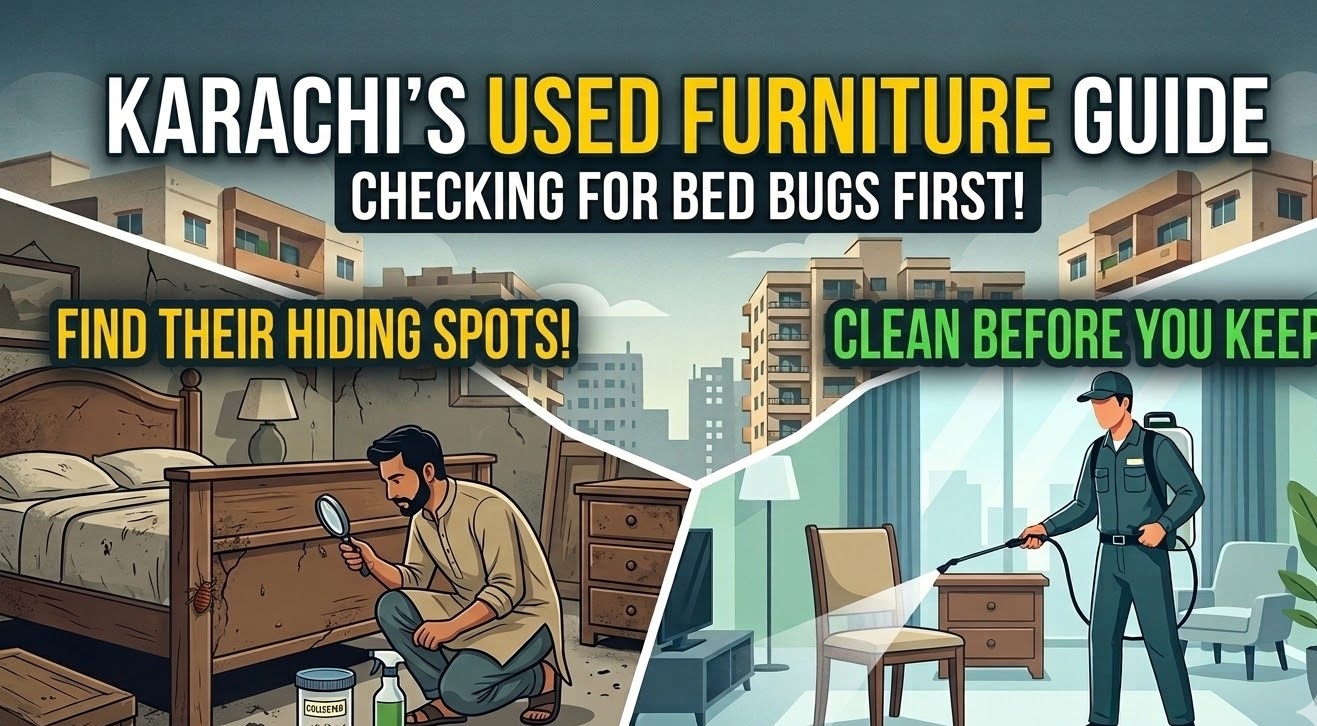
Karachi has one of Pakistan’s most active second-hand furniture markets. From the sprawling stalls of Lea Market and Sunday Bazaar in Saddar, to Facebook Marketplace listings and roadside dealers in Orangi, Landhi, and Korangi, thousands of families buy used sofas, beds, almirahs, and wooden furniture every single day. It’s economical, practical, and in a city where furnishing a home is expensive — completely understandable.
But there is a hidden danger lurking in those attractive bargains: bed bugs.
Second-hand furniture is the number one way bed bug infestations begin in Karachi homes. A single infested sofa or mattress brought in from outside can unleash hundreds of insects into your flat within weeks — spreading to bedrooms, living areas, and eventually to neighbouring apartments in your building.
The good news? With the right knowledge and a few minutes of careful inspection before you buy, you can protect your home entirely. This guide will walk you through exactly what to look for, where to look, how to safely bring second-hand furniture into your Karachi home, and what to do if you suspect you’ve already brought bed bugs in.
Why Second-Hand Furniture from Karachi Markets Is a High-Risk Source
Not all second-hand furniture carries the same risk. But Karachi’s specific conditions make locally sourced used furniture particularly likely to harbour bed bugs. Here is why:
The Scale of Karachi’s Used Furniture Trade
Karachi’s second-hand furniture markets are enormous. Lea Market in Saddar is one of the largest in South Asia, with hundreds of dealers trading furniture that has passed through multiple homes, storage facilities, and transport vehicles before reaching you. The supply chain is long, complex, and completely untested for pest contamination.
Online platforms have expanded this market dramatically. Furniture sold on OLX Pakistan, Facebook Marketplace, and WhatsApp groups changes hands rapidly, with no inspection standards and no pest control requirements at any point in the chain.
Karachi’s Climate Keeps Bed Bugs Alive in Storage
In colder climates, bed bugs in abandoned or stored furniture may die off during winter months. In Karachi, this simply does not happen. With year-round temperatures between 20 and 38 degrees Celsius, bed bugs can survive indefinitely in furniture sitting in a godown, on a market stall, or in a storage yard. A sofa that has been sitting in a Saddar warehouse for six months is just as likely to be infested as one freshly removed from a home.
High Population Density Means More Infested Sources
When furniture leaves a Karachi apartment building — whether due to a family relocating, a tenant vacating, or a landlord clearing out a unit — there is a meaningful chance it comes from a building where bed bugs are already present. Given how widely bed bugs have spread across Karachi’s apartment stock, the pool of potentially infested second-hand furniture in the city is very large.
Most Sellers Are Unaware of the Problem
Bed bugs are nocturnal, expert hiders, and easy to miss in daylight. Many sellers genuinely do not know their furniture is infested — particularly if the infestation is in its early stages. This is not dishonesty; it is simply the nature of these insects. You cannot rely on a seller’s word that furniture is clean.
What You Are Actually Looking For: A Quick Bed Bug Primer
Before you can inspect furniture properly, you need to know what bed bugs and their signs look like. Many people have never seen one, and confuse them with other insects.
The Insects Themselves
Adult bed bugs are roughly the size and shape of an apple seed — 4 to 5 millimetres long, flat, and oval-shaped. Before feeding they are pale tan or straw-coloured. After a blood meal they become dark reddish-brown and slightly swollen. Nymphs (young bed bugs) are smaller — 1 to 3 mm — and paler, making them very hard to spot with the naked eye.
The Evidence They Leave Behind
Even if you do not spot a live bug, the signs they leave are very distinctive:
Dark faecal spots: Tiny black or dark brown dots, roughly the size of a pen tip, often in clusters. These are digested blood and will smear if wiped with a damp cloth. Look for them on seams, joints, in crevices, and on any rough or porous surface.
Shed skins (exuviae): As bed bugs grow they shed their outer skin five times. These pale, translucent husks are hollow and papery, and often found in the same harbourage spots as the insects themselves.
Bloodstains: Small reddish or rust-coloured smears on fabric surfaces — the result of a bug being crushed after feeding, or of blood that has oozed from a bite wound.
Eggs and egg casings: Bed bug eggs are tiny (about 1 mm), white, and oval-shaped, resembling a grain of salt. They are laid in clusters in hidden spots and glued to surfaces, so they do not shake off easily.
A musty, sweetish odour: A well-established infestation produces a recognisable smell — often described as musty almonds or coriander. If second-hand furniture has an unexplained sweetish, stale odour, treat this as a warning sign.
You are unlikely to find all of these signs together. Finding even one — particularly faecal spots or shed skins — is sufficient reason to decline the purchase or take protective measures before bringing the furniture home.
Your Step-by-Step Inspection Guide for Second-Hand Furniture
Here is a practical, room-by-room approach to inspecting used furniture before you buy or accept delivery. Always conduct this inspection in bright daylight or use a strong torch — bed bugs avoid light and hide in the darkest recesses.
🔍 What you will need for a proper inspection: • A bright torch or phone flashlight • A credit card or flat spatula to probe seams • A white sheet of paper or cloth to catch any insects you dislodge • A magnifying glass (optional but helpful for eggs and nymphs) • Disposable gloves
How to Inspect Sofas and Upholstered Chairs
Sofas and armchairs are the highest-risk category of second-hand furniture. Their many seams, tufts, zippers, and wooden frames create dozens of ideal hiding spots.
Remove all cushions and inspect every seam of both the cushions and the main sofa body — especially where fabric meets the wooden frame. Run your finger or a card along the seam to dislodge anything hidden.
Flip the sofa upside down and inspect the underside, including the dust cloth (the fabric on the bottom), the legs, and any exposed wood. Faecal spots on bare wood are especially easy to spot.
Check the area where the back of the sofa meets the seat — this deep crevice is a favourite hiding spot. Use your torch and probe with a card.
Inspect the wooden frame wherever it is exposed — particularly joints, cracks, and any rough or unfinished wood surfaces where eggs can be glued.
If the sofa has a zipper, open it and inspect the inside fabric and foam closely. Check the zipper teeth themselves for faecal spots.
How to Inspect Mattresses and Bed Frames
Mattresses are bed bugs’ preferred habitat — the insects evolved specifically to live near sleeping humans. A mattress inspection should be thorough.
Inspect all four sides of the mattress, paying close attention to the stitched seams at the edges. Use a card to probe the seam and look for faecal spots, shed skins, or moving insects.
Check both the top and bottom surfaces, including the handles and any ventilation holes or eyelets.
Inspect the box spring or divan base separately. Remove the dust cloth if possible and inspect the inside — box springs are one of the most common bed bug harbourages and are frequently missed.
For wooden bed frames, inspect every joint, crack, screw hole, and groove. Run a card through any slotted areas. Check the headboard on both sides — headboards are extremely common harbourage spots in Karachi apartments.
Inspect the underside of the bed frame, particularly where horizontal slats rest on the frame, as these contact points create perfect crevices.
How to Inspect Wooden Furniture (Almirahs, Cabinets, Wardrobes)
Wooden furniture is lower risk than upholstered pieces but should still be inspected, particularly older pieces with joints, cracks, and rough interior surfaces.
Open all drawers and remove them completely. Inspect the inside of the drawer, the drawer slides or runners, and the cavity left behind when the drawer is removed.
Check all interior corners and joints — especially where wood panels meet at 90 degrees. Faecal spotting in these corners is a clear sign.
Inspect the back panel of the piece, particularly if it is made of thin hardboard. Check both sides if possible.
Look inside any hollow legs or base structures.
How to Inspect Dining Chairs and Wooden Chairs
Dining chairs are frequently overlooked. Check the underside of seats, all joints between legs and seat frame, and any upholstered padding on the seat or back.
Second-Hand Furniture Risk Level at a Glance
Not all second-hand items carry equal risk. Use this quick reference guide before making a purchase:
Furniture Type
Risk Level & Key Inspection Points
Mattress
VERY HIGH — Inspect all seams, handles, and both surfaces. Consider declining altogether.
Sofa / Upholstered Chair
VERY HIGH — Check all seams, underneath, cushion seams, and frame joints.
Divan / Box Spring
VERY HIGH — Often overlooked. Remove dust cloth and inspect inside thoroughly.
Wooden Bed Frame / Headboard
HIGH — Check all joints, cracks, screw holes, and headboard back.
Almirah / Wardrobe
MEDIUM — Focus on drawer runners, interior corners, and back panel.
Dining Chair (upholstered)
MEDIUM — Check seat seams, underside, and all leg joints.
Solid Wood Cabinet / Table
LOW-MEDIUM — Check cracks, joints, and underside.
Metal Furniture
LOW — Still check seams and any hollow sections, but lower risk.
Safe Practices: How to Bring Second-Hand Furniture Home Without Bringing Bed Bugs
Even if your inspection does not find obvious signs of bed bugs, the inspection itself is not 100% foolproof — especially for early-stage infestations where egg clusters may be present but hard to spot. These additional precautions provide a critical second layer of defence.
Do the Inspection Before Loading
Always inspect furniture at the seller’s location — not after it has been delivered to your home. Once infested furniture enters your flat, the insects can disperse within minutes. Inspect, decide, and only then allow the piece to be loaded.
Transport Carefully
If you decide to proceed with a piece you are not 100% certain about, transport it in a sealed plastic sheet or large plastic bag tied at the top. This prevents any insects from dropping off during transport and infesting your vehicle or building entrance.
Do Not Bring It Upstairs Immediately
If possible, leave the furniture in an outdoor area — a ground-floor veranda, car porch, or outside space — for at least 24 hours before bringing it inside. This allows you to conduct a more careful re-inspection in natural light.
Treat Before Bringing Inside
For high-risk items like mattresses and sofas, consider having them professionally treated before they enter your home. A reputable bed bug treatment service in Karachi can treat the item with appropriate insecticides or heat before it crosses your threshold — eliminating any risk entirely.
Use Mattress Encasements
If you are buying a second-hand mattress, invest in a purpose-made bed bug proof mattress encasement. These zippered covers trap any surviving bugs inside (where they will eventually die) and prevent new bugs from entering. Combined with a thorough inspection, this is a reliable safety net.
Monitor for 4 to 6 Weeks
After introducing any second-hand furniture, place bed bug interceptor traps under the legs of beds and sofas for at least four to six weeks. These small plastic traps catch any bugs attempting to climb up to a sleeping host and will alert you to a problem long before bites appear.
Already Brought the Furniture Home? Here Is What to Do Right Now
If you have recently purchased second-hand furniture and are now worried about bed bugs — or if you have already started noticing bites or other signs — do not panic. But do act immediately.
⚠️ The single most important rule: Do NOT move the furniture to another room. Moving suspected items spreads the infestation. Keep the piece exactly where it is until you have assessed the situation and spoken to a professional.
Step 1: Conduct an Immediate Inspection
Using the techniques described above, inspect the piece thoroughly right now. Look for live bugs, faecal spots, shed skins, and eggs. Use a bright torch and examine all seams, joints, and crevices.
Step 2: Check the Surrounding Area
Inspect the floor, skirting boards, and any nearby furniture in the same room. If the piece has been in your home for more than a few days, bugs may already have dispersed. Check your mattress seams, the back of your headboard, and behind any loose wallpaper or electrical sockets near where the furniture was placed.
Step 3: Do Not Use DIY Sprays
Resist the temptation to immediately spray with a household insecticide. Over-the-counter products rarely penetrate the deep harbourage spots where bugs hide, and can cause the insects to scatter — making the infestation much harder to treat and potentially spreading it to additional rooms.
Step 4: Call a Professional Immediately
This is the most critical step. Professional bed bug control in Karachi uses integrated treatment methods — residual insecticides, dust formulations for wall voids, and follow-up visits timed to kill newly hatched eggs — that are simply not achievable with DIY approaches. The sooner you call, the smaller the infestation, and the less costly and disruptive the treatment.
Catching a bed bug problem at the point of introduction — when it is confined to the new piece of furniture and its immediate surroundings — is the best possible scenario for treatment. A professional can resolve this quickly and completely. Waiting even two to three weeks allows the population to grow and spread significantly.
Specific Karachi Markets: What You Need to Know
Different second-hand furniture sources in Karachi carry different levels of risk. Here is a realistic assessment:
Lea Market, Saddar
One of Karachi’s oldest and largest second-hand markets, Lea Market is a high-risk source. Furniture here passes through many hands and storage facilities, with no pest control at any stage. Always conduct a thorough inspection and treat with extra caution. The volume of furniture traded here means infested pieces are common.
Sunday Bazaar, Clifton and Defence
The weekly Sunday Bazaar in Clifton Bridge area and similar markets in Defence attract sellers from across Karachi. Furniture sold here often comes from residential areas — including from buildings and apartments that may already have bed bug problems. The source is mixed and unpredictable; always inspect carefully.
OLX Pakistan and Facebook Marketplace
Online platforms carry additional challenges: you often cannot inspect the piece properly before agreeing to buy, and delivery means the furniture arrives directly at your home without the opportunity for a pre-entry inspection. Always insist on inspecting in person before any transaction is finalised, and never accept a piece on trust or based solely on photos.
Furniture Dealers in Orangi, Landhi, and Korangi
Dealers in these high-density residential areas source furniture from the immediate local community — which, given Karachi’s bed bug situation, carries real risk. The same precautions apply. The lower prices at these markets can be tempting, but the cost of a bed bug infestation — treatment, potential furniture disposal, time, and stress — far outweighs any initial savings.
Rental Apartments with Furnished Inclusions
A frequently overlooked source: furnished rental apartments in Karachi. If you are moving into a furnished flat — even in a relatively upmarket area like DHA, Bath Island, or Gulshan — inspect all included mattresses, sofas, and beds before sleeping on or near them. Landlords rarely sanitise furniture between tenants.
When to Skip the Second-Hand Option Entirely
There are some second-hand furniture purchases that simply are not worth the risk, no matter how attractive the price. Consider purchasing new — or at minimum, having a professional inspect and treat before use — in these situations:
Any mattress of unknown origin: Mattresses are the single highest-risk item. Unless you can verify the full history of a mattress and inspect it thoroughly with no signs found, buying new is the safer choice. The price difference is meaningless if you end up with a building-wide infestation.
Furniture from an eviction or abandonment: If furniture is being sold cheaply because a tenant was evicted or a building unit was abandoned, treat it as high risk. Distressed housing situations are disproportionately associated with pest infestations.
Very old upholstered pieces: Antique or very old sofas and chairs with deteriorating seams, fabric, or stuffing are extremely difficult to inspect thoroughly and equally difficult to treat if infested.
Any piece with visible faecal spots, shed skins, or live bugs: This seems obvious, but many buyers convince themselves that the spots are ‘just dirt’ or ‘old staining.’ They are not. Walk away.
Furniture from a market with poor storage conditions: Pieces stored in damp, dark, crowded godowns with other potentially infested items are high-risk by default.
Quick Reference: Your Pre-Purchase Bed Bug Checklist
✅ Bring a torch — inspect in bright light✅ Check all seams of upholstered pieces with a card✅ Flip and inspect the underside✅ Remove drawers and inspect drawer runners and cavities✅ Look for dark spots, shed skins, and eggs — not just live bugs✅ Smell the piece — a musty sweetish odour is a warning sign✅ Inspect the back of wooden headboards and bed frames✅ Do the inspection at the seller’s location, not at home✅ Transport in sealed plastic if you have any doubts✅ Monitor with interceptor traps for 4-6 weeks after purchase❌ Do not rely solely on the seller’s assurances❌ Do not inspect in low light or rush the process❌ Do not bring furniture upstairs before inspecting❌ Do not ignore small dark spots or unusual odours
Already Worried You May Have Brought Bed Bugs Home?
If you have recently bought second-hand furniture and are concerned — or if you are already seeing bites, spots, or signs you cannot explain — do not wait. The difference between catching a bed bug problem early and dealing with a full building-wide infestation can be as little as a few days.
Unique Fumigation’s specialist team offers expert bed bug inspection and treatment across all of Karachi — from DHA and Clifton to Gulshan-e-Iqbal, Nazimabad, North Karachi, Landhi, and beyond. We use proven, professional-grade treatment methods that eliminate infestations completely — not just temporarily.
Our free inspection service is designed for exactly this situation: you’ve brought in new furniture, you’re not sure if there’s a problem, and you want expert eyes to give you a definitive answer — with zero obligation.
📌 Book Your FREE Bed Bug Inspection with Unique Fumigation Karachi’s trusted pest control specialists. Fast response | Professional treatment | Building-wide solutions Serving all areas of Karachi
If you’ve been waking up with itchy, red welts on your arms, neck, or legs — and you can’t figure out where they’re coming from — there’s a very real chance your apartment building has a bed bug problem. Across Karachi, from the high-rise towers of Clifton and DHA to the densely packed apartment blocks of Nazimabad, Gulshan-e-Iqbal, and North Karachi, bed bug infestations are quietly spreading from one unit to another.
This isn’t just an inconvenience. Bed bugs cause sleep deprivation, skin infections, psychological stress, and can destroy the value of your furniture and belongings. The worst part? They spread silently — and by the time most families notice a full infestation, the problem has already traveled to neighbouring flats.
In this guide, we’ll break down exactly why bed bugs are such a growing problem in Karachi’s apartment buildings, how they spread, and — most importantly — what you can do right now to protect your home and family.
Why Karachi’s Apartment Buildings Are a Perfect Breeding Ground for Bed Bugs
Bed bugs thrive in environments where people live in close proximity, where travel is frequent, and where second-hand goods are commonly traded. Karachi, unfortunately, checks every single one of these boxes.
1. High-Density Living
Karachi is one of the most densely populated cities in the world, with millions of families living in multi-storey apartment buildings. When units share walls, floors, ceilings, plumbing chases, and electrical conduits, bed bugs have a ready-made highway to travel between neighbours — completely invisibly.
A single infested flat in a building of 20 units can spread bed bugs to 5 or 6 neighbouring apartments within a matter of weeks.
2. Karachi’s Hot and Humid Climate
Bed bugs reproduce fastest in warm, humid climates — precisely the conditions that define Karachi for most of the year. In temperatures between 21°C and 32°C (which is Karachi’s average range), a single female bed bug can lay up to 500 eggs in her lifetime, with eggs hatching in just 6 to 10 days. The city’s long summers and mild winters mean there is virtually no cold-weather die-off to slow the spread naturally.
3. High Turnover of Residents and Furniture
Karachi has enormous population movement — families relocating for work, students moving into rented accommodation, and frequent turnover in rental apartments. Each move is an opportunity for bed bugs to hitch a ride in luggage, mattresses, sofas, or even clothing. Second-hand furniture markets in areas like Lea Market and Saddar are particularly high-risk sources of infested items.
4. International Travel and Arrivals
Karachi is Pakistan’s busiest port city and home to Jinnah International Airport. Travellers returning from infested hotels abroad — or even from other Pakistani cities — regularly bring bed bugs home in their luggage without realizing it. Once inside an apartment building, the bugs quickly establish a local population.
How Bed Bugs Spread Through Apartment Buildings: The Mechanics
Understanding how bed bugs move is the first step to stopping them. These insects cannot fly or jump — but they are surprisingly good travellers.
Wall voids and conduits: Bed bugs crawl through gaps around pipes, electrical wires, and conduit openings in shared walls — moving from one flat to the next without ever entering a corridor.
Shared hallways and elevators: Bugs on an infested resident’s clothing or bags can be dropped in common areas and picked up by neighbours.
Second-hand furniture: Buying a used sofa, mattress, or wooden bed frame is one of the most common ways infestations start in a new apartment.
Luggage and travel: Bed bugs are notorious for hiding in the seams and pockets of suitcases. Placing hotel-used luggage on your bed at home is enough to start an infestation.
Visitors and guests: An infested visitor’s jacket or bag left on your furniture can introduce bugs into your home.
Laundry rooms: Shared laundry facilities in apartment buildings are a frequently overlooked transmission point — infested clothing can transfer bugs to others’ laundry.
The key takeaway here is that in a Karachi apartment building, your infestation is rarely just your problem. And conversely, your neighbour’s problem can quickly become yours if the building is not treated comprehensively.
Warning Signs: How to Know If Your Apartment Has Bed Bugs
Many Karachi residents mistake bed bug bites for mosquito bites or heat rash — especially during summer. Here are the definitive signs to look for:
Bite patterns: Bed bug bites typically appear in clusters or rows of 3 to 5 bites, often on arms, shoulders, neck, and legs. They are usually more intensely itchy than mosquito bites and appear on exposed skin.
Blood stains on sheets: Small reddish-brown spots on your bedsheets or pillowcases are a classic sign — these are caused by crushing a recently fed bug during sleep.
Dark spots on mattresses or walls: Tiny dark brown or black spots (bed bug excrement) on mattress seams, headboards, or behind electrical sockets are a strong indicator.
Shed skins: Bed bugs shed their exoskeletons 5 times as they grow. Finding pale, translucent husks in mattress seams or furniture joints is a clear sign.
A musty, sweet odour: A heavy infestation produces a distinctive, sweetish musty smell — often compared to coriander or almonds.
Live bugs: Adult bed bugs are apple-seed sized, reddish-brown, and flat. Check the seams of mattresses, the backs of headboards, behind picture frames, and inside electrical sockets.
⚠️ Important: Finding even ONE bed bug in your Karachi apartment should be treated as an emergency. Bed bugs do not live alone. Where there is one, there are dozens — or hundreds — hidden nearby. Do not wait for the problem to grow before taking action.
The Most Affected Areas in Karachi
While bed bugs can infest any home regardless of cleanliness or income level, certain areas and building types in Karachi see disproportionately high rates of infestation:
DHA and Clifton high-rises: Frequent international travel, furnished rental apartments, and high resident turnover all contribute to bed bug risk in premium areas.
Gulshan-e-Iqbal and Gulistan-e-Johar: Dense apartment blocks with shared walls and active second-hand furniture trading make these areas particularly vulnerable.
North Karachi and Nazimabad: Multi-family buildings with multiple units per floor and limited pest control history are hotspots.
Saddar and Lyari: Older building stock with plentiful wall voids and high population density create ideal conditions for bed bug spread.
Student accommodation near universities: High turnover, second-hand furniture, and shared spaces make student apartments in areas near NED, Karachi University, and SZABIST particularly high risk.
What NOT to Do When You Find Bed Bugs
Many Karachi homeowners make the situation significantly worse by reacting the wrong way. Here is what you must avoid:
Do NOT throw away your mattress immediately: This is the single most common mistake. Moving an infested mattress through the building spreads bugs to corridors, elevators, and neighbouring flats. And it does not solve the problem — bugs live throughout the room, not just in the mattress.
Do NOT use random spray pesticides from pharmacies: Over-the-counter insecticides rarely reach bugs hiding deep inside furniture, wall voids, or electrical outlets. Worse, they can drive bugs deeper into hiding or cause them to scatter to new areas — including neighbouring units.
Do NOT sleep in another room: Bugs will simply follow you. Worse, this can spread the infestation to additional rooms and make treatment much more complex and expensive.
Do NOT keep the infestation to yourself: If you live in an apartment building, you have an ethical and practical obligation to inform your building management. An untreated neighbouring unit will simply re-infest your flat even after successful treatment of your own unit.
How to Actually Stop Bed Bugs: A Step-by-Step Approach for Karachi Apartments
Step 1: Confirm the Infestation
Before taking any action, confirm that what you are dealing with is actually bed bugs and not mites, fleas, or another insect. Use a torch to inspect the seams of your mattress, behind your headboard, inside bedside table drawers, and behind loose wallpaper or electrical socket covers.
Step 2: Alert Your Building Management
Notify your building management or landlord immediately. In a multi-unit building, successful treatment requires a coordinated effort — treating only your unit while neighbouring units remain infested is a recipe for repeated re-infestation.
Step 3: Prepare the Area for Professional Treatment
Before professional fumigators arrive, you should:
Wash all bedding, curtains, and clothing on the highest safe heat setting and dry on high heat for at least 30 minutes
Vacuum all surfaces — mattresses, carpets, baseboards, and furniture — and immediately seal and dispose of the vacuum bag outside your building
Clear clutter from floors and under beds to give treatment access to all areas
Do NOT move furniture or bags out of the treated rooms during or after treatment
Step 4: Engage Professional Bed Bug Control
This is the most critical step. DIY treatments almost never fully eliminate a bed bug infestation in a Karachi apartment — the bugs are too well hidden, reproduce too quickly, and are increasingly resistant to common over-the-counter insecticides. You need professional bed bug control services in Karachi that use integrated pest management techniques, including heat treatment, residual insecticide application, and follow-up inspections.
A qualified fumigation company will treat not just the obvious areas but also all the hidden harbourage points — inside wall voids, behind electrical fittings, under carpet edges, and inside furniture joints — that DIY treatments completely miss.
Step 5: Follow Up and Monitor
A single treatment session is rarely sufficient for a heavy infestation. Professional treatment plans typically involve 2 to 3 visits spaced 10 to 14 days apart — timed to kill newly hatched eggs before they reach reproductive maturity. After treatment, install bed bug interceptor traps under bed legs to monitor for any surviving bugs.
Preventing Future Bed Bug Infestations in Your Karachi Home
Once your home has been successfully treated, prevention becomes the priority. Here is how to keep bed bugs from returning:
Inspect all second-hand furniture before bringing it home: Use a torch and check all seams, joints, and hollow sections. If in doubt, leave it out.
Use luggage racks when travelling: Never place your suitcase on a hotel bed. On returning home, inspect your luggage outside before bringing it in, and wash travel clothes immediately.
Encase your mattress and box spring: Purpose-made bed bug proof mattress encasements seal bugs inside (starving existing ones) and prevent new ones from hiding in your mattress.
Seal gaps in walls and around pipes: Caulk gaps around pipes, electrical conduits, and baseboards where they meet shared walls to block the key travel routes bugs use between apartments.
Conduct regular inspections: Check your mattress seams and headboard area every few months — especially after having guests or returning from travel.
Book annual preventive inspections: For apartment buildings in high-risk areas of Karachi, an annual professional inspection is the single most cost-effective way to catch a problem early before it becomes a building-wide crisis.
Why Whole-Building Treatment Is Essential in Karachi’s Apartment Blocks
This point deserves special emphasis. In Karachi’s typical apartment building layout — with multiple units per floor, shared walls, and shared plumbing and electrical runs — treating a single unit is almost always insufficient.
Studies of bed bug spread in multi-unit buildings consistently show that within 6 months of an untreated source unit, 60 to 80% of directly adjacent apartments become infested. This means that if you successfully treat your flat but your immediate neighbours do not, you will almost certainly be re-infested within weeks.
This is why working with a bed bug extermination specialist in Karachi who understands building-wide treatment protocols is so important. An experienced company will assess the extent of spread through your building, develop a floor-by-floor treatment plan, and work with building management to ensure comprehensive eradication — not just temporary relief.
What to Expect from Professional Bed Bug Treatment
If you’ve never hired a pest control company for bed bugs before, here is what a professional treatment from a reputable Karachi fumigation company typically involves:
Initial Inspection: A thorough assessment of all affected areas, identification of infestation level (light, moderate, or heavy), and documentation of harbourage points.
Treatment Plan: A customised treatment plan based on infestation severity, building layout, and resident needs — including preparation instructions for you.
Chemical Application: Application of professional-grade residual insecticides to all harbourage points, including contact insecticides and dust formulations in wall voids and electrical outlets.
Follow-up Visits: Return visits at 10 to 14 day intervals to treat newly hatched nymphs and verify elimination.
Post-Treatment Report: Documentation of treatment and recommendations for ongoing prevention.
Stop Bed Bugs Before They Take Over Your Building
✅ Don’t wait until the infestation has spread to every floor.✅ Don’t waste money on over-the-counter sprays that don’t work.✅ Don’t let the problem become your whole building’s nightmare. Book a FREE bed bug inspection with Unique Fumigation today. Karachi’s trusted pest control experts — serving DHA, Clifton, Gulshan, Nazimabad, North Karachi, and beyond.
Unique Fumigation’s specialist team has years of experience treating bed bug infestations in Karachi apartment buildings of all sizes. We use proven, safe, and effective treatment methods — and we don’t just treat your unit, we help you protect your entire building.
📞 Call us today or visit our website to schedule your FREE inspection. The sooner you act, the simpler and less costly the solution.