Category: Rats

This category includes informative articles about rats and rodent problems in homes and buildings. Learn how to identify signs of rat infestation, understand the risks they pose to health and property, and discover effective prevention and control methods. Our guides cover rat behavior, entry points, nesting habits, and practical tips to help keep your home or workplace safe and rodent-free.

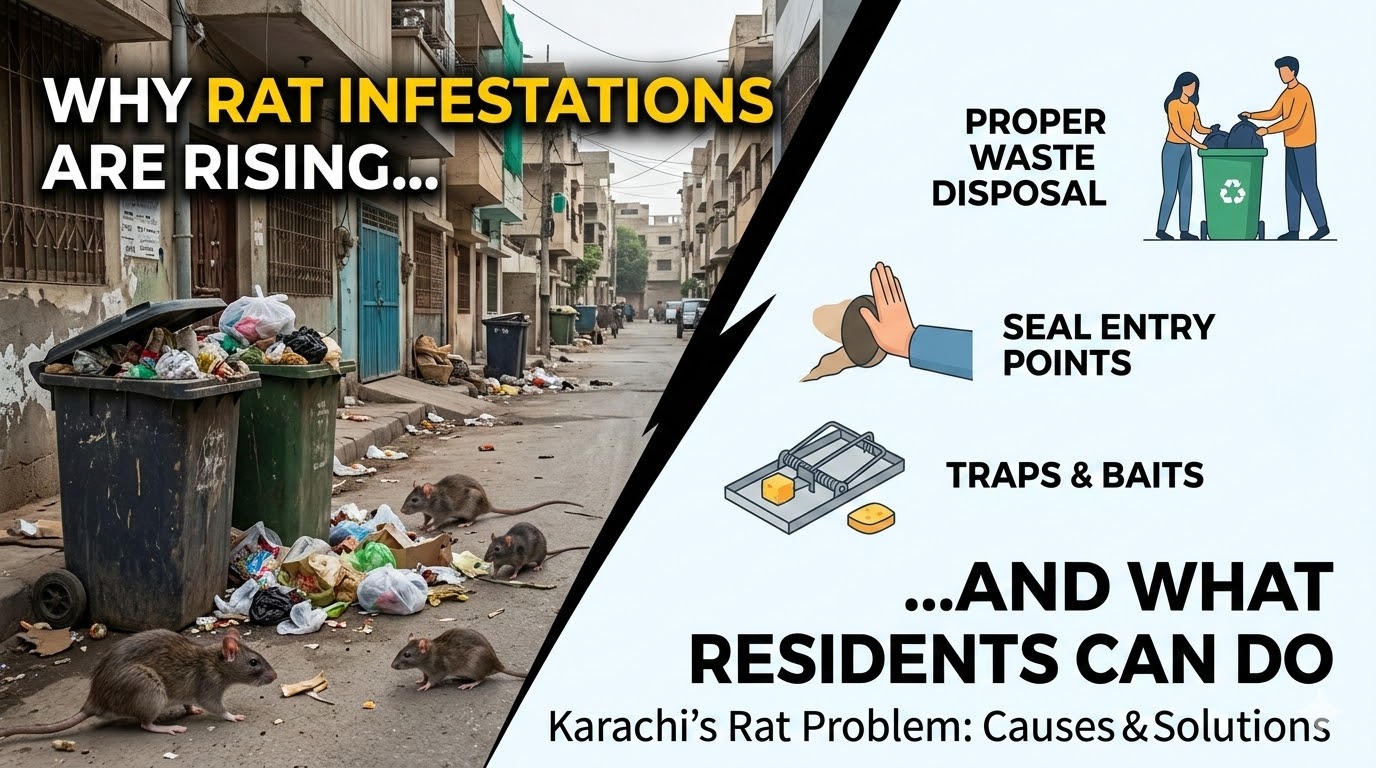
  • Why Rat Infestations Are Rising in Karachi’s Residential Areas — and What Residents Can Do

    Why Rat Infestations Are Rising in Karachi’s Residential Areas — and What Residents Can Do

    If you’ve noticed more rat droppings, gnawed wires, or scratching sounds in your walls lately, you’re not imagining it. Rat infestations in Karachi have been escalating at an alarming rate — and residential neighbourhoods across the city, from North Nazimabad and Gulshan-e-Iqbal to Clifton and Korangi, are feeling the pressure.

    In this article, we break down exactly why this is happening and, more importantly, what Karachi homeowners can do right now to fight back before the problem spirals out of control.

    The Growing Rat Problem in Karachi: What the Data Tells Us

    Rats — primarily the Norway rat (Rattus norvegicus) and the roof rat (Rattus rattus) — are not new to Karachi. But urban pest experts and fumigation professionals working across the city confirm that call volumes for rodent control have surged significantly in recent years, particularly in densely populated residential zones.

    So what’s behind this surge? The answer is a combination of urban, environmental, and infrastructural factors — many of which are unique to Karachi.

    Top Reasons Rat Infestations Are Worsening in Karachi

    1. Rapid Urbanisation and Informal Settlements

    Karachi is one of the fastest-growing megacities in the world, with an estimated population of over 20 million people. This rapid urban expansion has led to sprawling informal settlements (katchi abadis) where sanitation infrastructure lags far behind population density. These areas offer rats exactly what they need: food, shelter, and warmth — in abundance.

    As new construction pushes out into previously undeveloped land, it displaces rat colonies — which then migrate into established residential neighbourhoods.

    2. Overflowing Waste and Irregular Garbage Collection

    Karachi’s waste management system has struggled for years. In many areas, open rubbish dumps, blocked nullahs (drains), and garbage piles that go uncollected for days provide a reliable food source for urban rat populations.

    Rats are opportunistic omnivores. An overflowing bin outside a DHA home is just as attractive to them as a rubbish heap in Orangi Town. Once they find a food source near a property, they will nest nearby.

    3. Aging Sewer and Drainage Infrastructure

    Much of Karachi’s underground sewage and drainage network dates back decades and is in critical disrepair. Cracked pipes, broken manholes, and flooded nullahs create ideal rat highways — allowing rodents to travel freely underground and surface inside homes and buildings. This is a major reason why even well-maintained homes in areas like PECHS or Gulberg require professional rat control services in Karachi that specifically target entry points and burrow networks.

    4. Monsoon Season Drives Rats Indoors

    Every year, Karachi’s monsoon season — typically from July to September — disrupts rat colonies living outdoors, in drains, and in open ground. Flooding displaces thousands of rats and forces them to seek higher ground. That higher ground is often your home.

    After the monsoon, rat populations rebound quickly. Females can produce up to 5 litters per year, with each litter containing 6–12 pups. By winter, a small infestation can become a serious one.

    5. Food Storage and Kitchen Habits

    Traditional Pakistani kitchens often store grains, lentils, rice, and spices in large quantities. Without airtight storage containers, these become irresistible to rats. Even small gaps around kitchen pipes or cabinets can allow rats access to your pantry — and once they’ve found food, they will return repeatedly.

    6. Climate and Mild Winters

    Unlike cities in colder climates where winters thin out rat populations, Karachi’s mild winters allow rats to breed year-round. There is no natural seasonal die-off, which means populations compound continuously without human intervention.

    How to Tell If Your Home Has a Rat Infestation

    Rats are nocturnal and rarely seen during the day — but the signs of their presence are unmistakeable:

    • Droppings — dark, pellet-shaped, usually near food sources or along walls
    • Gnaw marks — on wires, wood, plastic containers, or even walls
    • Scratching or scurrying sounds — especially at night, in walls or ceilings
    • Burrow holes — in garden beds, under flooring, or near waste areas
    • Grease trails — oily smear marks along walls where rats regularly travel
    • Musky odour — a persistent unpleasant smell, particularly in enclosed spaces

    If you’re noticing one or more of these signs, the infestation is likely already beyond the early stage. This is the point at which DIY solutions — snap traps, glue boards, or over-the-counter poison baits — often fail to address the root cause. A thorough rat extermination and control treatment in Karachi can identify the scale of the problem and eliminate it systematically.

    ⚠️  Important: Rats are not just a nuisance — they are a genuine health hazard. They carry diseases including leptospirosis, salmonella, and hantavirus, and can contaminate food and water supplies. Chewed electrical wires from rats are also a leading cause of house fires.

    What Karachi Homeowners Can Do Right Now

    Seal All Entry Points

    Rats can squeeze through gaps as small as 1.5 cm. Inspect your home carefully: check where pipes enter walls, gaps under doors, cracks in foundations, and ventilation openings. Seal gaps with steel wool, wire mesh, or concrete — rats can chew through soft fillers and foam.

    Improve Food and Waste Storage

    Store all dry food items in sealed, hard-sided containers. Keep kitchen bins tightly lidded and empty them daily. Never leave pet food out overnight, and clean up fallen fruit in gardens promptly.

    Eliminate Nesting Sites

    Clear clutter from storage areas, garages, and around the exterior of your home. Rats love to nest in piles of cardboard, old clothing, or garden debris. Keep vegetation trimmed back from the walls of your home and stack firewood away from the house.

    Reduce Water Sources

    Fix leaking pipes and taps. Rats need water daily, and even a slow drip can support an entire colony. Ensure there is no stagnant water accumulating under appliances or in outdoor drains.

    Use Traps Strategically

    If the infestation is minor, snap traps placed along walls and in dark corners (where rats travel) can help. However, traps alone will not solve a moderate or large infestation — they are a supplementary tool, not a solution.

    Bring in Professionals

    For any infestation beyond the earliest stage, professional treatment is strongly recommended. A qualified pest control team will inspect your property, identify access points and nesting sites, deploy appropriate baiting and trapping systems, and apply targeted treatments in inaccessible areas. If you’re searching for effective, reliable rodent control and rat fumigation services in Karachi, working with an experienced local provider makes all the difference between a temporary fix and permanent resolution.

    Why DIY Rat Control Often Fails in Karachi

    Many Karachi homeowners try to manage rat problems themselves first — and understandably so. But there are several reasons why DIY approaches frequently fall short:

    • Rats are neophobic — they avoid new objects (like traps) in their environment for several days.
    • Over-the-counter poisons can be dangerous to children, pets, and even the household water supply if misused.
    • Without identifying and sealing entry points, new rats will replace any that are eliminated.
    • Rats that die in inaccessible cavities create odour problems and attract secondary infestations of flies and beetles.
    • Colony size is almost always larger than homeowners estimate — what looks like one or two rats often means dozens nearby.

    Professional pest controllers have the tools, training, and access to regulated rodenticides and exclusion materials that simply aren’t available off the shelf. They also know how to safely remove dead rodents and sanitise affected areas.

    Neighbourhood-Specific Risk Factors in Karachi

    While no part of the city is immune, some areas face heightened rat infestation risk due to local conditions:

    • Lyari, Orangi Town, Baldia Town: High density, older drainage infrastructure, and proximity to industrial waste zones increase vulnerability significantly.
    • Korangi and Landhi: Proximity to industrial zones means rats move between factory waste areas and residential homes frequently.
    • Old City area and Saddar: Ageing buildings with legacy plumbing and a high density of food businesses create persistent pressure.
    • DHA and Clifton: Newer construction with manicured gardens can still attract rats from adjacent areas, particularly near commercial zones and through drainage networks.
    • Gulshan-e-Iqbal and PECHS: Mixed residential-commercial zoning and dense housing mean rat pressure from restaurants and markets can spill into homes.

    No neighbourhood is fully safe. If you’re concerned about your specific locality, a professional assessment through Unique Fumigation’s rat control experts in Karachi can give you a clear picture of your risk level and the most appropriate treatment approach.

    Don’t Wait — Rat Infestations Grow Exponentially

    A single breeding pair of rats can produce over 1,000 descendants within a year under ideal conditions. Rats don’t wait for a convenient time to expand their colony, and infestations don’t resolve themselves.

    The earlier you act, the less costly and disruptive the treatment will be. Whether you’re seeing the first signs of a problem or dealing with an established infestation, professional intervention gives you the fastest, safest, and most reliable path to a rat-free home.

    🐀  Book Your Free Rat Inspection Today

    Unique Fumigation offers free on-site inspections for Karachi homeowners.

    Our licensed pest control specialists will assess your property, identify all rat entry points and nesting areas, and recommend a customised treatment plan — at no upfront cost to you.

    👉  Click Here to Schedule Your Free Inspection with Unique Fumigation

    Protect your family. Protect your home. Act before the problem grows.

    About Unique Fumigation

    Unique Fumigation is a Karachi-based pest control company specialising in residential and commercial fumigation, rodent control, termite treatment, cockroach extermination, and bed bug elimination. With teams operating across all major Karachi districts, Unique Fumigation provides licensed, safe, and effective pest management solutions to homeowners and businesses throughout the city.

  • Karachi Restaurant Owners: A Rat Problem Can Cost You Your Business

    Karachi Restaurant Owners: A Rat Problem Can Cost You Your Business

    It only takes one moment. A customer spots a rat darting across the floor. Someone films it on their phone. Within hours, it’s circulating on WhatsApp groups and Instagram stories across the city. By the following morning, your restaurant’s reputation — built over years of hard work — is in ruins.

    This is not a hypothetical. It has happened to real food businesses in Karachi. And with rat infestations on the rise across the city, no restaurant owner can afford to treat this as someone else’s problem.

    In this article, we walk through exactly how a rat infestation can destroy a food business in Karachi, the very real legal and financial consequences you face, and — most importantly — what you can do right now to prevent it.

    The Scale of Karachi’s Rat Problem in Food Areas

    Karachi’s restaurant and food business scene is one of the most vibrant in South Asia. From the iconic Burns Road food street and the restaurants of Boat Basin and Zamzama, to the countless local eateries in Gulshan, Saddar, and Orangi Town — food is at the heart of the city’s culture and commerce.

    But this same density of food businesses creates a perfect storm for rodent pressure. Rats are driven by three needs: food, water, and shelter. A busy commercial kitchen provides all three in abundance — and Karachi’s specific urban conditions make the problem significantly worse:

    • Aging drainage and sewer infrastructure provides underground rat highways directly into kitchen areas
    • Irregular municipal waste collection creates consistent food sources near food streets and commercial zones
    • Dense back-alley service areas in food streets like Burns Road and Tariq Road provide nesting sites just metres from kitchens
    • Monsoon flooding displaces outdoor rat colonies every year — pushing them into commercial buildings seeking higher ground
    • Shared walls and drainage in older buildings mean a neighbouring business’s rat problem quickly becomes yours

    Pest control professionals who provide commercial rat control services in Karachi report that restaurant kitchens, storage rooms, and dry goods areas are consistently among the highest-risk sites they attend — often with infestations far larger than the owner realised.

    How a Rat Infestation Can Destroy Your Restaurant

    1. The Viral Moment You Cannot Take Back

    In today’s digital environment, a single video of a rat in a Karachi restaurant can reach tens of thousands of people within hours. Pakistan’s food bloggers and reviewers are highly active on Instagram, TikTok, and Facebook — and negative content about a restaurant spreads far faster than positive reviews.

    Several Karachi restaurants have faced exactly this scenario in recent years. The business impact is severe: immediate footfall drops, cancellation of bookings, negative review floods on Google and Zomato, and in some cases, permanent closure.

    ⚠️  Real Risk: Once a video of a rat in your restaurant goes viral in Karachi, no amount of crisis PR can fully repair the damage. The only strategy that works is prevention.

    2. PSQCA and Local Authority Inspections

    The Pakistan Standards and Quality Control Authority (PSQCA) and Karachi Metropolitan Corporation (KMC) have the authority to inspect food premises and issue notices, fines, or closure orders for hygiene violations — including evidence of rodent activity.

    Signs that inspectors look for include rat droppings in storage or food prep areas, gnaw marks on packaging, evidence of contaminated food stocks, and the presence of live or dead rodents. A failed inspection can result in:

    • Immediate temporary closure pending remediation
    • Substantial fines and compliance orders
    • Mandatory destruction of contaminated food stock at your cost
    • Permanent licence suspension for repeat violations
    • Public notification of the closure, amplifying reputational damage

    3. Food Contamination and Customer Illness

    Rats contaminate food through direct contact, droppings, urine, and hair. They carry serious pathogens including Salmonella, Leptospirosis, and E. coli — all of which can cause severe illness in customers.

    If a customer becomes ill and traces the source to your restaurant, you face not only reputational damage but potential civil liability. In a city where word-of-mouth and community reputation are critical to a food business’s survival, a food poisoning incident linked to rodents can be fatal to the business.

    4. Physical Damage to Your Premises

    Rats gnaw constantly — on electrical wiring, gas pipes, structural woodwork, refrigeration units, and packaging. In a commercial kitchen environment, this creates serious fire and safety hazards on top of the contamination risk. The cost of repairing rat-damaged infrastructure can run into hundreds of thousands of rupees, and may not be covered by standard commercial insurance if the infestation was not proactively managed.

    5. Staff Morale and Retention

    Kitchen staff who work in a rat-infested environment will leave — and they will talk. In Karachi’s competitive hospitality labour market, a reputation for poor hygiene conditions makes it harder to recruit and retain quality staff. The hidden cost of staff turnover in restaurants is consistently underestimated by business owners.

    High-Risk Areas and Times for Karachi Restaurants

    While every food business in Karachi faces some level of rat pressure, certain locations and circumstances carry significantly elevated risk:

    High-Risk Locations

    • Burns Road and Saddar food streets: High food density, aging drainage, shared back-alley waste areas
    • Boat Basin and Zamzama (Clifton): Proximity to sea drains and dense commercial-residential mix
    • North Nazimabad and Gulshan-e-Iqbal: Heavy mixed-use zoning with frequent waste management lapses
    • Korangi industrial/commercial zone: Adjacent to industrial waste — high rat pressure migrating into food outlets
    • Tariq Road and Bahadurabad: High foot traffic, street food density, and older drainage infrastructure

    High-Risk Times

    • Monsoon season (July–September): Flooding displaces rat colonies; infestations spike after heavy rains
    • Post-Eid periods: Increased food waste in surroundings attracts and sustains larger rat populations
    • Winter construction nearby: Ground disturbance displaces burrowing colonies into adjacent buildings
    • After any neighbouring business closure: Rats from vacated premises migrate to active food sources nearby

    The Warning Signs Every Restaurant Owner Must Know

    Rats are nocturnal and adept at avoiding humans — but they leave clear evidence of their presence. Train yourself and your staff to look for:

    • Droppings — dark, spindle-shaped pellets, often concentrated near food storage, under equipment, or along walls
    • Gnaw marks — fresh marks appear lighter in colour; check packaging, wooden shelving, electrical conduits, and gas lines
    • Grease trails — dark smear marks along walls and skirting boards where rats travel repeatedly
    • Burrow holes — in ground-level flooring, near drainage, or in external walls
    • Scratching or scurrying at night — often heard in ceilings, walls, or under kitchen units after closing time
    • Unusual odour — a persistent musky or ammonia-like smell in enclosed storage areas
    • Disturbed stock — gnawed packaging, spilled grains or lentils, or food items moved from their original positions

    💡  Staff Training Tip: Brief your kitchen and storage staff weekly on these warning signs. Early detection is the single most effective way to prevent a minor rat sighting from becoming a full infestation — and a minor problem from becoming a public crisis.

    What Effective Rat Control Actually Looks Like for a Karachi Restaurant

    There is a significant difference between what most food businesses do about rats and what actually works. Here is a realistic breakdown:

    What Doesn’t Work

    • Placing a few snap traps near the back door and hoping for the best
    • Using over-the-counter rat poison bait without a systematic baiting strategy
    • Reacting only after a sighting — by which point the colony is already established
    • Relying on municipal pest control, which is inconsistent and covers only public areas
    • Assuming a clean kitchen is rat-proof — entry points are in walls, drains, and flooring, not on surfaces

    What Actually Works

    • Professional site survey: A trained pest controller assesses your entire premises — kitchen, storage, drains, exterior walls, ceiling voids — to map rat entry points, travel routes, and nesting sites
    • Proofing and exclusion: Physical sealing of entry points using steel mesh, concrete, and door sweeps — stopping new rats from entering regardless of pressure from outside
    • Targeted baiting strategy: Tamper-proof bait stations placed along rat travel routes (not randomly) using regulated rodenticides that are safe in a food environment when properly deployed
    • Drain and sewer treatment: Treatment of the drainage entry points that are most commonly overlooked — and most commonly exploited by rats in Karachi’s aging infrastructure
    • Monitoring and follow-up: Regular visits to check bait consumption, identify new activity, and adjust the strategy — essential in high-pressure commercial food environments
    • Documentation: A professional provider gives you written service records, which are valuable evidence of due diligence in the event of an inspection or complaint

    For Karachi restaurant owners looking for a reliable, food-safe solution, working with a specialist provider of professional rodent extermination services for restaurants in Karachi ensures treatments comply with food safety standards and deliver lasting results — not just a temporary knockdown.

    Building a Rat-Resistant Restaurant: Practical Steps You Can Start Today

    Professional treatment is essential for an active infestation, but there is much you can do operationally to reduce your vulnerability:

    • Seal all incoming pipe penetrations — where water, gas, and electrical conduits enter the building. Even a 1.5 cm gap is enough for a rat to enter.
    • Install door sweeps on all external doors — particularly delivery bay doors and back-alley exits that are frequently left open during service.
    • Use sealed, hard-sided containers for all dry goods — open sacks of flour, rice, lentils, and spices are a primary food source for rats in restaurant storage rooms.
    • Enforce strict waste discipline — seal all waste bags before disposal, keep bin areas clean, and never leave organic waste in open containers overnight.
    • Deep clean under and behind equipment weekly — rats nest in the grease and debris accumulation under large kitchen equipment; regular cleaning denies them both shelter and food.
    • Inspect deliveries before they enter storage — rats have been known to travel inside delivery packaging from supplier warehouses, particularly for grain and dry goods.
    • Schedule professional pest control quarterly at minimum — not just when you see a rat, but as a routine part of your operations. Prevention is dramatically cheaper than crisis management.

    If you’re not sure where your biggest vulnerabilities are, a free rat inspection by Unique Fumigation’s commercial pest experts can identify your specific risk areas and give you a clear, actionable plan — with no obligation.

    The Cost Comparison: Prevention vs. Crisis

    Restaurant owners often delay professional pest control because of cost concerns. But the financial reality of a rat crisis far exceeds the cost of prevention. Consider the typical cost of a serious infestation event:

    • Revenue loss during closure or following viral exposure: Can range from PKR 200,000 to over PKR 1,000,000 depending on the scale of your operation
    • Mandatory destruction of contaminated food stock: PKR 50,000 to 300,000+ depending on inventory levels
    • Emergency pest treatment and structural repairs: Significantly more expensive than routine prevention contracts
    • Regulatory fines and compliance costs: Variable but potentially substantial, plus ongoing monitoring requirements
    • Staff recruitment following turnover: Often underestimated at PKR 30,000–100,000 per position when training costs are included
    • Long-term revenue impact of reputational damage: The most significant and hardest to quantify — some businesses never fully recover

    By comparison, a routine commercial pest control contract covering quarterly inspections, baiting, and monitoring for a typical Karachi restaurant represents a fraction of these costs — and eliminates the risk of a crisis event entirely.

    Bottom line: The question is not whether you can afford professional rat control. It is whether you can afford not to have it.

    Protect Your Restaurant Before It’s Too Late

    The rat problem in Karachi’s commercial food sector is real, it is growing, and it does not resolve itself. But it is entirely manageable with the right professional support in place.

    Whether you are seeing the first warning signs, want to get ahead of monsoon season, or simply want to ensure your business is fully protected before an inspection, acting now is always better than acting after an incident.

    🐀  Book a Free Commercial Rat Inspection for Your Restaurant

    Unique Fumigation provides free on-site inspections for Karachi food businesses.

    Our licensed commercial pest specialists will inspect your kitchen, storage areas, drains, and exterior — identify every rat risk on your premises — and provide a clear, customised treatment plan. No commitment required.

    👉  Schedule Your Free Inspection with Unique Fumigation Now

    Don’t wait for a video to go viral. Protect your business, your staff, and your customers today.

    About Unique Fumigation

    Unique Fumigation is a Karachi-based pest control company specialising in commercial and residential pest management, including rodent control, termite treatment, cockroach extermination, and bed bug elimination. Serving restaurants, hotels, food manufacturers, and homeowners across all major Karachi districts, Unique Fumigation delivers licensed, safe, and food-hygiene-compliant pest solutions backed by professional documentation.

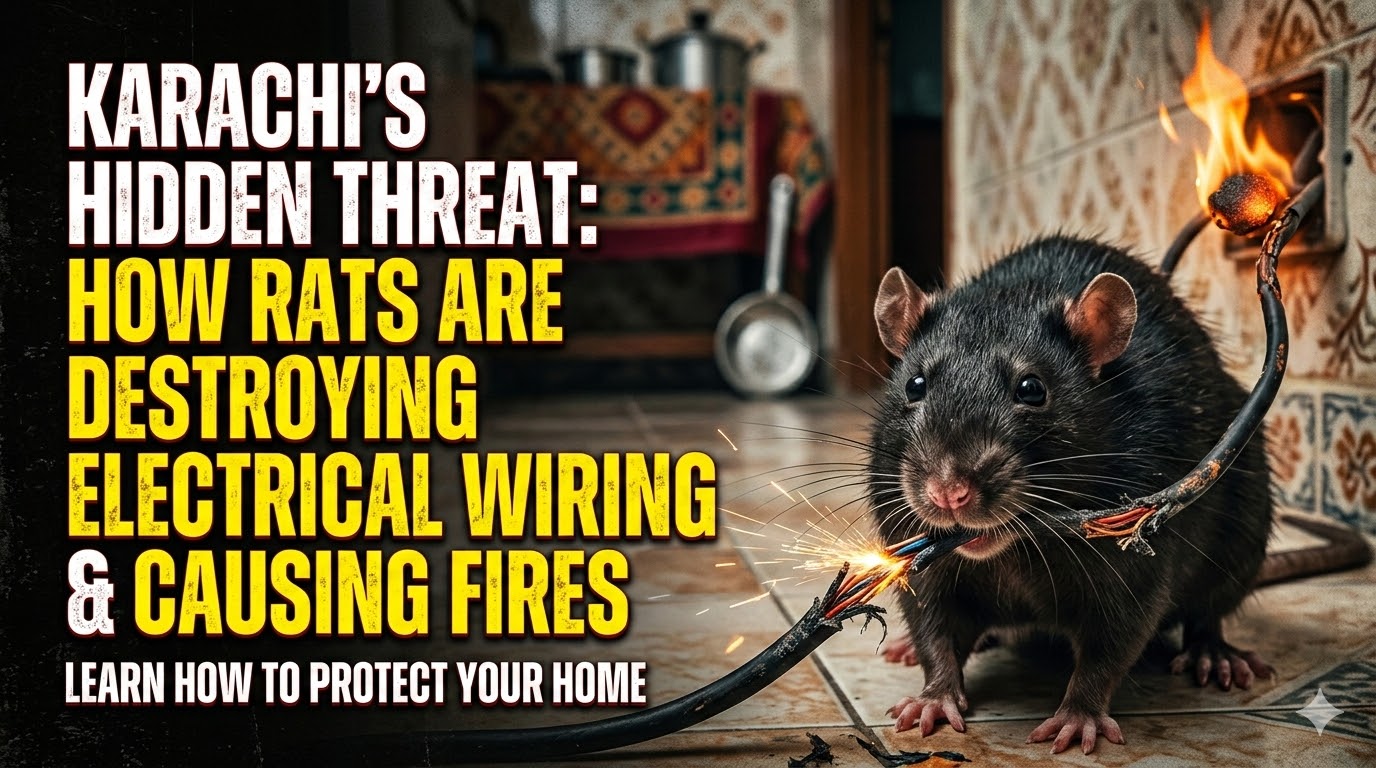
  • How Rats Are Destroying Electrical Wiring in Karachi Homes

    How Rats Are Destroying Electrical Wiring in Karachi Homes

    Every year, thousands of homes across Karachi suffer electrical faults, short circuits, and devastating fires — and rats are far more often to blame than most homeowners realize. From the cramped, centuries-old neighbourhood of Lyari to the sprawling apartment complexes of DHA and the densely packed streets of Orangi Town, rodents have silently become one of the most serious household threats in Pakistan’s largest city.

    This isn’t just a pest problem. It is a fire safety emergency hiding inside your walls, ceilings, and electrical panels. If you live in Karachi and have ever heard unexplained scratching at night, noticed frayed cables, or experienced frequent circuit trips, you need to read this guide carefully.

    Why Karachi Has Such a Severe Rat Problem

    Karachi’s unique combination of geography, infrastructure challenges, and rapid urban growth makes it one of the most rat-friendly cities in the region. Understanding why the problem is so bad here is the first step toward protecting your home.

    1. Year-Round Warm Climate

    Unlike cities in colder climates where winter kills off rat populations, Karachi’s warm weather — with temperatures rarely dropping below 12°C even in January — allows rats to breed continuously throughout the year. A single pair of Norway rats (Rattus norvegicus), the most common species found in Karachi homes, can produce up to 2,000 descendants within a single year under optimal conditions.

    2. Open Drains and Aging Sewage Infrastructure

    Karachi’s famously stressed drainage system provides rats with vast underground networks to travel through undetected. Open naalis (drains) running through residential areas of Korangi, Malir, and Liaquatabad are well-documented rat highways. Rodents travel from public sewers into residential buildings through plumbing gaps, broken pipes, and utility entry points.

    3. Dense, Mixed-Use Urban Construction

    In older neighbourhoods like Saddar, Kharadar, and Nazimabad, commercial shops sit directly below residential apartments. The constant presence of food waste, open garbage, and poorly sealed walls gives rats unlimited access to food and nesting opportunities — and a direct route straight into the homes above.

    4. High-Rise Construction Gaps

    Even in newer developments in Clifton, Gulshan-e-Iqbal, and Bahria Town, construction gaps around utility pipes, improperly sealed concrete joints, and inadequate pest-proofing during building create entry points that rats exploit almost immediately.

    The Gnawing Instinct: Why Rats Target Electrical Wiring Specifically

    Many homeowners assume rats only damage food stores and fabric. The truth is far more alarming: rats are biologically compelled to gnaw on hard materials, and electrical wiring is one of their most preferred targets.

    Rats belong to the order Rodentia, a Latin word meaning “to gnaw.” Their incisor teeth grow continuously throughout their lives — at a rate of up to 11–14 cm per year — and must be worn down constantly. If they don’t gnaw, their teeth grow so long they cannot eat and will eventually die. This means gnawing is not a choice for rats. It is survival.

    Electrical cables are attractive to rats for several specific reasons:

    • Modern wiring insulation is often made from PVC, soy-based compounds, or polyethylene — materials that are softer and more pliable than older rubber insulation, and which rats find easier to chew through.
    • Cable bundles generate gentle heat, which attracts rodents seeking warmth, especially inside wall cavities and false ceilings — common in Karachi’s older apartment stock.
    • Wiring runs near nesting areas such as attic insulation, kitchen cavity walls, and under-sink cabinets — all locations rats prefer for nesting.
    • Conduit runs alongside plumbing pipes, which rats already use as pathways, making wiring incidentally easy to encounter and gnaw on.
    ⚠  Critical Fact: According to international fire safety research, rodents are estimated to be responsible for 20-25% of all house fires of unknown origin. In a city like Karachi – where electrical infrastructure is already under stress from load-shedding cycles, voltage fluctuations, and aging wiring – the danger is dramatically amplified.

    How Rat-Damaged Wiring Causes Fires in Karachi Homes

    The path from a rat gnawing a cable to a house fire is disturbingly short, and it doesn’t require dramatic circumstances. Here is how it unfolds:

    Stage 1: Insulation Stripping

    A rat strips away the plastic insulation around a live electrical wire. This can happen inside a wall cavity, inside a distribution board (DB) box, inside an air conditioner conduit, or behind a refrigerator — all common rat pathways in Karachi apartments.

    Stage 2: Wire Exposure

    The bare copper conductor is now exposed. On its own, this does not immediately cause a fire. However, the exposed wire is now vulnerable to moisture (a constant concern in Karachi’s humid coastal air, especially during the monsoon season from June to September), contact with other conductors, or arcing.

    Stage 3: Short Circuit or Arcing

    When an exposed live wire touches a neutral wire, an earthed surface, or another conductor, a short circuit occurs. The resulting arc can reach temperatures exceeding 3,500°C — hot enough to instantly ignite dust, rat nesting material (paper, fabric, cardboard), and the surrounding wooden beam or wall cavity insulation.

    Stage 4: Hidden Fire in the Wall

    This is the most dangerous phase. A fire starts inside the wall, ceiling, or floor cavity — completely invisible to the occupants. By the time smoke is detected or the smell becomes noticeable, the fire has often spread significantly inside the structure. In buildings with POP (plaster of Paris) false ceilings — extremely common in Karachi’s upper-middle-class apartments — this hidden fire can engulf an entire ceiling before a single flame is visible.

    Stage 5: Sudden and Uncontrollable Spread

    By the time the fire breaks through, it is often already behind multiple walls. Residents have little time to escape, and the damage is catastrophic.

    Real Risk in Your Neighbourhood: Karachi’s frequent voltage fluctuations from KESC/K-Electric load-shedding and restoration surges put already-compromised wiring under additional electrical stress. A wire that rats have partially stripped may survive months of normal use but fail catastrophically during a voltage surge – which in Karachi can happen multiple times a day.

    Warning Signs That Rats Are Already Inside Your Electrical System

    Most Karachi homeowners only discover a rat infestation after significant damage has already been done. Watch carefully for these early warning signs:

    • Frequent, unexplained circuit breaker trips or fuse blowouts, especially at night when rats are most active
    • Flickering lights or appliances that behave erratically without an obvious cause
    • Burning smell from walls, sockets, or DB boxes — even without visible smoke
    • Scratching, scurrying, or squeaking sounds from inside walls, ceilings, or under floors after dark
    • Dark smear marks (“rub marks”) along walls, skirting boards, and pipes — caused by the oils in rat fur
    • Rat droppings (small, dark, pellet-shaped) near sockets, in kitchen cabinets, or in cupboard corners
    • Chewed plastic covers on light switches, plug sockets, or extension cords
    • Urine stains or a persistent musty ammonia smell in certain rooms — particularly in lower-ground floors or areas close to pipes
    • Pet cats or dogs displaying unusual interest in specific sections of walls or flooring

    If you have noticed even one of these signs in your Karachi home, do not wait. The risk is real and it is active. Contact professional rat control services in Karachi immediately for a thorough inspection.

    Areas of Karachi Most at Risk

    While no neighbourhood is fully immune, certain areas of Karachi face a significantly elevated risk due to structural, environmental, or demographic factors:

    Old City Areas: Saddar, Lyari, Kharadar, Mithadar

    These densely built historic districts feature aging colonial-era and post-partition construction with abundant gaps in foundations, deteriorating plaster walls, and decades-old wiring. Rat colonies in these areas are well-established and often extend across multiple buildings.

    Industrial & Mixed-Use Zones: Korangi, SITE, Orangi Town

    Proximity to industrial activity means large volumes of food waste, packaging material, and poorly maintained infrastructure. Rats from industrial zones migrate into adjacent residential areas through drainage systems and shared walls.

    High-Rise Apartments: Gulshan-e-Iqbal, North Nazimabad, Clifton Blocks

    Multi-story apartment buildings create vertical rat highways through shared utility shafts, elevator pits, and common garbage chutes. An infestation on the ground floor can reach upper floors within days.

    New Developments: Bahria Town, DHA Phase Extensions

    Counterintuitively, newly built areas are not immune. Construction debris, open lots, and poorly sealed new builds attract rats early. Soy-based wiring insulation — increasingly common in newer construction — is especially attractive to rodents.

    What Homeowners Can Do: Prevention and Professional Intervention

    Protecting your home requires a two-track approach: physical prevention measures and professional pest control. Here is what you should do:

    Physical Prevention Measures

    • Seal all gaps around pipes, conduits, and cables where they enter walls using steel wool, metal mesh, or hydraulic cement — materials rats cannot chew through
    • Install rodent-proof covers on drain openings, especially in kitchens and bathrooms
    • Ensure garbage bins have tight-fitting lids and do not leave food scraps exposed overnight
    • Store dry food (atta, chawal, dal) in hard plastic or metal containers, not fabric or thin plastic bags
    • Check for and repair gaps under doors, especially in ground-floor apartments and shops
    • Have an electrician inspect visible wiring runs in areas where rat activity has been suspected

    Why DIY Rat Control Is Insufficient

    Many Karachi homeowners attempt to manage rat infestations with snap traps, glue boards, or retail rat poison available from local kiryana stores. While these methods can reduce a visible population temporarily, they do not address the root cause: the active colony, its entry points, and its nesting sites inside your building’s structure.

    Rats are neophobic — instinctively cautious of new objects in their environment. They will avoid improperly placed traps for weeks. Poison stations placed without knowledge of rat travel routes are frequently ignored. Only comprehensive, professionally deployed rat extermination solutions in Karachi — including detailed site surveys, strategic bait placement, population tracking, and entry-point sealing — deliver lasting results.

    The Unique Fumigation Approach to Rat Control in Karachi

    Unique Fumigation has been protecting Karachi homes and businesses from pest infestations for years, combining local expertise with proven pest management methods. Our rodent control programme is not a one-size-fits-all product sale — it is a structured, multi-step intervention designed for Karachi’s specific urban environment.

    Our process includes:

    • Detailed site inspection to identify all active rat runs, entry points, nesting sites, and wiring risk areas
    • Population assessment to determine infestation severity and species present
    • Strategic bait station deployment along confirmed rat pathways — not randomly placed
    • Tamper-resistant bait boxes safe for households with children and pets
    • Structural gap-sealing recommendations to prevent re-entry
    • Follow-up monitoring visits to verify complete elimination
    • Written reporting so you know exactly what was found and what was done

    Whether you are dealing with a new infestation or have been struggling with recurring rat problems for years, our professional rat control services in Karachi are designed to deliver results that last.

    Frequently Asked Questions

    Can rats really cause a house fire?

    Yes — and they do so regularly. Rat-chewed wiring is a leading cause of electrical fires globally, and Karachi’s combination of heavy rat populations, aging electrical infrastructure, and frequent voltage surges makes the risk here especially high.

    How quickly can rats damage wiring?

    A rat can strip the insulation from a length of cable in a single night. In an active infestation with multiple animals, significant wiring damage can occur within days of initial entry.

    How do I know if rats are inside my walls?

    The most common signs are nocturnal scratching sounds, the smell of urine, circuit breaker trips without explanation, and rub marks along skirting boards. A professional inspection can confirm activity even when visual signs are absent.

    Is rat poison safe to use at home?

    Retail rodenticides available in Karachi markets carry significant risk if misused — particularly to children, pets, and secondary scavengers. Professional-grade bait used by certified pest controllers is contained in tamper-resistant stations and deployed according to safety protocols.

    How often should I have a professional rat inspection?

    For properties in high-risk areas (ground-floor apartments, properties near open drains, older buildings), a professional inspection at least once every six months is advisable. Properties that have had previous infestations should be monitored quarterly.

    Don’t Wait for a Fire to Take Action

    Book Your Free Rat Inspection Today  |  If you are a Karachi homeowner and you have noticed any of the warning signs described in this guide – or you simply want the peace of mind of knowing your home is rodent-free – Unique Fumigation is here to help. Our certified pest control specialists will conduct a thorough inspection of your property, identify any current or potential rat activity, and recommend a tailored treatment plan. This inspection is completely free – with no obligation.

    Contact Unique Fumigation now and book your free inspection at: uniquefumigation.com/rats-control-services-in-karachi

    Protecting Karachi homes from rats — one inspection at a time.

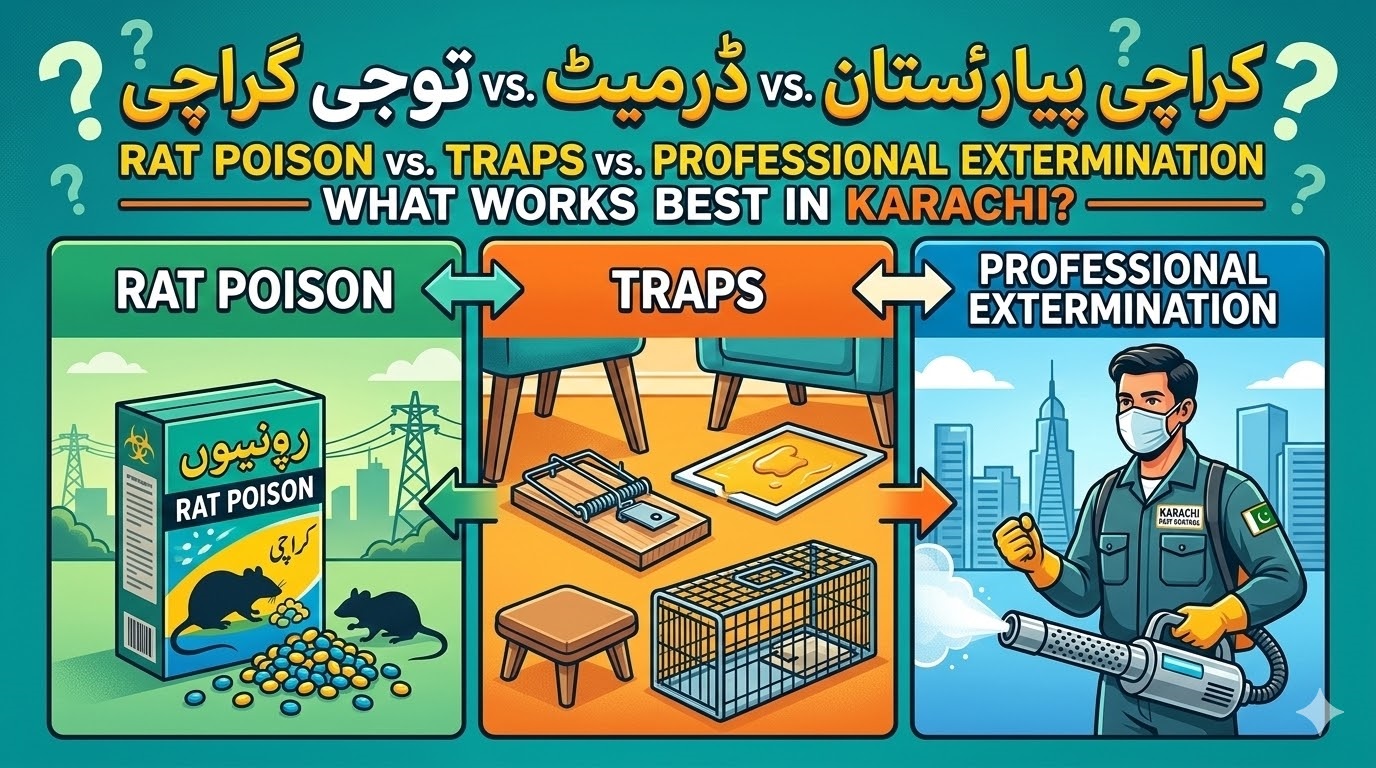
  • Rat Poison vs. Traps vs. Professional Extermination — What Works Best in Karachi?

    Rat Poison vs. Traps vs. Professional Extermination — What Works Best in Karachi?

    You’ve spotted the signs. Droppings behind the fridge. A gnawed bag of rice in the pantry. Scratching sounds in the ceiling at 2 AM. Now you’re standing in the pest control aisle at your local shop in Karachi, staring at boxes of rat poison and snap traps — wondering if any of it actually works.

    The honest answer is: it depends — but probably not in the way the packaging suggests. Every method has real limitations, and Karachi’s specific urban conditions make some approaches significantly less effective than they are elsewhere in the world.

    This guide cuts through the marketing and gives you a clear, practical breakdown of all three main approaches — rat poison, mechanical traps, and professional extermination — so you can make an informed decision for your home and family.

    Why Rat Control in Karachi Is Harder Than You Think

    Before comparing methods, it’s important to understand why rat infestations in Karachi are particularly stubborn and why solutions that work in other cities often fall short here:

    • Aging sewer and drainage networks — Cracked underground pipes give rats a protected highway directly into homes. Most DIY methods cannot address what’s happening underground.
    • Year-round breeding climate — Karachi’s mild winters mean there is no natural seasonal population die-off. Rat colonies grow continuously, compounding week by week.
    • Dense housing and shared walls — Even if you eliminate rats from inside your home, colonies in neighbouring properties, shared drainage, or nearby nullahs will repopulate your space rapidly.
    • Annual monsoon displacement — Flooding every July–September drives outdoor rat colonies into homes en masse, creating sudden surges that overwhelm any passive control measures already in place.
    • High population pressure in urban areas — In areas like Orangi Town, Gulshan-e-Iqbal, PECHS, and Korangi, the sheer density of the surrounding rat population means any gap in your defences will be found and exploited quickly.

    Understanding this context matters because the right approach to rat control for Karachi homes is not the same as what works in a low-density suburban environment. Let’s now examine each method honestly.

    Method 1: Rat Poison (Rodenticides)

    Rat poison — sold in grain, block, or paste form — works by causing internal bleeding (anticoagulants like brodifacoum and bromadiolone) or organ failure (acute toxicants). It is widely available from hardware stores and chemists across Karachi and is one of the most commonly used DIY rat control methods.

    How It Works

    A rat consumes the bait and dies within 3–10 days depending on the formulation. First-generation anticoagulants require multiple feeds; second-generation products can be lethal from a single dose. The idea is to place bait in areas of known rat activity and allow the population to self-reduce over time.

    The Real-World Limitations in Karachi

    • It does not stop new rats entering. Poison kills individual rats but does nothing to address the entry points, drainage access, or burrow networks that allow continuous re-infestation from outside.
    • Dead rats in inaccessible spaces. Rats often retreat into walls, ceiling voids, or under flooring to die. The resulting odour — which can last weeks — and secondary insect infestations (blowflies, dermestid beetles) are often worse than the original rat problem.
    • Bait shyness and neophobia. Rats are highly cautious around new objects and unfamiliar food sources. Without correct placement and pre-baiting techniques, many rats simply avoid commercially sold poison bait stations entirely.
    • Serious risk to children, pets, and wildlife. Second-generation anticoagulants are extremely dangerous. In Karachi homes where children and pets have access to storage areas and gardens, poison baiting without professional protocols carries real risk of accidental poisoning.
    • Partial colony impact. Even in ideal conditions, poison rarely eliminates an entire rat colony. Dominant individuals and pregnant females are often the last to access bait — meaning survivors breed rapidly and populations recover quickly.
    • No impact on drain-dwelling rats. A significant portion of Karachi’s rat population lives in the sewer and drainage network. Surface poison bait cannot reach these animals, meaning the reservoir population remains entirely untouched.

    ⚠️  Safety Warning: Second-generation rodenticides available in Karachi markets have caused accidental poisoning of children and domestic animals. Never use loose grain bait in areas accessible to family members or pets, and never place bait near water sources. If you are unsure, do not use poison without professional guidance.

    When Rat Poison Can Be Useful

    As part of a professionally managed baiting programme — where correct placement, tamper-proof bait stations, and monitoring are all in place — rodenticides are a legitimate and effective tool. The issue is not the product itself; it is unsupervised DIY application in complex urban environments.

    Verdict on Rat Poison Alone:

    ⚠️  Provides short-term, partial relief at best. Does not address root cause. Carries real safety risks in domestic settings. Not a standalone solution for Karachi homes.

    Method 2: Mechanical Traps (Snap Traps, Glue Boards, Live Catch)

    Traps are the other go-to for DIY rat control in Karachi. They come in several forms — traditional snap traps, adhesive glue boards, and live-catch cage traps — and are sold in hardware stores, supermarkets, and online across the city.

    Types of Traps and How They Work

    • Snap traps: Spring-loaded bars kill rats instantly on contact with the trigger. When set correctly with appropriate bait, they are one of the most humane and immediately effective mechanical options.
    • Glue boards: Adhesive boards trap rats on contact. They do not kill immediately and are considered inhumane by many pest professionals — rats caught on glue boards suffer stress injuries attempting to escape.
    • Live catch cage traps: Catch rats alive for relocation. Require daily monitoring and a plan for releasing the animal far from the property — which is impractical in dense Karachi neighbourhoods where release points are limited and re-infestation risk is high.

    The Real-World Limitations in Karachi

    • Neophobia makes placement critical — and difficult. Rats avoid new objects in their territory for several days. A snap trap placed incorrectly, or with the wrong bait, will simply be walked around. Most homeowners place traps in the wrong locations and abandon them after seeing no results.
    • Traps address individual rats, not colonies. A typical Karachi home infestation involves dozens of rats — not two or three. Traps cannot scale to address a colony-level problem; they are a supplementary tool at best.
    • Regular handling and resetting is required. Effective trap use requires daily inspection, resetting, and hygienic disposal of dead animals. In practice, most homeowners find this unsustainable within days.
    • Completely ineffective for drainage-based infestations. If rats are entering through broken sewer pipes or under-slab drainage — which is extremely common in Karachi’s older residential areas — traps inside the home cannot intercept them at the source.
    • No preventive value. Like poison, traps do nothing to stop new rats from entering. As long as entry points exist, any rats caught will be replaced from the external population within days.

    💡  Placement Tip: If you do use snap traps, place them flush against walls and skirting boards — perpendicular to the wall, with the trigger end nearest the wall surface. Rats travel along walls and edges, not across open floor space. Bait with peanut butter, dried fruit, or a small piece of chocolate rather than cheese.

    When Traps Are Genuinely Useful

    Snap traps have a legitimate role in a professionally designed integrated pest management programme — deployed strategically in large numbers along mapped rat runways, monitored regularly, and used alongside proofing and baiting. As a standalone DIY solution for a Karachi home with an active infestation, they are insufficient.

    Verdict on Traps Alone:

    ⚠️  Useful for single rat encounters or minor activity. Ineffective against established colonies or drainage-based infestations. Best used as a supplementary tool within a professional programme.

    Method 3: Professional Rat Extermination

    Professional pest control is not just a more powerful version of what you can buy at a shop. It is a fundamentally different approach — one that addresses the entire system rather than individual rats. Here is what a quality professional rat extermination service in Karachi actually delivers:

    What a Professional Inspection Covers

    • Full property survey: Every room, ceiling void, under-floor space, garage, garden, and external wall is assessed — not just the areas where you’ve seen rats
    • Entry point identification: All gaps, cracks, pipe penetrations, drain access points, and ventilation openings that allow rats to enter are mapped
    • Rat run and nesting site mapping: Grease trails, droppings, and burrow evidence are used to trace the routes and resting areas of the colony
    • Drain and sewer assessment: The underground access points that are the primary entry route in most Karachi infestations are specifically examined
    • Colony size estimation: A professional can assess whether you are dealing with a handful of rats or a large, established colony — which directly determines the treatment strategy

    What a Professional Treatment Delivers

    • Physical proofing and exclusion: Steel mesh, concrete, and door seals close the entry points that allow continuous re-infestation — the step that no poison or trap can replicate
    • Tamper-proof bait station deployment: Regulated rodenticides in locked, child- and pet-proof stations, placed precisely along rat runways for maximum uptake and minimum risk
    • Drain treatment: Targeted treatment of sewer and drainage entry points that are inaccessible to any DIY method
    • Mechanical trapping at scale: Multiple snap traps deployed simultaneously across mapped rat runways — far more effective than a homeowner’s two traps by the kitchen door
    • Follow-up monitoring: Return visits assess bait consumption, identify any new activity, and confirm that the colony has been eliminated — not just temporarily disrupted
    • Sanitisation guidance: Advice on decontaminating affected areas, including droppings, urine trails, and nesting material, to remove disease risk and odour attractants
    • Service documentation: Written records of treatment — valuable if you ever need to demonstrate pest management compliance to landlords, buyers, or authorities

    ✔  Why Proofing Is the Game-Changer: In Karachi, where external rat pressure from drains, nullahs, and neighbouring properties is constant, physical exclusion is the only method that delivers lasting results. Without sealing entry points, any treatment — professional or DIY — is simply buying time before the next infestation begins.

    Verdict on Professional Extermination:

    ✅  The only method that addresses the complete rat problem — colony elimination, entry point closure, drain treatment, and prevention of re-infestation. Higher upfront cost, dramatically lower total cost when the full lifecycle of DIY attempts is accounted for.

    Side-by-Side Comparison: All Three Methods

    The table below summarises the key differences between all three approaches for Karachi homeowners:

    The 5 Most Common Rat Control Mistakes Karachi Homeowners Make

    Even homeowners who take rat control seriously often make these avoidable errors:

    1. Acting only after a sighting. By the time you see a rat, the colony is usually well established. Waiting for a visual confirmation before acting means the problem is already weeks or months old.
    2. Treating only the interior. The source of your infestation is almost certainly outside — in drains, gardens, or neighbouring properties. Treating only inside the home is equivalent to mopping the floor while the tap is still running.
    3. Stopping treatment too soon. Homeowners often stop after a few days of no visible activity. Rat colonies are highly resilient — pregnant females and juveniles often survive the initial knockdown and repopulate rapidly.
    4. Underestimating the colony size. Rats are nocturnal and extremely cautious. For every rat you see, there are typically 10–20 you don’t. A handful of droppings can represent a colony of dozens.
    5. Not addressing monsoon season proactively. Karachi’s July–September flooding displaces massive outdoor rat populations every year. Homeowners who wait until after the monsoon to treat infestations are always responding to a larger, more entrenched problem.

    When Should You Call a Professional? A Simple Decision Guide

    Not every rat encounter requires immediate professional intervention. Here is a clear guide:

    Consider DIY Methods If:

    • You have seen a single rat once, with no other signs of activity
    • The sighting was near an external door and you can identify and seal the entry point
    • There are no droppings, gnaw marks, or sounds indicating ongoing activity

    Call a Professional Immediately If:

    • You have found droppings in multiple locations inside the home
    • You are hearing scratching or movement sounds in walls, ceilings, or under floors
    • You have found gnaw marks on wiring, pipes, or food packaging
    • You have already tried DIY methods and activity has continued or returned
    • Your property is in a high-pressure area — near a nullah, food market, or densely packed neighbourhood
    • It is approaching or immediately after monsoon season (June–October)
    • You have young children, elderly family members, or pets — making poison use unsafe

    If you are in any doubt, a professional assessment costs nothing with Unique Fumigation’s free rat inspection for Karachi homes — and gives you an accurate, expert picture of what you are actually dealing with before you spend money on any approach.

    Stop Guessing — Get a Professional Assessment for Free

    The reality is that most Karachi homeowners who deal with rat infestations spend weeks and hundreds of rupees on poison and traps — only to find themselves back at square one. The rats return because the root cause was never addressed.

    A professional assessment does not just tell you how many rats you have. It tells you where they are coming from, how they are getting in, what is sustaining the colony, and exactly what it will take to eliminate the problem permanently.

    🐀  Book Your Free Rat Inspection in Karachi

    Unique Fumigation offers completely free on-site rat inspections for Karachi homeowners.

    Our licensed pest specialists will inspect your entire property — interior, exterior, drains, and entry points — map the infestation, and give you a clear, honest treatment plan. No commitment, no cost.

    👉  Click Here to Schedule Your Free Inspection with Unique Fumigation

    Stop wasting money on partial solutions. Get the full picture — free.

    About Unique Fumigation

    Unique Fumigation is a Karachi-based pest control company providing licensed residential and commercial pest management services across all major city districts. Specialising in rodent control, termite treatment, cockroach extermination, and bed bug elimination, Unique Fumigation delivers integrated pest solutions backed by professional documentation and guaranteed results.

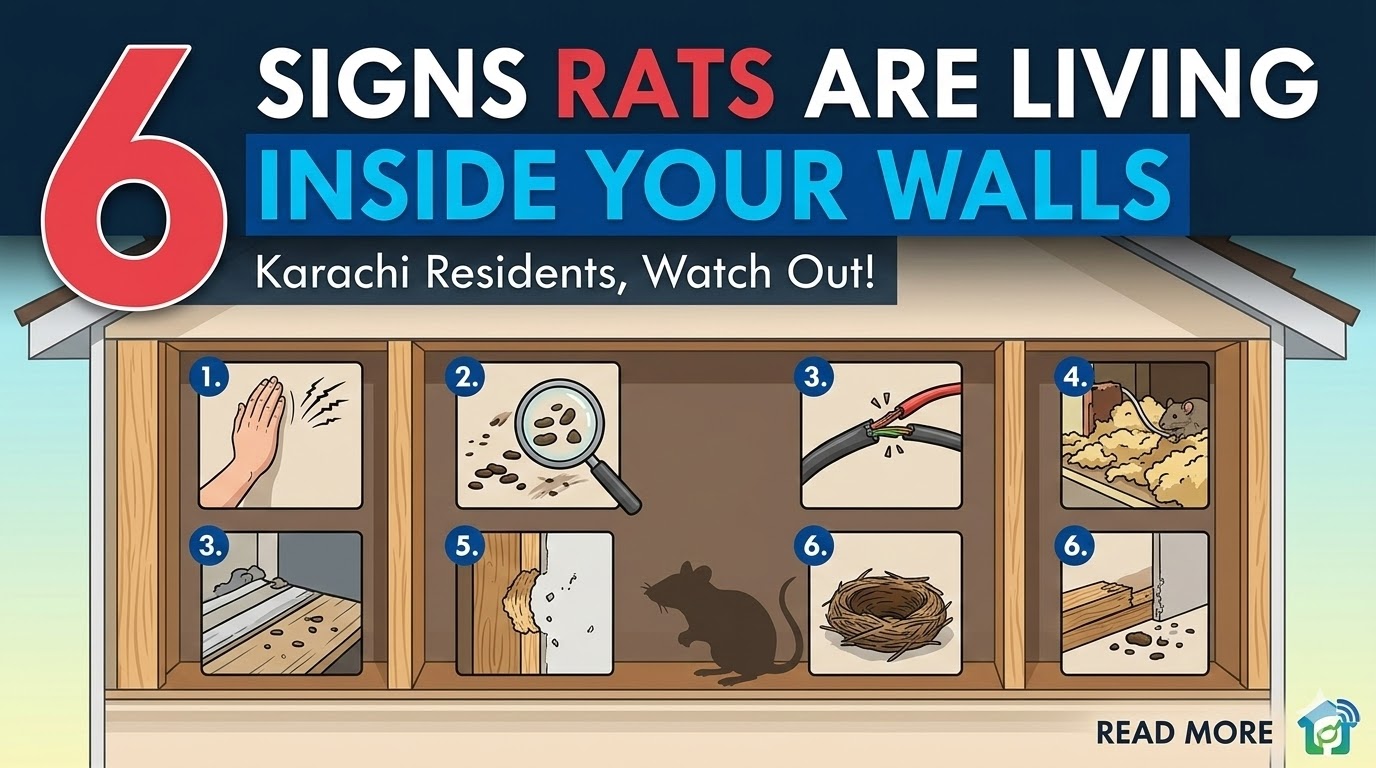
  • Karachi Residents: 6 Signs Rats Are Living Inside Your Walls

    Karachi Residents: 6 Signs Rats Are Living Inside Your Walls

    There is a deeply unsettling truth that most Karachi homeowners discover too late: by the time you see a rat, there are almost certainly many more you are not seeing. Rats are nocturnal, cautious, and extraordinarily skilled at remaining hidden. A mature colony of Norway rats (Rattus norvegicus) can live inside the walls, ceilings, and floors of a Karachi home for months — gnawing through wiring, contaminating insulation, and breeding rapidly — before a single animal is spotted in the open.

    The challenge is knowing what to look for. Rats leave behind a specific and recognizable set of clues, but most homeowners either do not know the signs or mistakenly dismiss them as minor household issues. This guide is designed to change that.

    Below, we walk you through the 6 most reliable signs that rats are living inside your walls right now — with specific context for Karachi’s urban environment, climate, and housing types. If you recognize even two or three of these signs in your home, do not delay: contact professional rat control services in Karachi before the situation escalates.

    Why Karachi Homes Are Particularly Vulnerable

    Karachi’s combination of dense urban construction, aging infrastructure, warm year-round climate, and overstressed drainage systems creates near-perfect conditions for rat infestations. From the old colonial-era buildings of Saddar and Kharadar to the high-rise apartment towers of Gulshan-e-Iqbal and Clifton, and the newer developments spreading across DHA, Bahria Town, and Malir — no neighbourhood in Karachi is fully immune.

    Rats enter homes through gaps as small as half an inch (roughly the diameter of a 5-rupee coin). Once inside, they navigate through wall cavities, plumbing chases, utility conduits, and POP false ceilings. They nest in insulation, behind kitchen cabinets, inside electrical panel boxes, and under flooring. Karachi’s K-Electric load-shedding cycles and the resulting voltage surges make the electrical damage they cause especially dangerous.

    Here is how to tell if they have already moved in.

    Sign #1:  Nocturnal Sounds Inside Your Walls and Ceiling

    The most common first sign — and the one most Karachi homeowners experience before any other — is unexplained sounds from inside the structure of the building after dark. These typically begin between 10 PM and 3 AM, when the household has gone quiet and rat activity is at its peak.

    What You Will Hear

    • Rapid, light scratching or scrabbling — like fingernails on a hard surface — from inside walls or the ceiling
    • Soft thudding or rolling sounds, often from above, as rats move across ceiling cavities
    • Intermittent squeaking or chattering, particularly when multiple animals are present
    • Gnawing sounds — a persistent, repetitive chewing noise — especially near electrical conduits, wooden beams, and pipe entry points

    Karachi-Specific Context

    In Karachi’s older apartment buildings — particularly those built in the 1960s through 1980s in areas such as North Nazimabad, Liaquatabad, Orangi Town, and Federal B Area — wall cavities are often wider and less sealed than in newer construction. This gives rat colonies more room to establish large nesting areas and travel routes. In buildings with POP false ceilings, sounds from above are especially common and can be heard clearly.

    If the sounds occur consistently at the same time each night and stop abruptly when you make a loud noise (rats freeze when they detect vibrations or sudden sounds), this is a strong indicator of active rodent activity rather than building settlement or plumbing noise.

    Important: Do not assume sounds in the ceiling mean birds or geckos. The scratching pattern of rats — fast, irregular bursts followed by movement — is distinct from the slow, deliberate movement of a lizard and the fluttering of a bird. If the sounds repeat every night, rats are the most likely explanation.

    Sign #2:  Droppings in Corners, Cabinets, and Along Walls

    Rat droppings are one of the clearest and most unambiguous signs of infestation. A single Norway rat produces between 40 and 50 droppings per day. In an established colony of even ten animals, this means hundreds of droppings deposited nightly in fixed locations along their travel routes.

    How to Identify Rat Droppings

    • Shape: spindle-shaped (tapered at both ends), approximately 1.5–2 cm long
    • Colour: dark brown to black when fresh; grey and crumbling when old (more than 3 days)
    • Location: concentrated along walls, in the corners of kitchen cabinets, behind the refrigerator or washing machine, inside storage cupboards, and near plumbing under sinks
    • Texture: soft and shiny when fresh; hard and dull when dried

    Where to Check in a Karachi Home

    Rats are creatures of habit. They use the same routes repeatedly, known as “rat runs”. In Karachi homes, the most common locations to find droppings include:

    • Behind and under kitchen counters, particularly near the stove and sink — areas where food odours are strongest
    • Inside pantry shelves where atta, rice, lentils, or spices are stored in fabric or thin plastic packaging
    • Along the base of external walls, especially walls that back onto a stairwell, utility shaft, or neighbouring wall
    • In the lower shelves of wardrobes, particularly in ground-floor apartments
    • Behind the toilet cistern or under bathroom sinks — rats frequently enter via drainage pipes
    Safety Warning: Never handle rat droppings with bare hands. Rat urine and droppings can carry serious pathogens including Leptospira bacteria (causing leptospirosis), Hantavirus, and Salmonella — all of which pose real health risks. Wear disposable gloves and a mask, and disinfect the area thoroughly with a bleach solution before disposal.

    Sign #3:  Grease Marks and Smear Trails Along Walls

    This is one of the most conclusive signs of rat activity, yet it is consistently overlooked or misidentified by homeowners. Rats have extremely poor eyesight and rely heavily on smell and touch to navigate. They press their bodies against walls and surfaces as they move, and the oils and dirt in their fur leave behind dark, greasy smear marks along their regular pathways.

    What Rub Marks Look Like

    • Dark grey to brown streaks or patches at a consistent height (typically 5–15 cm above the floor, or along the top edge of skirting boards)
    • Oily or waxy texture if touched (use a tissue to test — if it comes away dark, this is a rub mark)
    • Concentrated at corners, around pipe entry points, along baseboards, and where walls meet floors or ceilings
    • Consistent and repeating — rub marks appear where rats travel every night

    Karachi-Specific Context

    In Karachi homes with white or light-coloured wall paint — very common in apartment buildings across Clifton, Defence, and PECHS — rub marks become highly visible, particularly in low-light conditions or when you run your hand along the lower section of a wall near a pipe entry point. In older buildings with darker, textured walls, shine a torch at a low angle along the wall surface; the grease marks will reflect light distinctively.

    Fresh rub marks indicate current, active use of a route. Old rub marks that are dry and powdery suggest past activity. Multiple fresh rub marks in multiple locations indicate a well-established, ongoing infestation — the kind that requires professional rodent extermination treatment in Karachi rather than DIY measures.

    Sign #4:  Gnaw Marks on Wiring, Wood, and Food Packaging

    Rats must gnaw continuously because their incisor teeth grow throughout their lives at approximately 11–14 cm per year. They gnaw on almost any hard material — wood, plastic, aluminium, concrete, and especially electrical wiring insulation. In Karachi homes, gnaw damage is one of the most dangerous and costly consequences of an infestation.

    What to Look For

    • Chewed edges on food packaging — particularly atta bags, plastic storage containers, cardboard boxes of food, and biscuit packets
    • Bite marks on wooden furniture edges, door frames, skirting boards, and cabinet corners — look for rough, uneven chewing patterns with two parallel groove marks from the incisors
    • Frayed or stripped plastic insulation on extension cords, appliance cables (behind refrigerators, washing machines, microwave units), and exposed wiring
    • Gnaw holes in walls — particularly at the base of walls near pipes, or around the edges of utility access panels
    • Chewed plastic covers on electrical switches and sockets, particularly in kitchens and utility areas

    The Electrical Fire Risk — A Karachi-Specific Warning

    This sign warrants particular urgency in the Karachi context. K-Electric’s load-shedding cycles subject home wiring to repeated power interruptions and restoration surges. Wiring that has been partially stripped by rats — even slightly — is dramatically more vulnerable to arcing and short-circuiting during these surges. A fire starting inside a wall cavity from rat-damaged wiring can smoulder undetected for hours inside the structure before breaking through.

    If you find gnaw marks anywhere near electrical cables, this is not a situation to monitor and wait. Have an electrician inspect the wiring and contact a certified pest control company for immediate rat infestation treatment in Karachi to eliminate the source of the damage.

    Sign #5:  A Persistent, Unpleasant Ammonia-Like Smell

    Rat urine has a very strong, sharp ammonia odour that is distinct from other household smells. In an active infestation, this smell can become a constant background presence in certain rooms — particularly those near active nesting sites. Many Karachi homeowners initially mistake this smell for drainage issues, mould, or dampness, especially during the monsoon months of June to September when humidity intensifies all odours.

    Characteristics of Rat Odour

    • Sharp, stale, and musky — often described as “like a dirty animal cage”
    • Strongest in enclosed spaces: inside cabinets, behind large appliances, in store rooms, and inside false ceilings
    • In the case of a dead rat inside a wall cavity: a pungent, intensifying decomposition odour that can last 1–3 weeks and is virtually impossible to mask
    • Concentrated in nesting areas: look for the smell near soft insulating materials such as stored fabric, cardboard, or foam packaging — rats use these for nesting material

    Karachi-Specific Context

    Karachi’s high humidity — particularly in coastal areas of Clifton, DHA Phase 1–4, Keamari, and Lyari — amplifies the odour of rat urine significantly. If you notice an ammonia-like smell in a room that has otherwise clean drains and no visible mould, begin checking enclosed spaces systematically.

    The smell of rat urine is also a health hazard in its own right. Dried rat urine particles can become airborne and inhaled, carrying the risk of leptospirosis — a bacterial infection that causes flu-like symptoms and can progress to organ failure in severe cases. This disease is a documented public health concern in Karachi, particularly in flood-affected and low-lying areas during the monsoon season.

    Health Alert: Leptospirosis cases spike in Karachi every monsoon season, particularly in areas such as Surjani Town, Korangi, Orangi, and Malir where floodwater mixes with drainage. Rat urine is the primary vehicle for this disease. A rat infestation inside your home is not merely a property problem — it is a direct threat to the health of every person in the household.

    Sign #6:  Your Pets Are Acting Strangely Near Walls or Floors

    This sign is surprisingly reliable — and often the earliest indicator of a hidden infestation. Dogs and cats have sensory capabilities far beyond human perception. Their sense of smell is between 10,000 and 100,000 times more sensitive than ours, and they can detect the ultrasonic vocalisations rats make while communicating — sounds completely inaudible to human ears.

    Behaviours to Watch For

    • A dog or cat fixating on a specific section of wall, continuously sniffing, pawing, or scratching at the base of the wall or skirting board
    • A cat sitting for extended periods staring at the ceiling — particularly common in apartments where rats are active in the false ceiling above
    • A normally relaxed pet becoming restless or alert at night, particularly between 10 PM and 4 AM
    • A pet that refuses to enter a specific room or area of the home that it previously used comfortably
    • A dog whining, barking, or growling at walls, cupboards, or the area under a sink for no apparent reason

    How to Use This Sign Effectively

    If your cat or dog is displaying one or more of these behaviours, take note of exactly where in the home the behaviour is occurring. This location data is extremely valuable for a pest control inspector — it can help pinpoint the active rat run or nesting site immediately and reduce the time required for a full inspection. Note the location, the time of day it occurs, and whether it is consistent on multiple nights.

    A pet that has correctly identified a rat presence inside a wall cavity is giving you an early warning that professional intervention is needed urgently. The earlier a trained pest control team can assess the situation, the more limited the structural damage and the lower the cost of treatment.

    Three Additional Red Flags Karachi Homeowners Should Know

    Beyond the six primary signs above, there are three additional indicators that commonly appear in Karachi homes and strongly suggest an active rat problem:

    Footprints and Tail Drag Marks

    In dusty areas — common in utility rooms, storage areas, and rarely-used rooms across Karachi — you may be able to see rat footprints (four toes on front feet, five on back) and the drag line of their tail between footprints. Sprinkle a thin layer of atta or talcum powder along a suspected travel route overnight and check in the morning.

    Nesting Material Accumulation

    Rats build nests using shredded soft material. If you find unexplained collections of shredded paper, chewed fabric, cotton wool, or torn cardboard in a corner, inside a cupboard, or behind a large appliance — particularly if this material seems to have been deliberately gathered — this is a nest, or a rat in the process of building one.

    Unexplained Electrical Faults

    Repeated circuit breaker trips, intermittent flickering lights, or appliances that malfunction without obvious cause — especially when these faults are localised to one room or one circuit — can indicate rat damage to wiring inside walls. Combined with any of the other signs in this guide, this represents a serious and urgent situation that warrants both an electrician and expert rats removal services in Karachi without delay.

    Why Snap Traps and Supermarket Poison Will Not Solve the Problem

    Walk through any market in Karachi — from Tariq Road to Empress Market to any kiryana store in Korangi — and you will find snap traps, glue boards, and rat poison pellets readily available. Many homeowners try these first. Most find that they catch one or two rats at best, and the problem continues.

    There are specific biological reasons for this:

    • Neophobia: Rats are instinctively afraid of new objects in their environment. A snap trap or bait station placed without knowledge of the exact rat run will be avoided for days or weeks.
    • Bait shyness: If a rat consumes enough poison to feel ill but not enough to die — which is common with imprecisely dosed retail products — it will associate the bait with sickness and avoid it permanently.
    • Colony size: A retail trap catches one rat. An established colony inside a Karachi wall cavity can contain 20–50 animals or more. Catching individuals does not eliminate the colony.
    • Entry point remains open: Without identifying and sealing the specific gap or pipe entry through which rats are entering the building, new animals will continue entering from Karachi’s extensive urban rat population.

    A comprehensive, professionally executed treatment addresses all of these factors simultaneously — population elimination, strategic bait placement based on surveyed rat runs, and structural recommendations to prevent re-entry. This is precisely what Unique Fumigation’s rat control and extermination service in Karachi is designed to deliver.

    How Unique Fumigation Solves Rat Problems in Karachi Homes

    Unique Fumigation’s rodent control programme is built specifically for the realities of Karachi’s urban pest environment. Our approach is structured, evidence-based, and thorough:

    • Detailed Site Survey: A trained inspector examines all key risk areas — wall cavities, utility entry points, DB boxes, false ceilings, drainage connections, and kitchen areas — to identify the species present, estimate population size, and map all active rat runs
    • Strategic Bait Station Deployment: Professional-grade rodenticides placed in tamper-resistant stations along confirmed rat pathways — not guesswork. The positioning is critical to effectiveness
    • Entry Point Documentation: We identify every gap, crack, and pipe entry through which rats are accessing the property and provide detailed recommendations for sealing
    • Child and Pet-Safe Protocols: All bait stations are secured and positioned to prevent access by children and household pets
    • Follow-Up Monitoring: We return to verify that the treatment is working, replenish bait as needed, and confirm complete elimination before closing the case
    • Written Report: Every inspection and treatment is documented so you have a full record of findings and actions taken

    Whether you are in DHA, Gulshan-e-Iqbal, Nazimabad, PECHS, Bahria Town, Korangi, or any other area of Karachi — our team knows the local pest environment and is equipped to handle infestations of any scale in residential apartments, houses, and commercial buildings.

    Frequently Asked Questions

    How quickly can rats cause serious damage inside a wall?

    An active colony can strip insulation from wiring, contaminate an area with droppings and urine, and chew through wooden structural elements within a matter of weeks. The damage accelerates exponentially as the colony grows — a pair of rats can produce a colony of 50 or more within three to four months under Karachi’s warm conditions.

    Is it safe to stay in the home during rat treatment?

    Yes. Professional bait stations are sealed and tamper-resistant. The rodenticides used by Unique Fumigation are placed in secured housings that are inaccessible to children and pets. Our team will advise you on any specific precautions needed for your property type.

    Can rats come back after treatment?

    Without structural gap-sealing, rats from Karachi’s extensive urban population can re-enter a property. This is why our treatment includes entry-point documentation and follow-up monitoring. Homes in high-risk areas (near open drains, commercial zones, or older buildings) benefit from a preventive maintenance programme.

    How long does a rat treatment take to work?

    Most infestations show significant reduction within 7–10 days of professional treatment. Complete elimination and follow-up verification typically takes 2–4 weeks depending on colony size and property type.

    I only heard sounds once. Should I still call?

    Yes. A single incident of nocturnal scratching inside a wall is enough reason for a professional inspection. Early detection dramatically reduces treatment time, cost, and structural damage. A free inspection carries no obligation — and if there is no problem, you will have peace of mind.

    Recognized Any of These Signs in Your Home?

    Act Now — Before the Problem Gets Worse

    Book Your FREE Rat Inspection with Unique Fumigation  If you have seen even one of the signs in this guide, there is a real possibility that rats are already living inside your walls. Every day without action is another day of gnawing, breeding, contamination, and growing risk.  Unique Fumigation is offering Karachi homeowners a completely free, no-obligation property inspection. Our certified pest control specialist will visit your home, assess the situation thoroughly, and give you an honest picture of what is happening — and what it will take to fix it.  Visit us at: uniquefumigation.com/rats-control-services-in-karachi  to book your free inspection today.

    Karachi’s homes deserve protection. Unique Fumigation delivers it.