Bed bugs are one of the most distressing household problems a Karachi family can face. They are nearly invisible, remarkably resilient, rapidly reproductive, and spread silently through apartment buildings, shared transport, hotel rooms, and second-hand furniture. Once established inside a home, they do not simply go away — they multiply, spread, and make sleeping in your own bedroom a source of anxiety and discomfort every single night.
The good news is that bed bugs can be eliminated completely. But doing so requires the right knowledge, the right approach, and in the vast majority of cases, the right professional help. This guide is the most comprehensive resource available for Karachi homeowners dealing with a bed bug problem — covering identification, the full range of treatment options, what professional treatment actually involves, how to prepare your home, what to do after treatment, and how to prevent re-infestation in Karachi’s specific conditions.
Whether you have just noticed your first suspicious bites or are dealing with an infestation that has already spread across multiple rooms, this guide will give you a clear, practical path forward.
Part 1: Understanding Bed Bugs in Karachi’s Context
Why Karachi Has a Serious Bed Bug Problem
Karachi is not unique in having bed bugs — they exist in every country and every climate. But several of the city’s characteristics make infestations particularly common, fast-spreading, and difficult to control without professional intervention.
The city’s extraordinary population density — with millions of families living in close-packed multi-storey apartment buildings across areas like Gulshan-e-Iqbal, Nazimabad, North Karachi, Orangi, and Landhi — means that a single infested unit creates immediate risk for an entire floor and, over time, an entire building. Karachi’s hot, humid climate also provides near-perfect conditions for bed bug reproduction throughout the year, with no cold-weather die-off that would naturally slow the spread in temperate climates. Add in the city’s active second-hand furniture markets, high volumes of domestic and international travel through Jinnah International Airport, and the frequent movement of people between rented apartments, and the conditions for a sustained bed bug crisis are essentially permanent.
The Biology Behind the Problem
Understanding bed bug biology is essential to understanding why eliminating them is so difficult — and why the right treatment approach is non-negotiable.
- Reproduction rate: A single female bed bug can lay 200 to 500 eggs in her lifetime. Eggs hatch in 6 to 10 days in Karachi’s warmth. A pair of bed bugs introduced into a home can produce a population of hundreds within 6 to 8 weeks.
- Survival without feeding: Adult bed bugs can survive 6 to 12 months without a blood meal in cool conditions — and 2 to 3 months even in Karachi’s heat. This means vacating a property does not eliminate them.
- Hiding behaviour: Bed bugs spend over 90% of their time hidden in crevices, seams, wall voids, and furniture joints — emerging only briefly to feed. This makes them extremely difficult to detect and reach with surface-only treatments.
- Nocturnal feeding: They feed predominantly between 2am and 5am, biting sleeping occupants and retreating before dawn. Many Karachi residents remain unaware of an infestation for weeks because they attribute bites to mosquitoes.
- Growing pesticide resistance: Bed bug populations worldwide — and in Pakistan — have developed significant resistance to many commonly available insecticides, particularly pyrethroids. This is a major reason why over-the-counter sprays frequently fail.
The Full Cost of an Untreated Infestation
Many Karachi homeowners delay treatment hoping the problem will resolve itself, or spend money on ineffective over-the-counter products. The real costs of allowing an infestation to continue include:
- Health impacts: Chronic sleep deprivation, secondary skin infections from scratching bites, allergic reactions in sensitive individuals, and significant psychological stress including anxiety and insomnia that persists even after the infestation is resolved.
- Property damage: Mattresses, sofas, wooden bed frames, and wallpaper that require replacement rather than treatment once an infestation has reached a severe stage.
- Spread to neighbours: In Karachi’s apartment buildings, an untreated infestation is a direct threat to adjacent flats. This creates social and financial liability with neighbours and building management.
- Escalating treatment costs: A small, localised infestation caught early might require one or two professional treatment sessions. A building-wide infestation that has been left for months requires far more extensive and expensive intervention.
Part 2: Confirming You Have Bed Bugs — Not Something Else
Before committing to a treatment programme, it is important to confirm that what you are dealing with is actually bed bugs. In Karachi, bed bug bites are frequently confused with mosquito bites, mite bites, heat rash, and other skin conditions. Misidentification leads to the wrong treatment — or no treatment at all — while the actual problem grows.
Definitive Signs of Bed Bugs
The presence of bites alone is not sufficient for a confident diagnosis — bites are too easily confused with other causes. Confirmation requires finding physical evidence of the insects themselves.
- Faecal spots: Tiny black or very dark brown dots, roughly the size of a pen tip, on mattress seams, bed frame joints, skirting boards, behind headboards, and inside electrical socket covers. These spots smear when wiped with a damp cloth — distinguishing them from simple dirt. Finding these is the most reliable early indicator.
- Live insects: Adults are 4 to 5mm long, flat, oval, and reddish-brown (darker and more swollen after feeding). Nymphs are 1 to 3mm and much paler — almost translucent when unfed. They move quickly when disturbed and immediately seek a dark crevice.
- Shed exoskeletons: Bed bugs shed their outer skin (exoskeleton) five times during development. These pale, hollow husks are often found in the same harbourage spots as the insects and are frequently the first physical evidence discovered.
- Bloodstains on bedding: Small reddish-brown smears on sheets or pillowcases — caused by crushing a fed bug during sleep, or by blood seeping from a bite wound.
- Eggs: About 1mm long, white, and oval — the size and appearance of a small grain of rice. They are glued to surfaces in crevices and do not shake free easily. Very difficult to spot without a magnifying glass.
- Musty sweetish odour: A heavy infestation produces a recognisable, musty, faintly sweet smell — described by many as similar to almonds or overripe fruit. This odour comes from the bugs’ scent glands and is a reliable sign of a well-established colony.
Where to Inspect in a Karachi Home
Bed bugs are creatures of habit. They harbour as close as possible to their food source — sleeping humans — and return to the same hiding spots repeatedly. In the typical Karachi flat, the highest-priority inspection zones are:
- Mattress seams and handles — particularly the piping along the edges
- Divan bases and box springs — the underside fabric and internal structure
- Headboards — especially the back surface facing the wall, and any joints or routing holes
- Bed frame joints and screw holes — anywhere wood meets wood
- Behind electrical sockets and switch plates — a very common harbourage in Karachi flats
- Behind loose wallpaper and wall cracks — particularly near the bed
- Sofa seams and undersides — and the gap between back cushions and the main frame
- Skirting boards — especially where the board does not sit flush against the wall
- Inside bedside table drawers — and the runners on which the drawers slide
| 🔍 When to Call for a Professional Inspection: If you find faecal spots, shed skins, or live bugs in any of these locations, you have a confirmed infestation and should contact a professional immediately. If you have bites but cannot find physical evidence, a professional inspection using specialist techniques will identify whether bed bugs are present. |
Part 3: Understanding Your Treatment Options
There is a wide spectrum of responses to a bed bug infestation — from things you can do yourself to full professional treatment programmes. Understanding the realistic effectiveness of each option is critical, because choosing the wrong one costs time and money while the infestation continues to grow.
DIY Approaches: What Works, What Doesn’t, and Why
DIY approaches are tempting — they are cheaper upfront, immediately available, and give a sense of action. But for most Karachi homeowners, they deliver limited results and frequently make the problem worse. Here is an honest assessment:
| DIY Method | Realistic Effectiveness | Key Limitation |
| Over-the-counter sprays (pharmacies / hardware stores) | Very Low | Bugs resistant to common pyrethroids; cannot reach deep harbourages; scatters bugs to new areas |
| Vacuuming | Low — supportive only | Removes surface bugs and eggs but misses deep harbourages; eggs glued to surfaces often not removed |
| High-heat washing & drying (60°C+) | Effective for fabrics | Only treats washable items — cannot treat furniture, walls, or floor cavities |
| Mattress encasements | Preventive / supplementary | Traps existing bugs but does not kill them; does not address infestation elsewhere in room |
| Diatomaceous earth (DE) | Moderate — slow | Works over days to weeks; must be applied correctly; ineffective in humid Karachi air if damp |
| Freezing small items | Effective for small objects | Requires sustained -18°C for 4+ days; not practical for furniture or rooms |
| Isopropyl alcohol sprays | Low | Contact kill only; no residual effect; highly flammable — fire hazard |
The fundamental limitation of all DIY approaches is that they treat the surface, not the infestation. Bed bugs in a Karachi flat are not concentrated in one visible spot — they are distributed across dozens of harbourage sites throughout the room and, in more advanced cases, throughout the entire flat and into neighbouring units. No DIY method reaches all of these sites reliably.
| ⚠️ The Hidden Danger of DIY Sprays in Karachi Apartments: Using insecticide sprays without professional knowledge does not kill hidden bed bugs. It disperses them. Bugs flee treated areas and move deeper into wall voids, adjacent rooms, and neighbouring flats — making a localised problem into a building-wide one. If you have already used a spray, tell your professional fumigator immediately. |
Professional Treatment Methods Explained
Professional bed bug control uses methods and formulations that are not available to consumers, applied by trained technicians who understand bed bug behaviour, harbourage selection, and the specific challenges of Karachi’s apartment environments.
1. Residual Insecticide Treatment (Chemical Treatment)
This is the most widely used professional treatment method in Karachi and is the core approach used by reputable fumigation companies.
Professional-grade residual insecticides — typically including combinations of neonicotinoids, pyrethroids, carbamates, or insect growth regulators — are applied to all harbourage sites throughout the affected area. Unlike consumer sprays, professional formulations are selected to address local resistance patterns, applied in correct concentrations, and reach harbourages that DIY products cannot.
Critically, professional treatment also includes dust formulations (such as diatomaceous earth or deltamethrin dust) applied into wall voids, electrical conduit channels, and behind skirting boards — the deep harbourage sites that liquid sprays cannot penetrate. This combined approach is far more effective than any single application method.
- Number of treatments required: Typically 2 to 3 sessions, spaced 10 to 14 days apart. This timing is essential — it kills the first generation of adults and nymphs, then returns to kill newly hatched nymphs before they reach reproductive maturity, breaking the breeding cycle.
- When it works best: Light to moderate infestations, early-stage cases, and as part of a building-wide treatment programme in apartment blocks
- Typical timeline to resolution: 3 to 6 weeks with follow-up visits
2. Heat Treatment
Heat treatment raises the temperature of an entire room or property to 48 to 56 degrees Celsius — the thermal death point of bed bugs at all life stages, including eggs — and maintains that temperature for several hours. It is one of the most effective single-treatment methods available.
Heat penetrates into the deep harbourage sites that insecticides cannot always reach — inside mattresses, sofa foam, wall voids, and wooden furniture. There is no chemical residue, no need to launder all textiles, and no retreat period before re-occupation.
- Effectiveness: Very high — a single well-executed heat treatment can achieve complete elimination
- Limitation in Karachi: Equipment availability and cost make this a premium option; not all pest control companies in Karachi offer professional-grade heat treatment. Some heat-sensitive items (certain electronics, vinyl records, wax candles) must be removed before treatment.
- Best for: Severe infestations, cases where chemical treatments have failed, families who want a chemical-free option, and hospitality or commercial properties
3. Steam Treatment
Professional steam treatment uses dry steam (above 120 degrees Celsius at the nozzle) applied directly to mattress seams, sofa crevices, carpet edges, and baseboards. Like heat treatment, steam kills at all life stages on contact, including eggs.
Steam is highly effective on surfaces it directly contacts, but does not penetrate deep into wall voids or furniture interiors. For this reason, professional steam treatment is most effective when combined with residual chemical treatment — the steam addresses surface and accessible harbourages, while residual insecticides handle deeper sites.
4. Integrated Pest Management (IPM) — The Gold Standard
The most effective professional approach is not any single method in isolation — it is an Integrated Pest Management programme that combines the strengths of multiple methods, tailored to the specific infestation, property layout, and occupant circumstances. The best bed bug control specialists in Karachi do not offer a one-size-fits-all treatment — they assess the infestation, identify all harbourage sites, select the combination of methods best suited to the situation, and deliver a structured multi-visit programme with built-in follow-up monitoring.
Part 4: How to Prepare Your Karachi Home for Professional Treatment
Professional treatment is significantly more effective when the property is properly prepared beforehand. Preparation removes obstacles that prevent technicians from accessing harbourage sites, reduces the number of items that may need post-treatment washing, and accelerates the overall timeline to resolution.
Your fumigation company will provide specific instructions, but the following is standard preparation for bed bug treatment in a Karachi home:
72 Hours Before Treatment
- Wash all bedding, pillowcases, curtains, and clothing on the highest safe heat setting (at minimum 60°C) and dry on high heat for at least 30 minutes. Seal clean items in plastic bags immediately after drying.
- Remove all personal items from floors, under beds, and inside wardrobes and drawers. Place in sealed plastic bags.
- Dismantle bed frames if possible — this gives technicians direct access to all joints and crevices.
- Pull furniture away from walls by at least 30cm to provide access to skirting boards and wall-floor junctions.
- Remove contents from bedside tables and clear surfaces near the bed.
- Vacuum thoroughly — mattresses, carpets, upholstery, skirting boards, and floor edges. Immediately seal and dispose of the vacuum bag or empty the cylinder outside the building.
Day of Treatment
- All occupants — including infants, elderly family members, and pets — must vacate the property for the duration of treatment and for the period specified by your fumigator (typically 4 to 6 hours for chemical treatments).
- Cover or remove food items, dishes, and cooking utensils from open surfaces in the kitchen.
- Turn off all air conditioning units and ceiling fans. Close all windows.
- Do not move items from treated rooms to untreated rooms on the day of treatment — this is one of the most common ways infestations spread during the treatment process.
| ⚠️ Critical Rule for Karachi Apartment Dwellers: Do not move any furniture or bags out of the flat during or after treatment. Moving items can spread bugs to the corridor, elevator, and neighbouring flats. Keep all treated items in their original positions until your fumigator advises otherwise. |
After Treatment — Returning Home
- Re-enter the property only after the period specified by your fumigation company.
- Ventilate all rooms thoroughly before settling back in — open windows and run fans for at least 30 minutes.
- Do NOT mop or wipe down treated surfaces for at least 10 to 14 days. The residual insecticide on these surfaces is essential for killing newly hatched nymphs that emerge after the initial treatment.
- Launder and re-bag any remaining unwashed items before removing them from sealed bags.
- Install bed bug interceptor traps under all bed and sofa legs — these will help you monitor for any surviving bugs between treatment visits.
Part 5: What to Expect During and After Treatment
Why Multiple Treatment Visits Are Essential
One of the most common mistakes Karachi homeowners make is expecting a single treatment to eliminate the problem entirely. Understanding why this is rarely sufficient — even with professional treatment — is important for managing expectations and ensuring you complete the full treatment programme.
The core issue is eggs. No insecticide currently available, regardless of how powerful, can reliably kill bed bug eggs. Eggs are protected by a hard shell that most chemical formulations cannot penetrate. Heat treatment at sufficient temperatures is the only method that effectively kills eggs — and even heat treatment requires careful execution to ensure all areas reach lethal temperature.
This means that after even a highly effective first treatment, the eggs already laid before treatment will hatch — typically over the 7 to 10 days following the session. The follow-up visit, timed 10 to 14 days after the first, is specifically designed to kill this newly hatched generation before it reaches reproductive maturity (which would reset the cycle). In more severe infestations, a third visit may be required.
The Treatment Timeline — What a Complete Programme Looks Like
| Stage | What Happens |
| Week 1 — First Treatment | Full professional treatment of all affected areas. Residual insecticides applied to all harbourage sites including wall voids and electrical channels. Significant reduction in active bugs. |
| Days 7–14 — Post-Treatment Monitoring | Some biting activity may continue as eggs hatch. This is expected and does not mean treatment has failed. Monitor using interceptor traps. |
| Week 2 — Second Treatment | Follow-up treatment targeting newly hatched nymphs. Technician assesses effectiveness of first treatment and adjusts approach if needed. |
| Days 14–28 — Second Monitoring Period | Biting should have stopped or reduced significantly. Continue monitoring with traps. |
| Week 3–4 — Third Treatment (if required) | For severe or multi-room infestations, a third treatment may be needed. This is standard for heavy infestations or cases where bugs have spread across multiple units. |
| Week 6 — Final Assessment | Professional re-inspection to confirm elimination. Interceptor traps reviewed. Prevention recommendations provided. |
Signs That Treatment Is Working
- Reduction in live bugs seen: After the first treatment, significantly fewer or no live bugs should be visible.
- Interceptor traps catching fewer or no bugs: Traps should show declining counts between visits.
- Bites reducing: While some biting may continue for up to 2 weeks as hatching eggs emerge, it should decrease significantly.
- No new faecal spots: No new dark spotting appearing on mattress seams or headboards.
Signs That Something May Be Wrong
- Continued heavy biting 3+ weeks after first treatment: This may indicate that harbourage sites were missed, that re-infestation from a neighbouring flat is occurring, or that a resistant population requires a different treatment approach. Contact your fumigation company immediately.
- Bugs appearing in new rooms: This suggests dispersal — possibly caused by moving treated items, or bugs migrating through wall voids from an untreated neighbouring unit. Notify your fumigator.
- No reduction in trap counts after two visits: Indicates that the treatment plan needs to be reviewed and expanded.
Part 6: Bed Bug Treatment in Karachi Apartment Buildings — The Building-Wide Challenge
If you live in a Karachi apartment building — which the majority of urban residents do — your bed bug treatment cannot be considered in isolation. The building itself is the treatment unit, not your individual flat.
How Bugs Travel Between Flats
Bed bugs are not contained by the walls of your apartment. They travel through:
- Gaps around plumbing pipes and electrical conduits passing through shared walls
- The spaces behind skirting boards where they meet shared walls
- Common corridors and elevator cars (via infested residents’ clothing or bags)
- Shared laundry facilities
- Visiting between units — an infested visitor’s jacket or bag left on your sofa
Research on bed bug spread in multi-unit buildings consistently shows that within 3 to 6 months of an untreated source unit, 50 to 80% of directly adjacent flats become infested. This means that even if your treatment is successful, you face almost certain re-infestation if neighbouring units are not treated simultaneously.
What You Should Do in a Shared Building
- Notify your building management or landlord immediately. In most apartment buildings in Karachi, the management has both a practical interest and a responsibility to address building-wide pest issues.
- Request that neighbouring units — particularly those directly above, below, and to the sides of your flat — be inspected as part of the treatment programme.
- Work with a fumigation company that has experience treating multi-unit buildings and understands the need for coordinated, floor-by-floor treatment programmes. Comprehensive bed bug fumigation services in Karachi from a reputable provider will always include an assessment of spread risk to neighbouring units and a recommendation for building-wide treatment where required.
- Seal gaps around pipes and electrical conduits on shared walls with caulk or expanding foam after treatment — this reduces the physical routes through which bugs can re-enter from neighbouring units.
Part 7: Long-Term Prevention in a Karachi Home
Eliminating an active infestation is only half the battle. Given Karachi’s conditions — the climate, the density, the active second-hand furniture market, and the volume of travel — re-infestation is a real and ongoing risk. These prevention measures should become permanent habits for any Karachi homeowner.
Physical Protection Measures
- Mattress and box spring encasements: Purpose-made bed bug proof encasements seal your mattress completely. Any bugs remaining inside will eventually starve (they can live 6 to 12 months without feeding, so encasements should be left in place for at least one year). New bugs cannot establish a harbourage in the encased mattress. These are one of the most cost-effective protective measures available.
- Interceptor traps: Plastic interceptor devices placed under the legs of beds and sofas create a physical trap — bugs climbing up or down are caught in the smooth-sided reservoir. Check traps weekly; finding a bug early is far better than discovering an established infestation.
- Seal wall penetrations: Caulk or seal all gaps around pipes, cables, and conduits entering your flat through shared walls. This is especially important for the shared walls with immediately adjacent units.
- Bed frame isolation: Where possible, keep beds pulled away from the wall. Do not allow bedding to drape onto the floor — this creates a direct bridge for bugs to climb onto the bed.
Behavioural Prevention
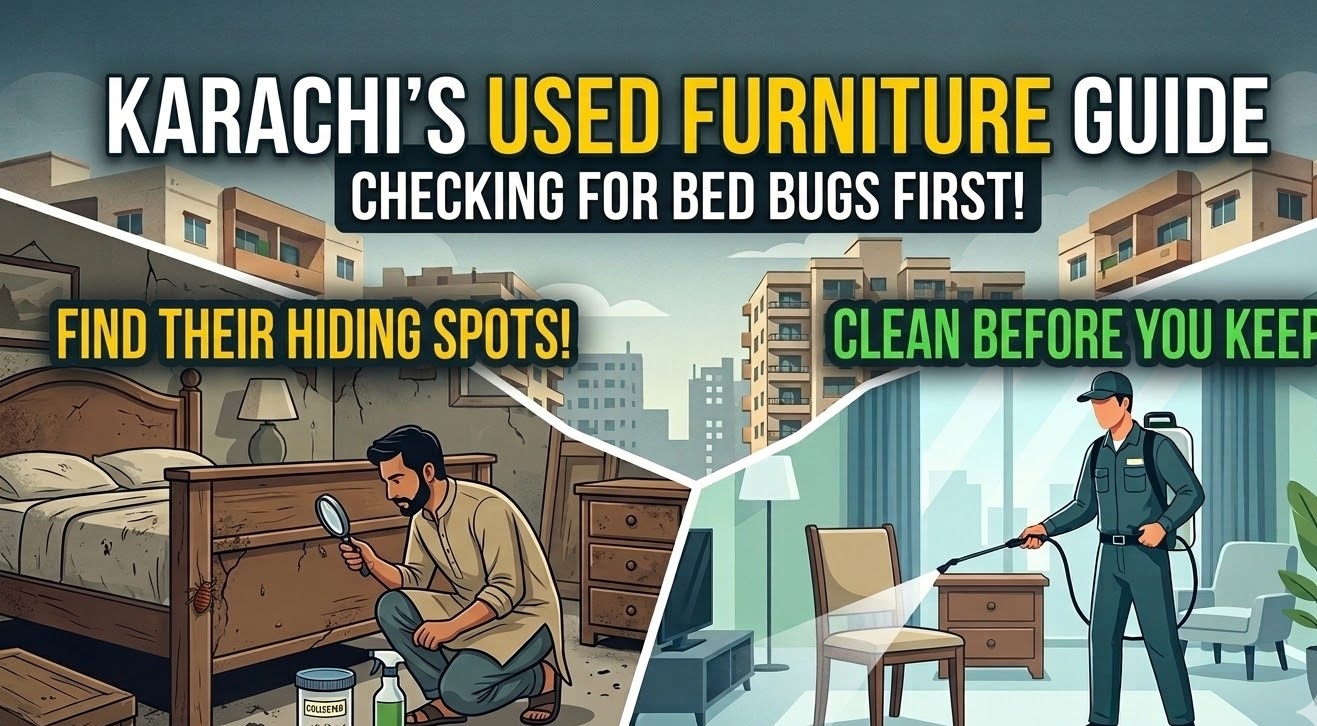
- Inspect second-hand furniture before purchase: Never bring a used mattress, sofa, or wooden bed frame home without a thorough pre-purchase inspection using a torch and card. Lea Market, Sunday Bazaar, and online platforms like OLX are high-risk sources.
- Travel hygiene: On returning from travel — whether domestic or international — leave your luggage outside or in a closed hallway before inspecting it. Wash all travel clothes immediately on a high heat cycle. Use luggage racks in hotels and never place your suitcase on the hotel bed.
- Guest vigilance: Visitors returning from travel or from homes with unknown pest control history can introduce bugs via their belongings. Inspect seating and bedding used by overnight guests after their visit.
- Regular self-inspections: Every 2 to 3 months, do a 10-minute inspection of your mattress seams, headboard, and nearby skirting boards. This is particularly important after any new furniture purchase, house guest visit, or period of travel.
Annual Professional Prevention
For families living in high-density areas of Karachi — particularly in apartment buildings where the risk of re-infestation from neighbouring units is ongoing — an annual professional prevention inspection is the single most cost-effective protective measure available. Early detection means a simple, inexpensive treatment. A full-blown infestation detected late means weeks of disruption and significant cost. The professional bed bug prevention services in Karachi offered by Unique Fumigation are specifically designed to catch problems before they become crises.
Part 8: Frequently Asked Questions from Karachi Homeowners
Can I stay at home during treatment?
No. All occupants — including children, elderly family members, and pets — must vacate the property during treatment and for the period specified by your fumigation company (typically 4 to 6 hours for chemical treatments). This is a safety requirement, not optional.
Will I need to throw away my mattress?
In the majority of cases, no. Professional treatment can successfully treat infested mattresses in place. Throwing away a mattress is often counterproductive — moving an infested mattress through the building spreads bugs to the corridor and neighbouring flats, and does not resolve the infestation since bugs are present throughout the room, not just in the mattress. Your fumigation company will advise whether any items need to be discarded.
How long will the treatment smell last?
Professional insecticide formulations have a mild odour that typically dissipates within a few hours of re-entry and ventilation. Most families find the smell is negligible or undetectable by the following morning. If you or a family member have respiratory sensitivities, inform your fumigation company in advance — they can advise on appropriate ventilation and re-entry timing.
What if my neighbour refuses to treat their flat?
This is a genuine and common challenge in Karachi apartment buildings. Your building management has a role to play — they can communicate the shared risk to all residents and in some cases require treatment as a building policy. Your fumigation company can provide a formal report documenting the infestation and the risk to neighbouring units, which building management can use to take action. In the meantime, sealing wall penetrations and using interceptor traps are the best physical defences against bugs entering from an untreated neighbouring flat.
How do I know if the treatment has worked?
Effective treatment results in progressively fewer bites, declining interceptor trap counts between visits, and no new faecal spots appearing. A final professional re-inspection 4 to 6 weeks after the last treatment session is the most reliable way to confirm complete elimination. Many reputable fumigation companies offer a guarantee period during which they will return for additional treatment at no charge if activity continues.
Is professional treatment safe for children and elderly family members?
Professional-grade insecticides used by reputable companies are safe for occupants once dry — typically 4 to 6 hours after application. The products are registered for residential use. Sensitive individuals — infants, elderly people with respiratory conditions, or anyone with chemical sensitivities — should remain out of the property for a longer period as a precaution. Always inform your fumigation company of any health sensitivities in advance so they can provide specific guidance.
Can bed bugs spread through building drainage or plumbing?
No. Bed bugs cannot survive submersion in water and do not travel through plumbing systems. Their primary routes of travel between apartments are dry: gaps in shared walls around pipes and conduits, shared corridors, and on people’s clothing or belongings.
Part 9: How to Choose the Right Bed Bug Treatment Company in Karachi
Not all pest control companies operating in Karachi are equally competent, honest, or equipped to handle bed bug infestations effectively. Here is what to look for when choosing a provider:
- Specific bed bug experience: Ask directly whether the company regularly treats bed bug infestations and what their approach is. A company that treats bed bugs the same way it treats cockroaches or mosquitoes does not have specialised expertise.
- A written treatment plan: Reputable companies provide a written plan specifying what will be treated, what products will be used, how many visits are included, and what the follow-up schedule is. Avoid any company that offers a single-visit fix with no follow-up.
- Multi-visit programme as standard: As explained above, a single treatment is rarely sufficient. Any company offering a guaranteed single-session fix for a confirmed infestation should be approached with caution.
- Willingness to assess the building: A good company will ask about the building layout and neighbouring units, not just treat the reported flat in isolation.
- Clear communication about preparation and re-entry: A professional company provides clear, specific preparation instructions and post-treatment guidance — not just ‘vacate for a few hours’.
- A guarantee or warranty: Look for a company that stands behind its work with a defined guarantee period, during which additional treatments are provided if activity continues.
Ready to Eliminate Bed Bugs from Your Karachi Home — For Good?
You now have the most complete understanding of bed bug treatment available to any Karachi homeowner. The single most important decision you can make — whether your infestation is just beginning or has already spread — is to get professional eyes on the problem as soon as possible.
Every day of delay means more eggs laid, more rooms potentially affected, and greater risk to your neighbours. Early professional intervention is not just the most effective approach — it is also the least disruptive and least expensive one.
| 📌 Book Your FREE Bed Bug Inspection with Unique Fumigation Karachi’s specialist bed bug treatment experts. We serve DHA, Clifton, Gulshan-e-Iqbal, Nazimabad, North Karachi, Orangi, Landhi, Korangi, Saddar, and all surrounding areas. Fast response | Professional-grade treatment | Multi-visit programmes Building-wide solutions | Follow-up monitoring | Guaranteed results |
Whether you need a first-time professional inspection, a complete treatment programme, or an annual prevention check, Unique Fumigation’s specialist team delivers comprehensive bed bug control across all of Karachi — using proven, safe, and effective methods tailored to your home and building.
👉 Book Your Free Inspection Now
Don’t let bed bugs steal another night’s sleep. The solution starts with a single call.
Unique Fumigation — Karachi’s Trusted Pest Control Specialists
uniquefumigation.com | Serving all areas of Karachi