Author: Unique_Fumigation

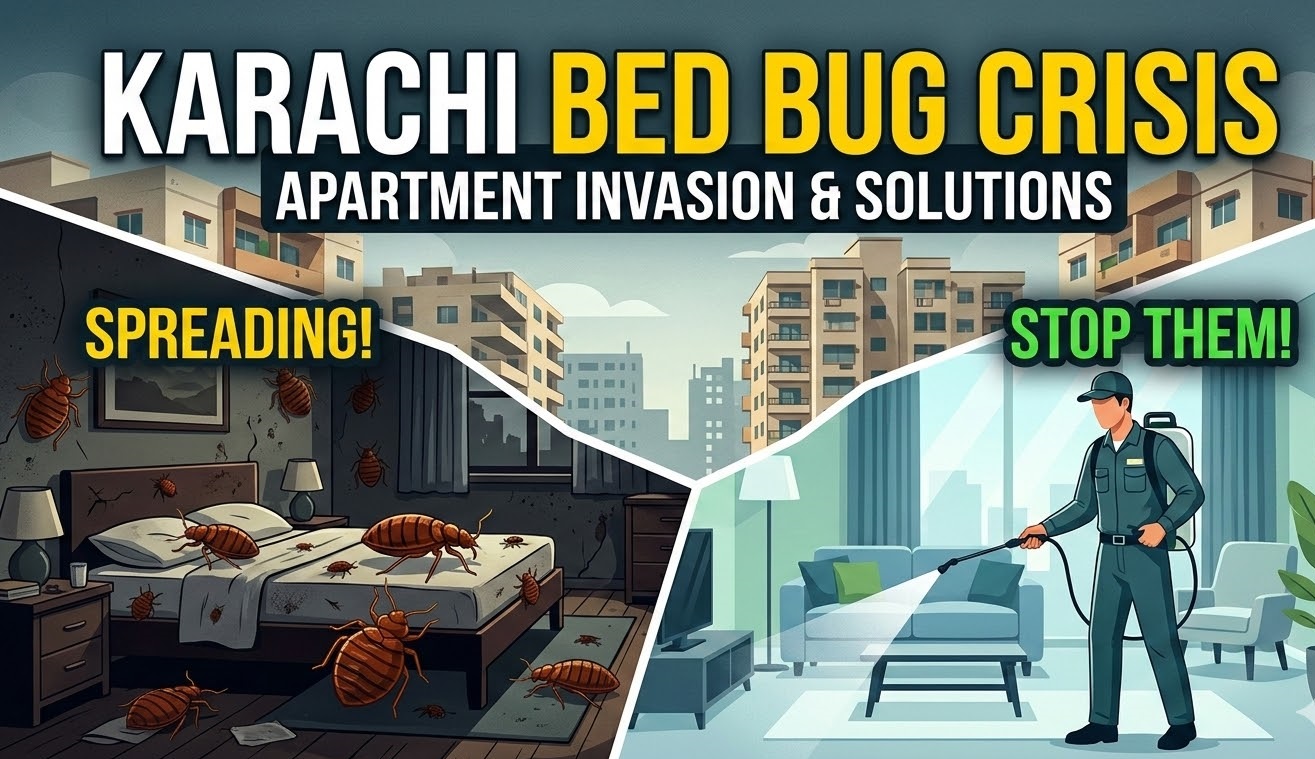
  • How Bed Bugs Are Spreading Across Karachi’s Apartment Buildings — And How to Stop Them

    How Bed Bugs Are Spreading Across Karachi’s Apartment Buildings — And How to Stop Them

    If you’ve been waking up with itchy, red welts on your arms, neck, or legs — and you can’t figure out where they’re coming from — there’s a very real chance your apartment building has a bed bug problem. Across Karachi, from the high-rise towers of Clifton and DHA to the densely packed apartment blocks of Nazimabad, Gulshan-e-Iqbal, and North Karachi, bed bug infestations are quietly spreading from one unit to another.

    This isn’t just an inconvenience. Bed bugs cause sleep deprivation, skin infections, psychological stress, and can destroy the value of your furniture and belongings. The worst part? They spread silently — and by the time most families notice a full infestation, the problem has already traveled to neighbouring flats.

    In this guide, we’ll break down exactly why bed bugs are such a growing problem in Karachi’s apartment buildings, how they spread, and — most importantly — what you can do right now to protect your home and family.

    Why Karachi’s Apartment Buildings Are a Perfect Breeding Ground for Bed Bugs

    Bed bugs thrive in environments where people live in close proximity, where travel is frequent, and where second-hand goods are commonly traded. Karachi, unfortunately, checks every single one of these boxes.

    1. High-Density Living

    Karachi is one of the most densely populated cities in the world, with millions of families living in multi-storey apartment buildings. When units share walls, floors, ceilings, plumbing chases, and electrical conduits, bed bugs have a ready-made highway to travel between neighbours — completely invisibly.

    A single infested flat in a building of 20 units can spread bed bugs to 5 or 6 neighbouring apartments within a matter of weeks.

    2. Karachi’s Hot and Humid Climate

    Bed bugs reproduce fastest in warm, humid climates — precisely the conditions that define Karachi for most of the year. In temperatures between 21°C and 32°C (which is Karachi’s average range), a single female bed bug can lay up to 500 eggs in her lifetime, with eggs hatching in just 6 to 10 days. The city’s long summers and mild winters mean there is virtually no cold-weather die-off to slow the spread naturally.

    3. High Turnover of Residents and Furniture

    Karachi has enormous population movement — families relocating for work, students moving into rented accommodation, and frequent turnover in rental apartments. Each move is an opportunity for bed bugs to hitch a ride in luggage, mattresses, sofas, or even clothing. Second-hand furniture markets in areas like Lea Market and Saddar are particularly high-risk sources of infested items.

    4. International Travel and Arrivals

    Karachi is Pakistan’s busiest port city and home to Jinnah International Airport. Travellers returning from infested hotels abroad — or even from other Pakistani cities — regularly bring bed bugs home in their luggage without realizing it. Once inside an apartment building, the bugs quickly establish a local population.

    How Bed Bugs Spread Through Apartment Buildings: The Mechanics

    Understanding how bed bugs move is the first step to stopping them. These insects cannot fly or jump — but they are surprisingly good travellers.

    • Wall voids and conduits: Bed bugs crawl through gaps around pipes, electrical wires, and conduit openings in shared walls — moving from one flat to the next without ever entering a corridor.
    • Shared hallways and elevators: Bugs on an infested resident’s clothing or bags can be dropped in common areas and picked up by neighbours.
    • Second-hand furniture: Buying a used sofa, mattress, or wooden bed frame is one of the most common ways infestations start in a new apartment.
    • Luggage and travel: Bed bugs are notorious for hiding in the seams and pockets of suitcases. Placing hotel-used luggage on your bed at home is enough to start an infestation.
    • Visitors and guests: An infested visitor’s jacket or bag left on your furniture can introduce bugs into your home.
    • Laundry rooms: Shared laundry facilities in apartment buildings are a frequently overlooked transmission point — infested clothing can transfer bugs to others’ laundry.

    The key takeaway here is that in a Karachi apartment building, your infestation is rarely just your problem. And conversely, your neighbour’s problem can quickly become yours if the building is not treated comprehensively.

    Warning Signs: How to Know If Your Apartment Has Bed Bugs

    Many Karachi residents mistake bed bug bites for mosquito bites or heat rash — especially during summer. Here are the definitive signs to look for:

    • Bite patterns: Bed bug bites typically appear in clusters or rows of 3 to 5 bites, often on arms, shoulders, neck, and legs. They are usually more intensely itchy than mosquito bites and appear on exposed skin.
    • Blood stains on sheets: Small reddish-brown spots on your bedsheets or pillowcases are a classic sign — these are caused by crushing a recently fed bug during sleep.
    • Dark spots on mattresses or walls: Tiny dark brown or black spots (bed bug excrement) on mattress seams, headboards, or behind electrical sockets are a strong indicator.
    • Shed skins: Bed bugs shed their exoskeletons 5 times as they grow. Finding pale, translucent husks in mattress seams or furniture joints is a clear sign.
    • A musty, sweet odour: A heavy infestation produces a distinctive, sweetish musty smell — often compared to coriander or almonds.
    • Live bugs: Adult bed bugs are apple-seed sized, reddish-brown, and flat. Check the seams of mattresses, the backs of headboards, behind picture frames, and inside electrical sockets.
    ⚠️  Important: Finding even ONE bed bug in your Karachi apartment should be treated as an emergency.    Bed bugs do not live alone. Where there is one, there are dozens — or hundreds — hidden nearby.    Do not wait for the problem to grow before taking action.

    The Most Affected Areas in Karachi

    While bed bugs can infest any home regardless of cleanliness or income level, certain areas and building types in Karachi see disproportionately high rates of infestation:

    • DHA and Clifton high-rises: Frequent international travel, furnished rental apartments, and high resident turnover all contribute to bed bug risk in premium areas.
    • Gulshan-e-Iqbal and Gulistan-e-Johar: Dense apartment blocks with shared walls and active second-hand furniture trading make these areas particularly vulnerable.
    • North Karachi and Nazimabad: Multi-family buildings with multiple units per floor and limited pest control history are hotspots.
    • Saddar and Lyari: Older building stock with plentiful wall voids and high population density create ideal conditions for bed bug spread.
    • Student accommodation near universities: High turnover, second-hand furniture, and shared spaces make student apartments in areas near NED, Karachi University, and SZABIST particularly high risk.

    What NOT to Do When You Find Bed Bugs

    Many Karachi homeowners make the situation significantly worse by reacting the wrong way. Here is what you must avoid:

    • Do NOT throw away your mattress immediately: This is the single most common mistake. Moving an infested mattress through the building spreads bugs to corridors, elevators, and neighbouring flats. And it does not solve the problem — bugs live throughout the room, not just in the mattress.
    • Do NOT use random spray pesticides from pharmacies: Over-the-counter insecticides rarely reach bugs hiding deep inside furniture, wall voids, or electrical outlets. Worse, they can drive bugs deeper into hiding or cause them to scatter to new areas — including neighbouring units.
    • Do NOT sleep in another room: Bugs will simply follow you. Worse, this can spread the infestation to additional rooms and make treatment much more complex and expensive.
    • Do NOT keep the infestation to yourself: If you live in an apartment building, you have an ethical and practical obligation to inform your building management. An untreated neighbouring unit will simply re-infest your flat even after successful treatment of your own unit.

    How to Actually Stop Bed Bugs: A Step-by-Step Approach for Karachi Apartments

    Step 1: Confirm the Infestation

    Before taking any action, confirm that what you are dealing with is actually bed bugs and not mites, fleas, or another insect. Use a torch to inspect the seams of your mattress, behind your headboard, inside bedside table drawers, and behind loose wallpaper or electrical socket covers.

    Step 2: Alert Your Building Management

    Notify your building management or landlord immediately. In a multi-unit building, successful treatment requires a coordinated effort — treating only your unit while neighbouring units remain infested is a recipe for repeated re-infestation.

    Step 3: Prepare the Area for Professional Treatment

    Before professional fumigators arrive, you should:

    • Wash all bedding, curtains, and clothing on the highest safe heat setting and dry on high heat for at least 30 minutes
    • Vacuum all surfaces — mattresses, carpets, baseboards, and furniture — and immediately seal and dispose of the vacuum bag outside your building
    • Clear clutter from floors and under beds to give treatment access to all areas
    • Do NOT move furniture or bags out of the treated rooms during or after treatment

    Step 4: Engage Professional Bed Bug Control

    This is the most critical step. DIY treatments almost never fully eliminate a bed bug infestation in a Karachi apartment — the bugs are too well hidden, reproduce too quickly, and are increasingly resistant to common over-the-counter insecticides. You need professional bed bug control services in Karachi that use integrated pest management techniques, including heat treatment, residual insecticide application, and follow-up inspections.

    A qualified fumigation company will treat not just the obvious areas but also all the hidden harbourage points — inside wall voids, behind electrical fittings, under carpet edges, and inside furniture joints — that DIY treatments completely miss.

    Step 5: Follow Up and Monitor

    A single treatment session is rarely sufficient for a heavy infestation. Professional treatment plans typically involve 2 to 3 visits spaced 10 to 14 days apart — timed to kill newly hatched eggs before they reach reproductive maturity. After treatment, install bed bug interceptor traps under bed legs to monitor for any surviving bugs.

    Preventing Future Bed Bug Infestations in Your Karachi Home

    Once your home has been successfully treated, prevention becomes the priority. Here is how to keep bed bugs from returning:

    • Inspect all second-hand furniture before bringing it home: Use a torch and check all seams, joints, and hollow sections. If in doubt, leave it out.
    • Use luggage racks when travelling: Never place your suitcase on a hotel bed. On returning home, inspect your luggage outside before bringing it in, and wash travel clothes immediately.
    • Encase your mattress and box spring: Purpose-made bed bug proof mattress encasements seal bugs inside (starving existing ones) and prevent new ones from hiding in your mattress.
    • Seal gaps in walls and around pipes: Caulk gaps around pipes, electrical conduits, and baseboards where they meet shared walls to block the key travel routes bugs use between apartments.
    • Conduct regular inspections: Check your mattress seams and headboard area every few months — especially after having guests or returning from travel.
    • Book annual preventive inspections: For apartment buildings in high-risk areas of Karachi, an annual professional inspection is the single most cost-effective way to catch a problem early before it becomes a building-wide crisis.

    Why Whole-Building Treatment Is Essential in Karachi’s Apartment Blocks

    This point deserves special emphasis. In Karachi’s typical apartment building layout — with multiple units per floor, shared walls, and shared plumbing and electrical runs — treating a single unit is almost always insufficient.

    Studies of bed bug spread in multi-unit buildings consistently show that within 6 months of an untreated source unit, 60 to 80% of directly adjacent apartments become infested. This means that if you successfully treat your flat but your immediate neighbours do not, you will almost certainly be re-infested within weeks.

    This is why working with a bed bug extermination specialist in Karachi who understands building-wide treatment protocols is so important. An experienced company will assess the extent of spread through your building, develop a floor-by-floor treatment plan, and work with building management to ensure comprehensive eradication — not just temporary relief.

    What to Expect from Professional Bed Bug Treatment

    If you’ve never hired a pest control company for bed bugs before, here is what a professional treatment from a reputable Karachi fumigation company typically involves:

    1. Initial Inspection: A thorough assessment of all affected areas, identification of infestation level (light, moderate, or heavy), and documentation of harbourage points.
    2. Treatment Plan: A customised treatment plan based on infestation severity, building layout, and resident needs — including preparation instructions for you.
    3. Chemical Application: Application of professional-grade residual insecticides to all harbourage points, including contact insecticides and dust formulations in wall voids and electrical outlets.
    4. Follow-up Visits: Return visits at 10 to 14 day intervals to treat newly hatched nymphs and verify elimination.
    5. Post-Treatment Report: Documentation of treatment and recommendations for ongoing prevention.

    Stop Bed Bugs Before They Take Over Your Building

    ✅  Don’t wait until the infestation has spread to every floor. ✅  Don’t waste money on over-the-counter sprays that don’t work. ✅  Don’t let the problem become your whole building’s nightmare.   Book a FREE bed bug inspection with Unique Fumigation today. Karachi’s trusted pest control experts — serving DHA, Clifton, Gulshan, Nazimabad, North Karachi, and beyond.

    Unique Fumigation’s specialist team has years of experience treating bed bug infestations in Karachi apartment buildings of all sizes. We use proven, safe, and effective treatment methods — and we don’t just treat your unit, we help you protect your entire building.

    📞  Call us today or visit our website to schedule your FREE inspection. The sooner you act, the simpler and less costly the solution.

    👉  Book Your Free Bed Bug Inspection Now

    Unique Fumigation — Karachi’s Trusted Pest Control Specialists

    uniquefumigation.com  |  Serving all areas of Karachi
  • Wood vs. Concrete: Which Structures in Karachi Are Safe from Termites?

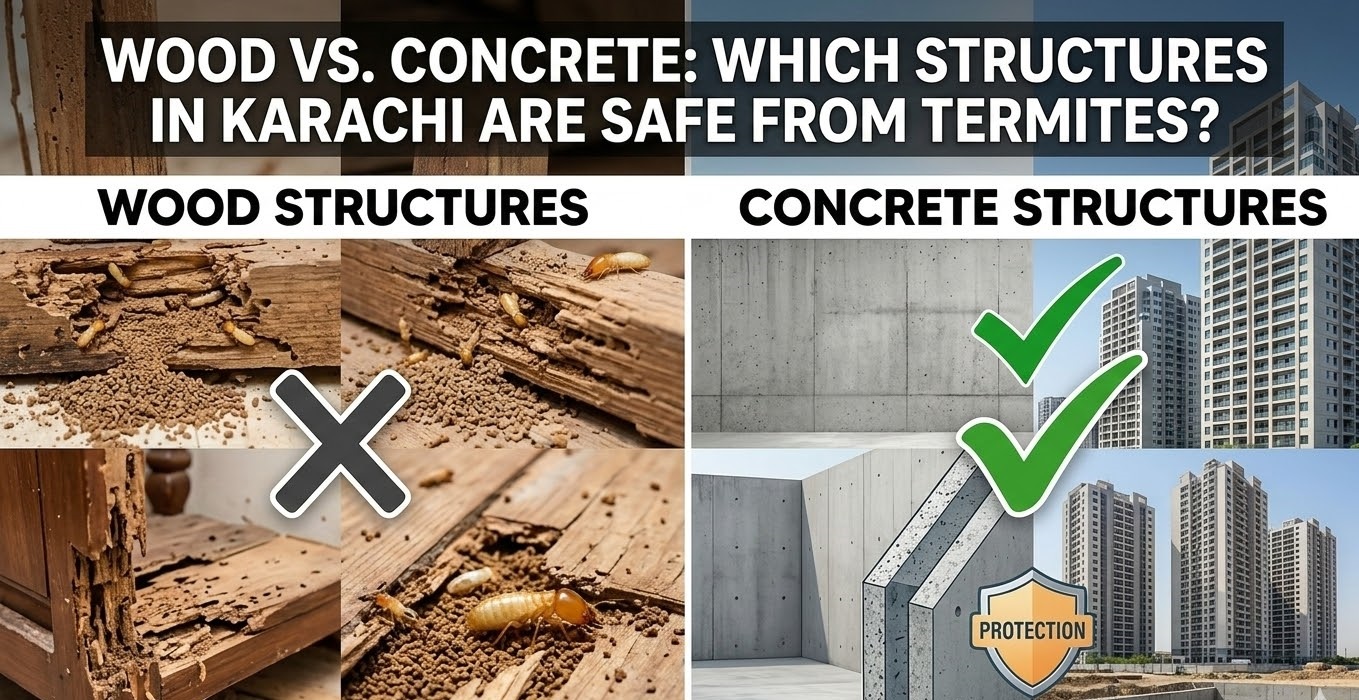
    Wood vs. Concrete: Which Structures in Karachi Are Safe from Termites?

    Walk through almost any neighborhood in Karachi — from the leafy lanes of Defence to the dense residential blocks of Gulshan-e-Iqbal — and you will find a mix of construction styles: older timber-heavy homes, modern reinforced concrete structures, and everything in between. A question that many Karachi homeowners ask, often after a neighbor suffers a costly infestation, is a simple one: Is my home safe from termites because it is built from concrete?

    The answer is more complicated — and more alarming — than most people expect. While the material your home is built from does influence termite risk, it does not eliminate it. Understanding exactly where termites can and cannot penetrate, and why even steel-reinforced concrete structures in Karachi are not fully immune, is the first step toward genuinely protecting your property.

    This guide gives you the full picture.

    The Myth of the “Termite-Proof” Concrete Home

    There is a widespread belief among Karachi homeowners that if a structure is built primarily from concrete, brick, and steel, termites simply cannot enter or cause damage. This belief, while understandable, is dangerously incomplete.

    Here is the reality: termites do not eat concrete. That much is true. But they do not need to. What termites are after is the cellulose-rich organic material inside your concrete structure — the wooden door frames, window shutters, built-in wardrobes, kitchen cabinets, flooring underlays, roof timbers, and decorative woodwork that exists in virtually every Karachi home, regardless of how it was built.

    Termites are among the most determined travelers in the insect world. Subterranean termite species — the most destructive and prevalent in Karachi — build pressurized mud tubes that allow them to cross any non-food surface, including concrete walls, brick, ceramic tile, and even metal conduits, to reach the wood on the other side.

    ⚠️  The Key Insight: Termites do not need to eat through your walls. They only need a crack, a pipe gap, or a construction joint the width of a credit card edge to gain entry. Once inside, they will find the wood.

    Timber and Wood-Frame Structures: The Highest-Risk Category

    There is no ambiguity here. Homes with substantial timber construction — whether it is a traditional wooden ceiling (“lakri ki chhat”), timber-frame walls, wooden flooring, or heavy use of untreated wood in structural and decorative elements — represent the highest-risk category for termite infestation in Karachi.

    Why Timber Construction Is So Vulnerable in Karachi

    • Direct food source: Wood is composed almost entirely of cellulose, which is what termites digest. A timber beam is not just a pathway — it is a meal.
    • Moisture retention in Karachi’s climate: Wooden elements in Karachi’s humid coastal environment absorb and retain moisture, especially during the July–September monsoon season. Moist wood is significantly more attractive to termite colonies than dry wood, and it supports faster colony growth.
    • Soil contact: In older neighborhoods like Saddar, Lyari, Orangi Town, and parts of Landhi, wooden posts, door frames, and boundary structures frequently make direct contact with the soil — providing subterranean termites with an unobstructed entry path from the ground straight into the structure.
    • Untreated timber: Much of the timber used in Karachi’s residential construction — particularly in mid- and lower-income areas — has never been pre-treated with termiticides or preservatives. This is especially common in homes built more than 15 years ago, when anti-termite pre-treatment was not a standard practice.
    • Hidden voids and cavities: Traditional timber construction creates hollow spaces within walls, ceilings, and floors that provide ideal, undisturbed conditions for termite colonies to establish and expand without detection for years.
    🏘️  At Particular Risk in Karachi: Older homes in Saddar, Lyari, and Ranchore Line with wooden ceiling structuresProperties in Korangi, SITE, and Baldia with timber-heavy compound walls and storagePre-2000 construction in Gulshan-e-Iqbal, North Nazimabad, and Federal B AreaAny home with large trees or mature garden shrubs adjacent to the structure  

    Concrete and Steel Structures: Safer — But Not Safe

    Modern reinforced concrete construction — the dominant building method across contemporary Karachi developments in DHA, Bahria Town, Clifton, Scheme 33, and Gulistan-e-Johar — significantly reduces the structural risks associated with termite attack. But it would be a serious mistake to assume it eliminates termite risk entirely.

    Where Termites Enter Concrete Structures

    1. Construction Joints and Expansion Gaps

    Every reinforced concrete structure has construction joints — the seams where separate concrete pours meet, and expansion gaps built in to allow for thermal movement. These joints, if not sealed with appropriate termite-resistant compounds, are entry highways for subterranean termite colonies traveling through the soil beneath the slab.

    In Karachi’s variable temperatures — cold January nights and scorching May afternoons — thermal expansion cycles cause these joints to open and close repeatedly, degrading standard sealants over time and creating progressively larger gaps.

    2. Utility Pipe Penetrations

    Water supply pipes, drainage pipes, gas lines, and electrical conduits must pass through the concrete slab and walls of every structure. The gaps around these penetrations — which are never perfectly sealed in practice — are among the most common termite entry points observed in Karachi homes.

    This is particularly relevant in Karachi given the frequency of plumbing repairs: every time a pipe is accessed and re-sealed, the re-sealing is rarely done with termite-resistant compounds.

    3. Hollow Block Construction

    A significant proportion of concrete construction in Karachi uses hollow concrete blocks rather than solid poured concrete. The cavities within hollow blocks are actually ideal termite habitat — they provide protected, dark, humid spaces that termites can use to travel and nest, even within an apparently solid concrete wall.

    4. The Wood Inside the Concrete Home

    Even the most comprehensively concrete-constructed home in Karachi contains substantial wood: door frames and shutters, window frames and shutters, kitchen and bathroom cabinets, wardrobes and built-in furniture, decorative ceiling treatments (false ceilings with wooden battens), parquet or wooden flooring, roof timbers beneath the final roof slab, and wooden boxing around exposed pipes.

    In a typical well-appointed three-bedroom apartment or villa in DHA or Clifton, the total timber content can amount to several tons of wood — all of it potentially accessible to a determined termite colony once they have crossed the concrete envelope.

    💡  Case Example — DHA Phase 5 Villa: A fully concrete-constructed four-bedroom villa was found to have significant termite activity in the kitchen cabinetry and master bedroom wardrobe — both installed on the ground floor. Inspection revealed a mud tube running from the soil outside, through a utility pipe penetration in the kitchen slab, across the screed floor under the tile, and into the base of the kitchen units. The concrete structure was entirely intact. The damage was 100% to timber fittings and furniture. Early professional treatment would have prevented Rs. 180,000 in replacement costs.

    Head-to-Head: Wood vs. Concrete in Karachi’s Termite Context

    🪵  Wood / Timber🧱  Concrete / Steel
    Primary material is food for termitesPrimary material is not food for termites
    Structural timbers directly at risk of collapseStructural elements safe — but timber fittings fully at risk
    Infestations typically faster-spreading and harder to detectInfestations confined to fittings — but can still be very costly
    Mud tubes may penetrate from multiple soil contact pointsEntry through pipe gaps, construction joints, and hollow blocks
    Repair costs can include full structural reconstructionRepair costs typically limited to fittings and furniture
    Pre-treatment essential before and during constructionPre-treatment still strongly recommended — especially soil barrier
    Annual professional inspection: criticalAnnual professional inspection: strongly recommended

    The “Hybrid” Reality: Most Karachi Homes Are Both

    In practice, the vast majority of Karachi’s residential housing stock is neither purely timber nor purely reinforced concrete. Most homes built between the 1960s and 2010s combine:

    • Reinforced concrete columns and beams with brick infill walls
    • Concrete slabs for floors and roof, but significant timber in door and window frames
    • Some rooms with traditional wooden ceiling treatments
    • Wooden kitchen and bathroom fixtures throughout
    • Timber used for roof framing beneath a concrete or asbestos sheet roof

    This hybrid construction model means that even homes which owners consider “RCC construction” often contain the equivalent of a fully timber-fitted interior — and all the termite vulnerability that comes with it. The structural frame may be safe, but the liveable space is not.

    This is exactly why homeowners in areas like Gulistan-e-Johar, North Karachi, Surjani Town, and even newer developments in Bahria Town Karachi should not assume their reinforced concrete homes are exempt from professional termite control treatment.

    The Critical Window: Why Pre-Construction Treatment Matters Most

    Regardless of whether your home is timber, concrete, or hybrid in construction, there is one point in the building lifecycle when termite protection is most effective and most affordable: before and during construction.

    Once a structure is completed, applying a chemical soil barrier requires drilling through finished floors, accessing foundation walls, and disrupting interior fittings. This is possible — and Unique Fumigation does it every day across Karachi — but it is significantly more involved and costly than treating during construction.

    What Pre-Construction Anti-Termite Treatment Involves

    1. Foundation soil treatment: Before the concrete slab is poured, the prepared soil base is treated with an approved, long-duration termiticide that creates a chemical barrier termites cannot cross without being eliminated.
    2. Perimeter trench treatment: A trench is dug around the building footprint and filled with termiticide solution before backfilling — creating an unbroken chemical shield around the entire structure.
    3. Pipe penetration sealing: Entry and exit points for utility pipes through the slab are pre-treated and sealed with termite-resistant compounds before the floor finish is applied.
    4. Post-slab surface treatment: After the slab is cured, the surface below the floor screed is treated before tiles or other floor finishes are installed.

    If you are currently building or planning to build in Karachi, insisting on proper pre-construction anti-termite soil treatment from a certified pest control company is not optional — it is the single most important structural protection decision you will make.

    📌  Did You Know? In many countries including India and parts of the Middle East, anti-termite soil treatment before construction is legally required for building permits. While Pakistan’s building regulations vary, Karachi’s climate makes pre-construction treatment just as essential in practice.

    Specific Scenarios: Your Home Type and Your Risk Level

    Scenario A: Older Timber-Ceiling Home in Nazimabad or Saddar

    Risk level: Critical. Traditional wooden ceiling structures, often built in the 1950s–1970s, are at extreme risk. If a professional inspection has not been conducted in the past 12 months, the likelihood of an active colony is very high. Professional termite inspection and treatment should be booked immediately.

    Scenario B: RCC Apartment in a Multi-Story Building in Clifton or DHA

    Risk level: Moderate. Ground floor and first floor apartments face the highest risk due to proximity to soil. Upper floors are lower risk for subterranean termites but can still be affected if drywood termites are introduced through infested furniture. Soil treatment around the building’s perimeter is the key protection measure — confirm with building management whether this has been done.

    Scenario C: Newly Built Villa in Bahria Town or Scheme 33

    Risk level: Moderate to High if pre-construction treatment was not applied. New construction disturbs established termite colonies in the soil, which can migrate directly into new foundations. Verify with your builder whether certified anti-termite pre-treatment was applied — and if not, arrange post-construction soil barrier treatment in Karachi as soon as possible.

    Scenario D: Home with Large Garden or Mature Trees (Any Area)

    Risk level: High. Mature trees, tree stumps, wooden garden furniture, and landscaping materials all serve as termite colony bases. Subterranean colonies established in garden soil can reach the home’s foundation within weeks. Annual perimeter inspections are essential.

    Scenario E: Under-Construction Property

    Risk level: Controllable with action. This is the ideal moment to act. Pre-construction anti-termite treatment applied now will provide long-duration protection at a fraction of the cost of post-construction treatment.

    How Unique Fumigation Protects Both Wood and Concrete Homes

    Whether your home is a traditional timber structure in Lyari or a modern concrete villa in DHA Phase 8, Unique Fumigation’s approach to comprehensive termite control in Karachi is tailored to your specific construction type, risk profile, and the degree of any existing infestation.

    • Timber homes and timber-heavy structures: Full soil treatment around the perimeter, borate wood treatment applied directly to accessible timber elements, wood injection for inaccessible voids, and baiting systems for active established colonies.
    • Concrete and RCC structures: Soil injection drilling around the building’s perimeter, chemical barrier installation beneath floors where accessible, sealing of all utility penetrations with approved compounds, and inspection of all timber fittings with targeted treatment as needed.
    • New or under-construction properties: Pre-pour soil treatment, trench treatment, post-slab surface treatment, and pipe penetration sealing — all carried out to manufacturer and industry specifications using government-approved termiticides.
    • Ongoing monitoring programs: Quarterly or bi-annual visits to check bait stations, re-inspect high-risk zones, and apply maintenance treatments — because in Karachi’s climate, one-time treatment is never sufficient for long-term protection.

    6 Things Every Karachi Homeowner Should Do Right Now

    Regardless of your construction type, these steps reduce your termite risk immediately:

    • Get a professional inspection done this season. Before the monsoon, book a certified termite inspection. Early detection saves money and structural damage.
    • Check every utility entry point. Examine where pipes enter your floors and walls. Any gap larger than a few millimetres should be sealed with appropriate filler compound.
    • Eliminate moisture problems. Fix leaking taps, pipes, and roof drainage. Moisture is the single biggest accelerant of termite colony growth.
    • Keep wood off the ground. Store timber, firewood, old furniture, and building materials elevated and away from the building perimeter.
    • Remove tree stumps and dead roots. If you have had trees removed in or around your garden, ensure the stumps are fully cleared and the soil treated — stumps are prime termite colony bases.
    • Confirm pre-construction treatment status. If you are unsure whether your home received anti-termite pre-treatment during construction, ask Unique Fumigation to inspect and advise — it is a free service.

    Frequently Asked Questions

    Can termites damage concrete directly?

    Termites cannot digest or structurally damage sound concrete. However, they can exploit cracks, gaps, and joints in concrete to gain access to the wood inside a structure. Termite activity can also accelerate moisture ingress into concrete cracks over time.

    My home is fully tiled with no exposed wood on the ground floor. Am I safe?

    Tiling provides no barrier against subterranean termites. Termites travel in sealed mud tubes across any surface — including ceramic tiles — and can enter through grout lines, expansion joints, and the tiny gaps around pipe bases. The wood in your door frames, cabinets, and wall fittings remains accessible to them.

    Is steel-frame construction termite-proof?

    Steel framing is not a food source for termites and will not be structurally damaged by them. However, steel-frame homes still contain wood in every door, window, cabinet, and fitting — and require the same soil barrier and fitting protection measures as other construction types. Do not assume a steel-frame home is termite-immune.

    How much does post-construction soil treatment cost compared to pre-construction?

    Pre-construction soil treatment typically costs 30–50% less than post-construction treatment for an equivalent structure, because it does not require drilling through finished floors, moving furniture, or extensive sealing work on completed surfaces. The earlier you treat, the more cost-effective the protection.

    I live in a high-rise apartment. Should I be concerned?

    Ground floor and first floor apartment owners should take the same precautions as house owners. In multi-story buildings, drywood termites (which do not require soil contact) can infest any floor through wooden furniture, infested timber brought in during renovation, or adjacent units. If you are on the ground floor, confirm with building management that the foundation soil has been treated.

    The Bottom Line: No Structure in Karachi Is Automatically Safe

    Whether your home is built from timber, reinforced concrete, brick, or a combination of all three, the unique conditions of Karachi — the coastal humidity, the year-round warmth, the aging urban infrastructure, and the active termite species in the soil — mean that no home is automatically exempt from termite risk.

    The question is not whether your construction material protects you. The question is whether your soil, your building’s entry points, and your timber fittings are protected. That requires professional assessment and, where necessary, professional treatment.

    The good news: with the right treatment applied at the right time, termite infestation is entirely preventable. And with Unique Fumigation’s team covering every neighborhood in Karachi, protection is a phone call away.

    📞  Book Your FREE Termite Inspection Today Whether your home is timber, concrete, or anywhere in between — our certified inspectors will assess your property’s specific risk level, identify any active termite activity, and recommend a treatment plan tailored to your construction type. ►  Visit: uniquefumigation.com/termite-control-services-in-karachi/ No obligation. No cost. Just honest expert advice — and peace of mind. Serving DHA • Clifton • Gulshan • North Nazimabad • Bahria Town • Korangi • Scheme 33 • And All of Karachi

    Unique Fumigation | Karachi’s Trusted Termite & Pest Control Specialists

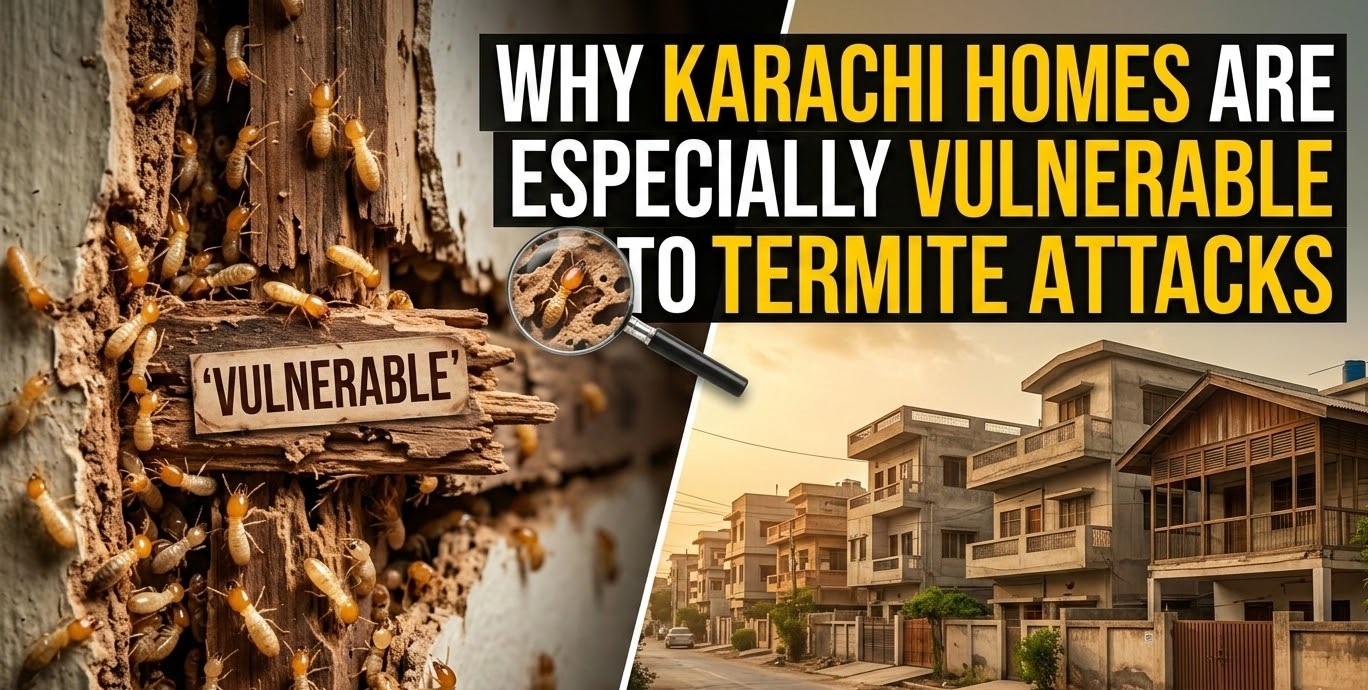
  • Why Karachi Homes Are Especially Vulnerable to Termite Attacks — And What to Do About It

    Why Karachi Homes Are Especially Vulnerable to Termite Attacks — And What to Do About It

    If you own a home in Karachi, termites are one of the most serious — and most underestimated — threats to your property. Every year, thousands of Karachi homeowners discover, often too late, that these tiny insects have been silently hollowing out their furniture, wooden fixtures, door frames, and even the structural beams of their homes.

    Unlike a burst pipe or a cracked wall, termite damage is invisible until it reaches a critical stage. By the time you notice hollow-sounding wood, sagging floors, or crumbling skirting boards, the colony has likely been feeding for months — sometimes years.

    But what makes Karachi’s homes especially vulnerable? And more importantly, what can you do right now to protect your home and your family’s investment? This guide covers everything you need to know.

    The Karachi Climate: A Termite’s Paradise

    Termites thrive in warm, humid conditions — and Karachi delivers both in abundance. Situated on the Arabian Sea coast, Karachi experiences a hot, semi-arid climate with high coastal humidity, particularly during the monsoon months of July through September and in the humid winter coastal air.

    Here is what the local climate looks like from a termite’s perspective:

    • High humidity levels: Termites require moisture to survive. Coastal neighborhoods such as Clifton, Defence (DHA), and Keamari experience persistent humidity that keeps the soil and building materials consistently moist — ideal conditions for subterranean termite colonies.
    • Year-round warmth: Karachi rarely experiences true cold winters. Temperatures stay above 20°C for most of the year, allowing termite colonies to remain active and reproducing 365 days a year, unlike in colder climates where activity slows seasonally.
    • Monsoon season soil saturation: When heavy rains arrive, water saturates the soil beneath and around homes. This drives subterranean termites upward, directly into foundations, floor slabs, and ground-floor wooden elements.
    • Post-rain swarming events: After the first monsoon rains, winged termites (alates) swarm in massive numbers to establish new colonies. If you have seen clouds of flying insects around street lights in Karachi in July or August, many of those are termite swarmers searching for a new home — and yours could be next.
    ⚠️  Important: Termite colonies can grow to over one million individuals in a mature nest. A single queen can lay up to 30,000 eggs per day. Once established in your home’s foundation, a colony will not go away on its own.

    Karachi’s Urban Infrastructure: Built for Termites to Travel

    Beyond climate, Karachi’s urban fabric creates invisible highways for termite colonies to move from one property to the next. Understanding this is key to understanding why even brand-new homes in Karachi can develop termite infestations within a few years.

    1. High Density of Old Timber Construction

    Older neighborhoods in Karachi — including areas like Saddar, Lyari, North Nazimabad, and parts of Gulshan-e-Iqbal — contain a significant proportion of older homes built with substantial timber framing, wooden ceilings, and traditional woodwork. Many of these properties have existing termite colonies that have been present for decades.

    When a new property is constructed nearby, or when renovations disturb the soil, termite colonies can easily migrate. In densely packed urban areas, the colony from a neighbor’s home can reach yours within weeks.

    2. The Problem of Continuous Soil Contact

    Much of Karachi’s residential construction — particularly in middle-income neighborhoods — involves direct contact between timber elements and the ground. Door frames, wooden posts, boundary walls, and garden areas often allow uninterrupted soil-to-wood contact, which is the primary pathway for subterranean termite species like Coptotermes formosanus and Odontotermes obesus — both of which are prevalent in Karachi’s soil.

    3. Utility Lines and Underground Passages

    Karachi’s aging underground infrastructure — including water pipes, sewage lines, and electrical conduits — creates network of passages that termites readily exploit. Old cracked pipes provide moisture sources deep in the soil, and the spaces around utility entries into buildings are common termite entry points that often go unnoticed for years.

    4. Construction Material Quality

    Rapid urban expansion in areas like Gulistan-e-Johar, Surjani Town, and the outskirts of Karachi has led to widespread use of lower-grade timber that has not been pre-treated against termites. Untreated wood in high-moisture environments is essentially an open invitation to a termite colony.

    The 5 Warning Signs Karachi Homeowners Must Not Ignore

    Because termites work silently and mostly out of sight, many homeowners only discover a problem after serious structural damage has occurred. Knowing the early warning signs can save you hundreds of thousands of rupees in repair costs.

    • Mud tubes on walls or foundations: Pencil-thin tunnels of soil and saliva built by subterranean termites to travel from the ground to their food source. Check your exterior walls at ground level, inside cupboards, and around pipe entry points.
    • Hollow-sounding wood: Tap your wooden door frames, window frames, skirting boards, and furniture. A hollow or papery sound indicates that termites have consumed the interior, leaving only a thin surface shell.
    • Blistered or uneven paint: Moisture produced by termites feeding beneath painted surfaces can cause paint to blister, bubble, or look water-damaged — even on walls with no plumbing nearby.
    • Discarded wings near windows and doors: After a swarming event, termites shed their wings. Small piles of transparent wings near light sources, window sills, or door frames are a clear sign that a new colony may have been established nearby or inside your home.
    • Frass (termite droppings): Drywood termites leave behind tiny wood-colored pellets that resemble sawdust. Finding these near wooden fixtures is a tell-tale sign of active feeding activity.
    💡  Tip: Check these areas every six months in Karachi — especially after the monsoon season ends (September–October), as this is when new termite colonies are most active and detectable.

    Which Areas of Karachi Are at Highest Risk?

    While no neighborhood in Karachi is completely safe from termites, some areas carry significantly higher risk due to soil type, proximity to water, age of construction, and vegetation density.

    • Clifton and DHA (Defence Housing Authority): Coastal proximity means persistent humidity and high soil moisture. The prevalence of mature trees and landscaped gardens increases the likelihood of established subterranean colonies in the soil.
    • Gulshan-e-Iqbal and North Nazimabad: Dense older construction with significant timber elements in existing buildings provides a ready reservoir of active colonies that can spread to adjoining properties.
    • Korangi, Landhi, and SITE industrial areas: The combination of older buildings, industrial wood storage, and historically poor drainage makes these areas particularly high risk for subterranean and drywood termites.
    • New construction zones (Bahria Town, Scheme 33, Hawks Bay Road): Interestingly, newly developed areas are also high-risk because construction activity disrupts established termite colonies in the soil, causing them to relocate — often directly into the new building.
    • Homes with large gardens or mature trees: Tree stumps, old timber, and tree roots are favorite nesting sites for termites, providing a colony base that can spread underground to your home’s foundations.

    What NOT to Do: Common Mistakes Karachi Homeowners Make

    When homeowners spot signs of termites, the instinct is often to act immediately with whatever is available. Unfortunately, some of the most common responses either fail to solve the problem or, worse, allow it to get significantly worse.

    • Using retail insect sprays: Household sprays kill surface termites but do nothing to eliminate the queen or the colony. Disturbing a surface colony can cause it to scatter and establish multiple satellite nests, making the infestation harder to treat.
    • Ignoring mud tubes and removing them: Knocking down a mud tube without treating the colony simply forces termites to rebuild and find an alternative route. The colony remains active.
    • Delaying professional treatment: Every week of delay allows the colony to grow and spread deeper into the structure. What might cost Rs. 15,000–20,000 to treat today could require Rs. 200,000+ in structural repairs if left for another six months.
    • Treating only the visible damage: Professional termite control requires treating the entire affected zone — soil, foundations, and the building structure — not just the wood you can see.

    Professional Termite Control: What the Process Actually Looks Like

    Effective termite control in a Karachi home involves a systematic, multi-stage approach. At Unique Fumigation, our termite control services in Karachi follow a proven protocol that has protected thousands of homes across the city.

    Stage 1: Professional Inspection

    A certified technician conducts a comprehensive inspection of your property — including the foundation, all ground-floor timber elements, wall cavities, roof space, and external perimeter. This establishes the species present, the extent of infestation, and the appropriate treatment method.

    Stage 2: Soil Treatment (Pre- or Post-Construction)

    For subterranean termites, the primary line of defense is creating a chemical barrier in the soil around and beneath the structure. This is done using approved termiticides injected into the soil at regular intervals around the building’s perimeter and under the floor slab where accessible. This is the same approach used in anti-termite soil treatment services carried out before or during new construction.

    Stage 3: Wood Treatment

    Accessible timber elements — including skirting boards, door frames, window frames, and roof timbers — are treated with borate-based solutions or targeted termiticides that penetrate the wood and remain active for extended periods.

    Stage 4: Baiting Systems (Where Appropriate)

    For large or established colonies, in-ground bait stations may be installed around the perimeter of the property. Termites carry the bait back to the colony, eventually eliminating the queen and collapsing the entire colony. This is a slower but highly effective long-term solution for severe infestations.

    Stage 5: Follow-Up Monitoring

    A single treatment is rarely sufficient on its own in Karachi’s climate. Responsible termite management includes scheduled follow-up visits to check for any new activity and reapply treatment as needed, typically on a 6- or 12-month basis.

    Protecting Your Home Before Termites Arrive: Prevention Tips for Karachi

    Prevention is always more cost-effective than cure. If your home is currently termite-free, here are the steps Karachi homeowners should take to keep it that way:

    • Eliminate soil-to-wood contact: Ensure that wooden door frames, fence posts, and garden structures do not make direct contact with soil. Use metal saddles or concrete bases to create separation.
    • Fix water leaks promptly: Leaking pipes, dripping taps, and poor drainage create the moisture conditions that attract and sustain termite colonies. Address any plumbing issues without delay.
    • Store firewood and timber away from the house: Keep wood, old furniture, and timber offcuts stored at least two meters from the building and elevated off the ground.
    • Seal cracks and entry points: Inspect the exterior of your home for cracks in the foundation, gaps around utility penetrations, and unsealed expansion joints. Seal these with appropriate materials.
    • Schedule a pre-monsoon inspection: Book a professional termite inspection in May or June — before the rainy season creates conditions that accelerate colony growth and swarming.
    • Request pre-construction anti-termite treatment: If you are building a new home, insist on professional pre-construction anti-termite treatment in Karachi before the foundation is laid. This is far more effective and affordable than treating a completed structure.

    The True Cost of Ignoring Termites in Karachi

    It is tempting to delay action when you cannot see the damage happening. But the financial consequences of unchecked termite activity in a Karachi home are significant:

    • Structural timber replacement: Replacing termite-damaged roof timbers, floor joists, or structural beams in a mid-size Karachi home can cost between Rs. 150,000 and Rs. 500,000 depending on the extent of damage.
    • Furniture and woodwork: A fully infested wardrobe, kitchen cabinet set, or antique furniture collection may be beyond repair. Replacement costs for quality wooden furniture in Karachi run into hundreds of thousands of rupees.
    • Property value impact: Homes with known or suspected termite history are significantly harder to sell and often command lower prices. Buyers and their surveyors routinely check for evidence of termite activity.
    • Treatment cost vs. repair cost: A professional termite treatment for a standard Karachi home typically costs a fraction of what structural repair or replacement would demand. The earlier treatment begins, the lower the total cost.
    Why Unique Fumigation? Unique Fumigation has been protecting Karachi homes and commercial properties for over a decade. Our teams are trained, certified, and equipped with the latest termiticides and treatment technologies. We offer: Free professional inspection with no obligationGuaranteed, government-approved treatment chemicalsCoverage across all of Karachi — DHA, Clifton, Gulshan, North Nazimabad, Korangi, and beyondTailored treatment plans for pre-construction, under-construction, and fully built homesPost-treatment warranty and scheduled follow-up monitoring

    Frequently Asked Questions

    How long does a termite treatment take?

    For a standard residential property in Karachi, a full soil and wood treatment typically takes one to two days depending on the size of the property. Minimal disruption to the household is required.

    Is the treatment safe for children and pets?

    Unique Fumigation uses government-approved, internationally certified termiticides that are safe once dry and properly applied. Our technicians will advise on the appropriate re-entry time for your property, typically within a few hours after treatment is complete.

    Do I need termite control if my home is relatively new?

    Yes. New homes in Karachi are particularly vulnerable during the first five years if pre-construction anti-termite treatment was not applied. Construction activity disturbs the soil and can attract colonies. Our professional termite control services include assessments specifically designed for new and recently built properties.

    How often should I get my home inspected?

    We recommend a professional inspection at minimum once per year, ideally before the monsoon season begins. Homes in high-risk areas such as Clifton, DHA, or older neighborhoods should consider bi-annual inspections.

    Can termites come back after treatment?

    If the treatment is thorough and post-treatment monitoring is maintained, recurrence is uncommon. However, in Karachi’s climate, the surrounding environment always contains active colonies. This is why scheduled follow-up inspections and maintenance treatments are an important part of any long-term termite protection plan.

    Don’t Wait for the Damage to Become Visible

    In Karachi’s climate, no home is immune to termites — and no infestation gets smaller on its own. The best time to protect your home was before construction. The second best time is right now.

    Whether you have already spotted warning signs or simply want the peace of mind that your home is protected, the first step is a professional inspection by experts who understand Karachi’s unique termite risks.

    📞  Book Your FREE Termite Inspection Today Contact Unique Fumigation and let our certified team inspect your property at no cost. We will identify any existing activity, assess your risk level, and recommend a customized treatment plan — all with no obligation. ►  Visit: uniquefumigation.com/termite-control-services-in-karachi/ Protect your home, protect your investment. Karachi’s termites are active year-round — and so are we.

    Unique Fumigation | Karachi’s Trusted Termite & Pest Control Specialists

    Serving DHA, Clifton, Gulshan-e-Iqbal, North Nazimabad, Korangi, Bahria Town, and all areas of Karachi